Why Does a Bucket Elevator Throw Back or Return Excess Material?
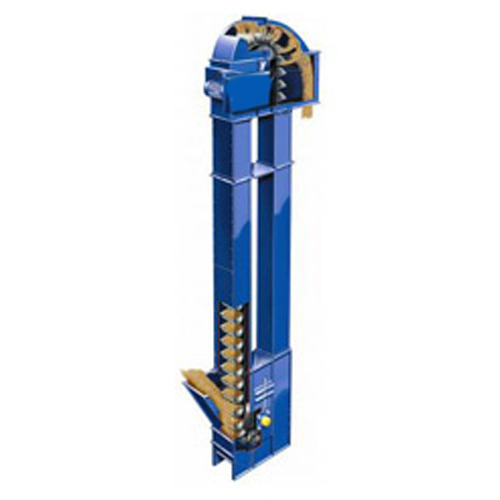
A bucket elevator is one of the most efficient machines for vertical material handling, transporting everything from grains and fertilizers to cement, chemicals, minerals, and food products. When designed and operated correctly, it delivers continuous, reliable performance with minimal product loss.
However, many industries encounter a recurring issue known as material throw back, carryback, or return material. Instead of discharging cleanly at the head section, part of the material remains inside the bucket or falls back into the down leg. Over time, this reduces conveying efficiency, increases energy consumption, accelerates component wear, and creates housekeeping and maintenance challenges.
Understanding the root causes of material throw back is essential for improving bucket elevator performance, extending equipment life, and reducing operating costs.
If you're planning a new installation or upgrading an existing system, explore our Bucket Elevator Manufacturer in India solutions:
https://www.neoconveyors.com/products/bucket-elevator-manufacturers-india
What Is Bucket Elevator Throw Back?
Bucket elevator throw back refers to the condition where material fails to discharge completely at the elevator head. Instead of flowing into the discharge chute, a portion of the material remains inside the bucket or falls back into the return leg.
This problem is commonly seen in industries handling:
- Cement
- Fly ash
- Limestone
- Sand
- Grain
- Rice
- Fertilizers
- Sugar
- Salt
- Animal feed
- Coal
- Chemical powders
- Plastic granules
Although some carryback is unavoidable in certain applications, excessive return material usually indicates an issue with equipment design, operating parameters, or maintenance.
Why Is Throw Back a Serious Problem?
Many operators ignore minor material carryback, assuming it is a normal part of operation. In reality, excessive throw back can lead to several operational and financial problems.
Reduced Conveyor Capacity
When buckets cannot discharge completely, their effective carrying capacity decreases. This lowers the throughput of the entire system and affects production targets.
Higher Power Consumption
Buckets carrying residual material require additional energy during every operating cycle, increasing motor load and electricity costs.
Increased Component Wear
Material repeatedly circulating inside the elevator causes unnecessary wear on buckets, belts, chains, pulleys, sprockets, and the elevator casing.
Product Loss
In industries handling valuable materials such as food products, chemicals, or specialty powders, throw back directly increases product loss and reduces profitability.
Dust Generation
Returned material often creates excessive dust, leading to poor housekeeping, environmental concerns, and potential safety risks.
Common Causes of Bucket Elevator Throw Back
1. Incorrect Bucket Elevator Speed
The speed of a bucket elevator plays a major role in discharge efficiency.
If the elevator runs too slowly, the material may not leave the bucket completely before it starts moving downward. If the speed is too high, material can be thrown beyond the discharge chute, resulting in spillage and product loss.
Each material has an optimum operating speed based on:
- Bulk density
- Particle size
- Moisture content
- Flow characteristics
- Bucket type
- Elevator design
Selecting the correct speed is one of the most effective ways to minimize throw back.
2. Wrong Bucket Design
Not all bucket designs perform the same.
Using the wrong bucket type can significantly reduce discharge efficiency.
Common design issues include:
- Incorrect bucket depth
- Improper bucket profile
- Wrong bucket spacing
- Inadequate bucket capacity
- Worn bucket lips
- Deformed bucket shape
Different materials require different bucket geometries. Choosing the appropriate bucket design improves filling, discharge, and overall elevator performance.
3. Incorrect Discharge Method
Bucket elevators generally use one of two discharge principles:
- Continuous Discharge
- Centrifugal Discharge
Selecting the wrong discharge method can lead to excessive return material.
Continuous bucket elevators operate at lower speeds and are suitable for fragile or free-flowing materials.
Centrifugal bucket elevators operate at higher speeds and rely on centrifugal force for discharge, making them suitable for granular and free-flowing materials.
Learn more in our guide:
Continuous vs. Centrifugal Bucket Elevators
https://www.neoconveyors.com/blogs/continuous-vs-centrifugal-discharge-bucket-elevator
4. Material Characteristics
The properties of the conveyed material have a direct impact on discharge performance.
Factors that contribute to throw back include:
- High moisture content
- Sticky material
- Fine powders
- Poor flowability
- Irregular particle size
- High cohesiveness
Materials that adhere to bucket surfaces are more likely to remain inside the bucket after discharge.
For these applications, selecting suitable bucket materials and discharge designs is essential.
5. Material Build-Up Inside Buckets
Over time, materials such as cement, clay, chemicals, and fertilizers may accumulate inside buckets.
This build-up reduces bucket capacity and interferes with proper discharge.
Common reasons include:
- Wet material
- Product contamination
- Inadequate cleaning
- Incorrect bucket coating
- Extended operation without maintenance
Routine cleaning helps maintain optimal conveying performance.
6. Belt or Chain Speed Fluctuation
Inconsistent operating speed affects discharge timing.
Speed variation may result from:
- Worn drive components
- Loose belts
- Chain elongation
- Gearbox issues
- Variable motor performance
Maintaining a constant operating speed improves discharge consistency.
7. Improper Feeding
Uneven feeding is another common cause of return material.
Problems include:
- Overloading
- Underloading
- Off-center feeding
- Material surges
- Incorrect inlet chute design
Proper feed control allows buckets to fill uniformly, resulting in more efficient discharge.
8. Worn Buckets
Buckets gradually wear due to continuous abrasion.
Signs of wear include:
- Rounded bucket lips
- Cracks
- Deformation
- Corrosion
- Reduced bucket capacity
Damaged buckets affect both loading and discharge efficiency.
Replacing worn buckets at the right time improves performance and reduces product loss.
How to Diagnose Throw Back Problems
Before making mechanical changes, conduct a systematic inspection of the elevator.
Check the following:
- Bucket condition
- Belt or chain tension
- Head pulley or sprocket alignment
- Elevator speed
- Feed rate
- Material flow characteristics
- Discharge chute condition
- Build-up inside the casing
- Bearing condition
- Gearbox performance
A structured inspection helps identify the root cause rather than simply treating the symptoms.
Engineering Solutions to Reduce Throw Back
The most effective solution depends on the specific application, but the following practices generally deliver excellent results:
- Select the correct bucket type for the conveyed material.
- Operate the elevator at the recommended speed.
- Maintain proper bucket spacing.
- Ensure uniform material feeding.
- Keep buckets clean and free from build-up.
- Replace worn buckets, belts, or chains before they fail.
- Inspect the discharge chute for restrictions.
- Perform routine preventive maintenance.
For a complete maintenance program, read:
Continuous Bucket Elevator Maintenance Guide
https://www.neoconveyors.com/blogs/continuous-bucket-elevators-a-fundamental-maintenance-guide
Continue to Part 2: Preventive maintenance schedules, inspection checklist, advanced troubleshooting, FAQs, and expert recommendations from Neo Conveyors.
Recent Posts