Telescopic Belt Conveyor: Complete Guide to Truck Loading & Unloading Conveyor Systems
Every minute a truck sits idle at a loading dock is a minute of lost throughput. For warehouses, e-commerce fulfilment centers, and manufacturing plants moving high volumes of cartons, parcels, and packaged goods, the bottleneck is rarely the storage system — it's the loading bay. That's the exact problem a telescopic belt conveyor is built to solve.
What Is a Telescopic Belt Conveyor?
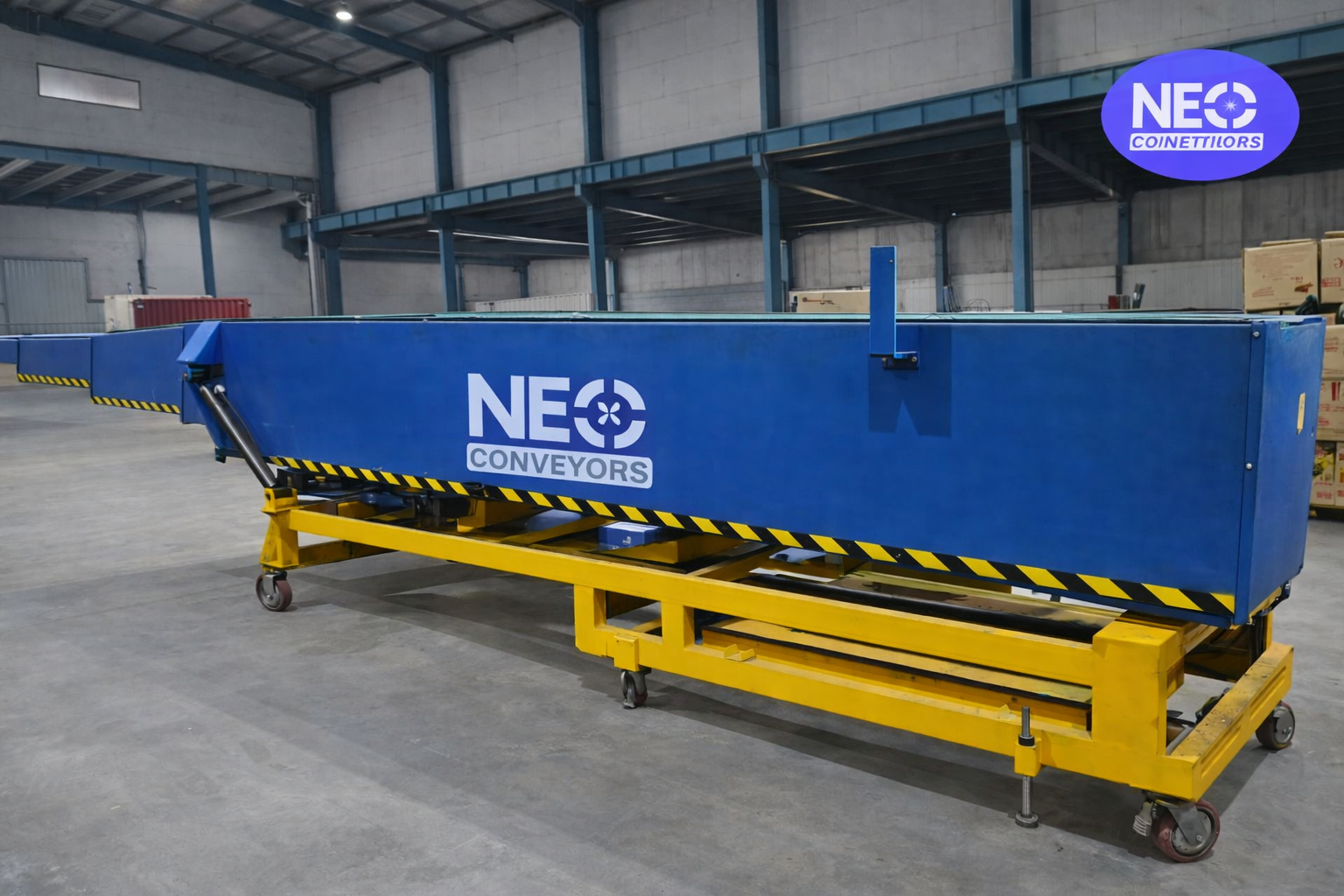
A telescopic belt conveyor is a material handling system built from nested, sliding conveyor sections that extend outward and retract back in, much like a collapsible telescope. Rather than requiring workers to carry goods in and out of a trailer by hand, the conveyor itself travels into the vehicle, letting cartons, boxes, totes, and bags move directly from the dock to deep inside the truck bed — or the reverse, during unloading.
Because the belt lengthens and shortens on demand, the same unit can service trucks and containers of different sizes, then retract into a compact footprint when not in use. This adaptability is what makes it a staple of modern dock operations rather than a fixed, single-purpose chute or ramp.
How It Works
Most systems use a multi-stage design — commonly three or four telescoping sections — where each stage slides out from the one before it on a motorized frame. An electric drive, typically paired with a variable frequency drive (VFD) for adjustable belt speed, powers the continuous belt that carries goods along the extended length. Height adjustment (manual, mechanical, or hydraulic) lets the conveyor line up with different dock heights and vehicle floor levels, while castor wheels on mobile versions allow the whole unit to be repositioned between loading bays. Explore Neo Conveyors' full range of loading and unloading conveyor systems for other dock automation options.
Key Features to Look For
- Extendable and retractable design — reaches deep into trailers and containers to shorten the distance goods must be carried by hand, then folds back for storage or transport between docks.
- Adjustable height and speed — hydraulic or manual height adjustment accommodates varying vehicle and dock heights, while VFD-driven speed control lets throughput be tuned to the product being handled.
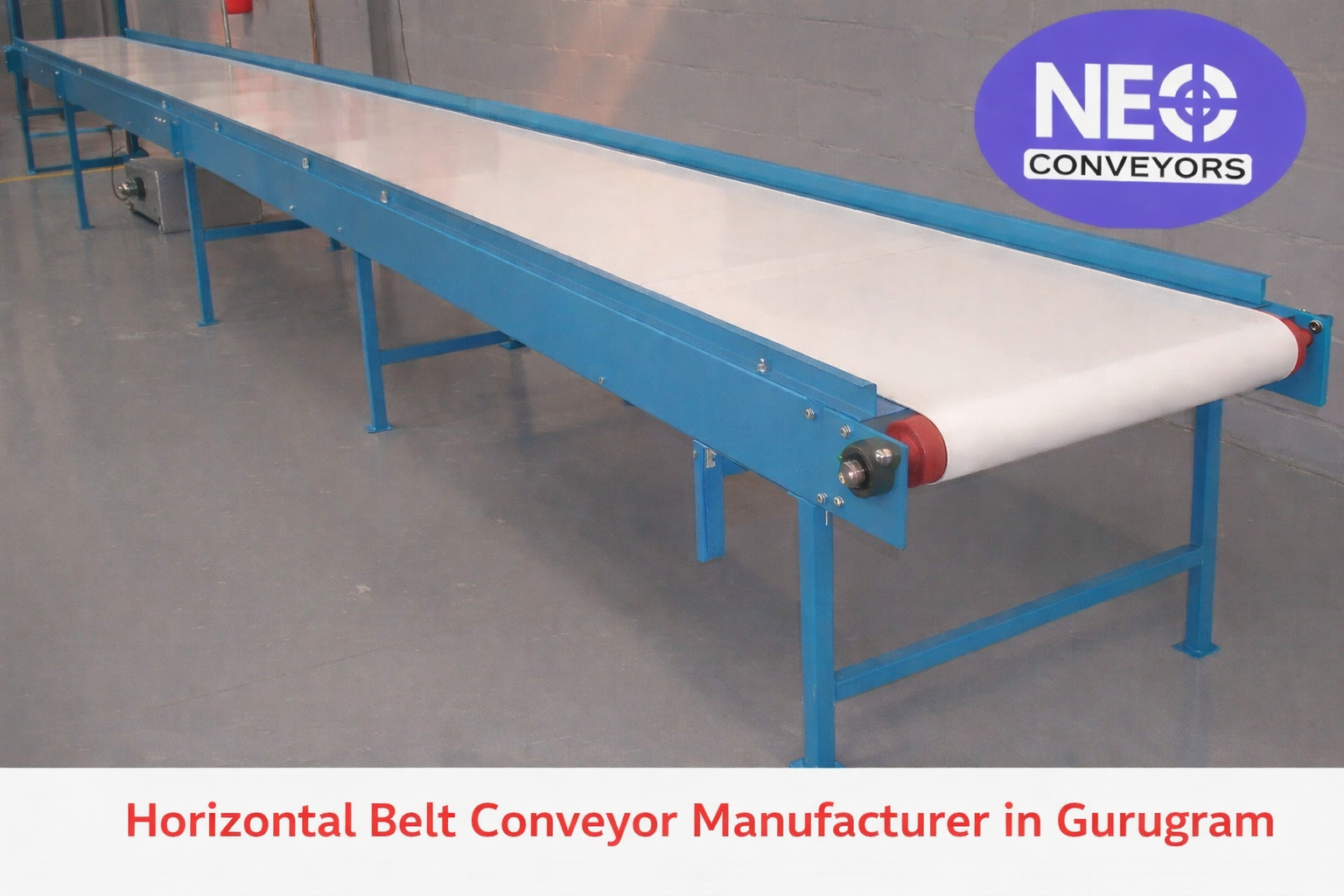
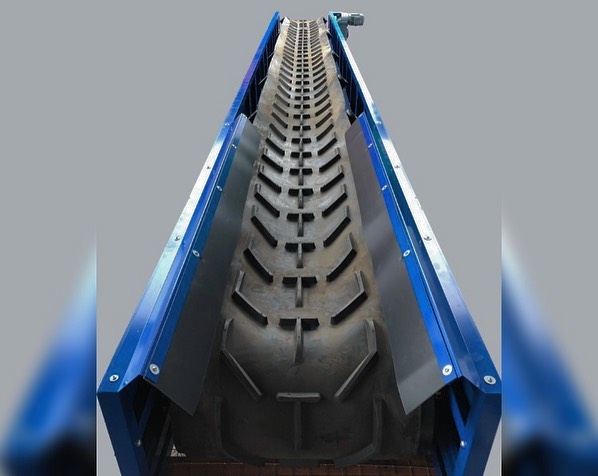
- Durable belt and frame construction — belts in PVC, rubber, or polyurethane, mounted on mild steel or aluminum frames, are built to withstand continuous industrial use with minimal wear. See Neo Conveyors' standard belt conveyor range for fixed-length, non-extendable applications.
- Safety systems — emergency stop buttons, anti-collision sensors, and guarding reduce the risk of injury during high-tempo loading and unloading.
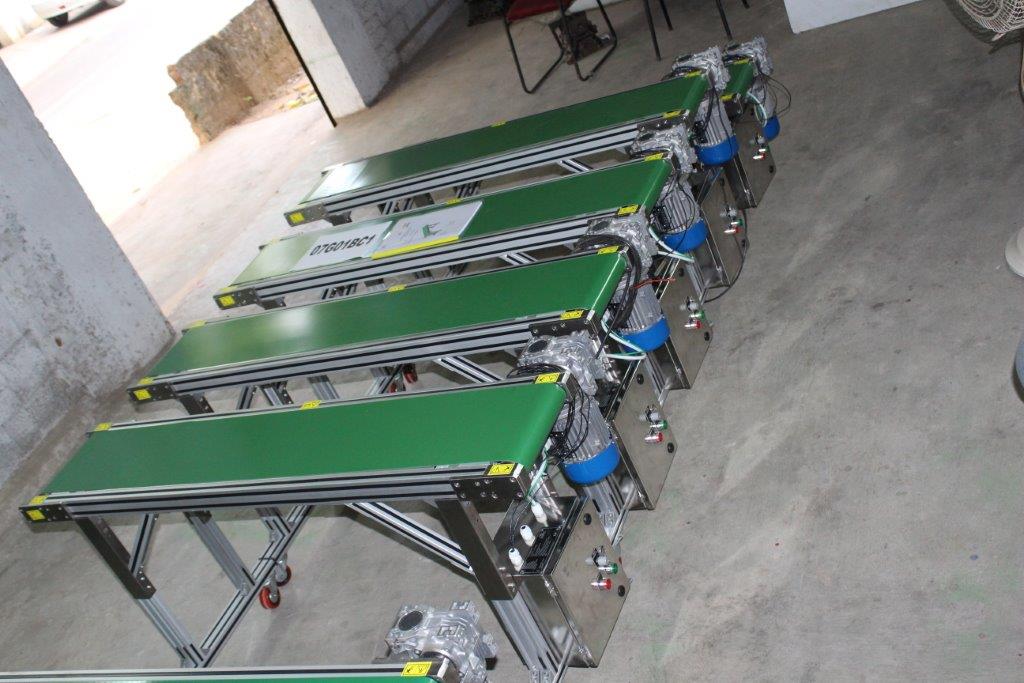
- Mobility — heavy-duty castor wheels make it easy to move the conveyor between dock doors or storage locations.
- Low maintenance — simple mechanical design and durable components keep upkeep and downtime to a minimum.
Typical Specifications
Specifications vary by manufacturer and application, but a general range across the market looks like this:
| Parameter | Typical Range |
|---|---|
| Number of stages | 3 to 4 telescoping sections |
| Extended length | Roughly 12–21+ meters (up to ~40 feet in heavy-duty models) |
| Belt width | 600 mm, 800 mm, or 1,000 mm |
| Load capacity | Approximately 60–100 kg per meter |
| Power supply | 220V/380V, 3-phase electric drive |
| Drive control | Variable frequency drive (VFD) for adjustable belt speed |
| Belt material | PVC, rubber, or PU |
| Frame material | Mild steel or aluminum |
Always confirm exact figures with the manufacturer, since load capacity, extension length, and belt width are usually customized to the specific dock, truck fleet, and product mix.
Where Telescopic Conveyors Are Used
Logistics and distribution hubs rely on telescopic conveyors to cut loading and unloading time across high-volume dock operations, directly improving trailer turnaround.
E-commerce and retail fulfilment centers use them to keep parcels and totes moving quickly and accurately during peak order cycles, where every extra minute per truck compounds across dozens of daily shipments.
Manufacturing plants integrate telescopic conveyors into production and dispatch lines to move components and finished goods efficiently between production areas and outbound trucks.
Courier, parcel, and FMCG distribution networks use them to handle high volumes of cartons, bags, and packaged goods with a consistent, repeatable process rather than manual carrying.
Transportation and shipping yards use extendable belt systems to optimize cargo handling where trucks and containers of varying sizes need to be serviced by the same equipment.
Fixed vs. Mobile Systems
Telescopic conveyors generally come in two configurations:
- Fixed installations, permanently mounted at a dock door, are suited to high-throughput sites with consistent truck traffic at a single bay.
- Mobile units, fitted with castor wheels, can be wheeled between multiple dock doors or storage zones, offering flexibility for sites where load volumes shift between bays throughout the day.
The right choice depends on dock layout, the number of active bays, and how consistently loading volume is distributed across them.
How to Choose the Right Telescopic Conveyor
- Truck and container sizes you regularly service, which set the required extension length.
- Belt width, based on the size of cartons, totes, or bags being handled.
- Throughput needs, which influence belt speed and whether VFD control is worth specifying.
- Dock height variation, which determines how much height adjustment range is needed.
- Fixed vs. mobile deployment, based on how many dock doors the unit needs to serve.
- Safety requirements, including emergency stops and anti-collision systems for the operating environment.
- Customization needs, such as export-ready builds for cross-border installations or integration with existing warehouse automation and layout.
The Bottom Line
A telescopic belt conveyor turns one of the most labor-intensive parts of the supply chain — manually loading and unloading trucks — into a faster, safer, and more consistent process. Whether the priority is reducing trailer dwell time in a 3PL yard, keeping pace with order volume in an e-commerce fulfilment center, or moving finished goods off a production line, the flexibility of an extendable, retractable conveyor makes it one of the most practical automation investments a dock operation can make.
Before buying, request technical data sheets and, where possible, a site assessment from the manufacturer — extension length, belt width, load capacity, and drive specifications should all be matched to your actual truck fleet and throughput, not just the largest model on the spec sheet.
Ready to see specs and configurations up close? View Neo Conveyors' telescopic belt conveyor product range.