7 Conveyor Maintenance Tips to Prevent Downtime
Most conveyor breakdowns don't happen out of nowhere. A belt that snaps mid-shift was usually slipping for weeks first. A seized bearing gave off a warning noise long before it locked up. The seven habits below are the ones that catch these problems while they're still cheap to fix, not the ones that make headlines, just the routine checks that keep a line running.
Seven Habits That Actually Prevent Downtime
Walk the line before every shift, not just when something sounds wrong
A two-minute visual check, belt tracking straight, no unusual noise, no material buildup at the pulleys, catches most problems before they turn into a stoppage. It's the cheapest maintenance you'll ever do, and it's the one that gets skipped first when a shift is busy.
Keep belt or chain tension where the manufacturer specified it, not where it "feels right"
Too loose and you get slip, wasted power, and uneven wear at the drive pulley. Too tight and you're putting unnecessary load on bearings and shafts, shortening their life for no benefit. Check tension against the actual spec sheet, not by pressing on the belt and guessing.
Lubricate on a schedule, not when something starts squeaking
By the time a bearing is loud enough to notice over the rest of the plant noise, it's often already past the point where lubrication alone fixes it. Stick to the interval in the manual, and shorten it in dusty or high-temperature environments where grease breaks down faster.
Fix misalignment as soon as you see it drifting
A belt that's started tracking slightly to one side won't fix itself, it gets worse, and it takes the edge of the belt, the idlers, and eventually the frame with it. Idler and pulley alignment is one of those checks that's quick when caught early and expensive when ignored for a month.
Don't run the conveyor above its rated load, even occasionally
Overloading doesn't usually cause an immediate failure, it just eats into the equipment's service life every time it happens. A conveyor rated for a certain TPH that regularly runs 20-30% over that figure will wear out its belt, drive, and bearings well ahead of schedule.
Clean material buildup off pulleys and idlers, not just the belt
Buildup on a pulley changes its effective diameter, which throws off tracking and adds uneven load to the belt every time it passes. It's an easy thing to miss because the belt itself looks fine, the problem is hiding on the rollers underneath it.
Keep the parts that actually fail on the shelf
Belts, idlers, bearings, and common fasteners are the parts that wear out on a predictable schedule. Waiting for one to fail before ordering a replacement means the line sits idle for however long shipping takes, when keeping a small stock on hand would have meant an hour of downtime instead of a week.
A Simple Preventive Maintenance Schedule
The seven tips above turn into a routine once you attach a frequency to each one. This is a reasonable starting point; adjust it based on how hard your line actually runs.
| Frequency | What to check |
|---|---|
| Daily | Belt or chain condition, unusual noise, spillage, emergency stops working |
| Weekly | Tracking, tension, idlers, pulleys, guards |
| Monthly | Bearings, lagging, fasteners, gearbox oil, motor condition |
| Quarterly | Overall alignment, structure, drive system, wear components |
| Planned shutdown | Detailed mechanical inspection and replacement of worn parts |
None of this needs to be complicated. A checklist on a clipboard by the control panel, filled in once a shift, catches most of what matters.
Related Maintenance Guides
This page covers routine maintenance to prevent problems in the first place. If something's already gone wrong, these go deeper on the specifics:
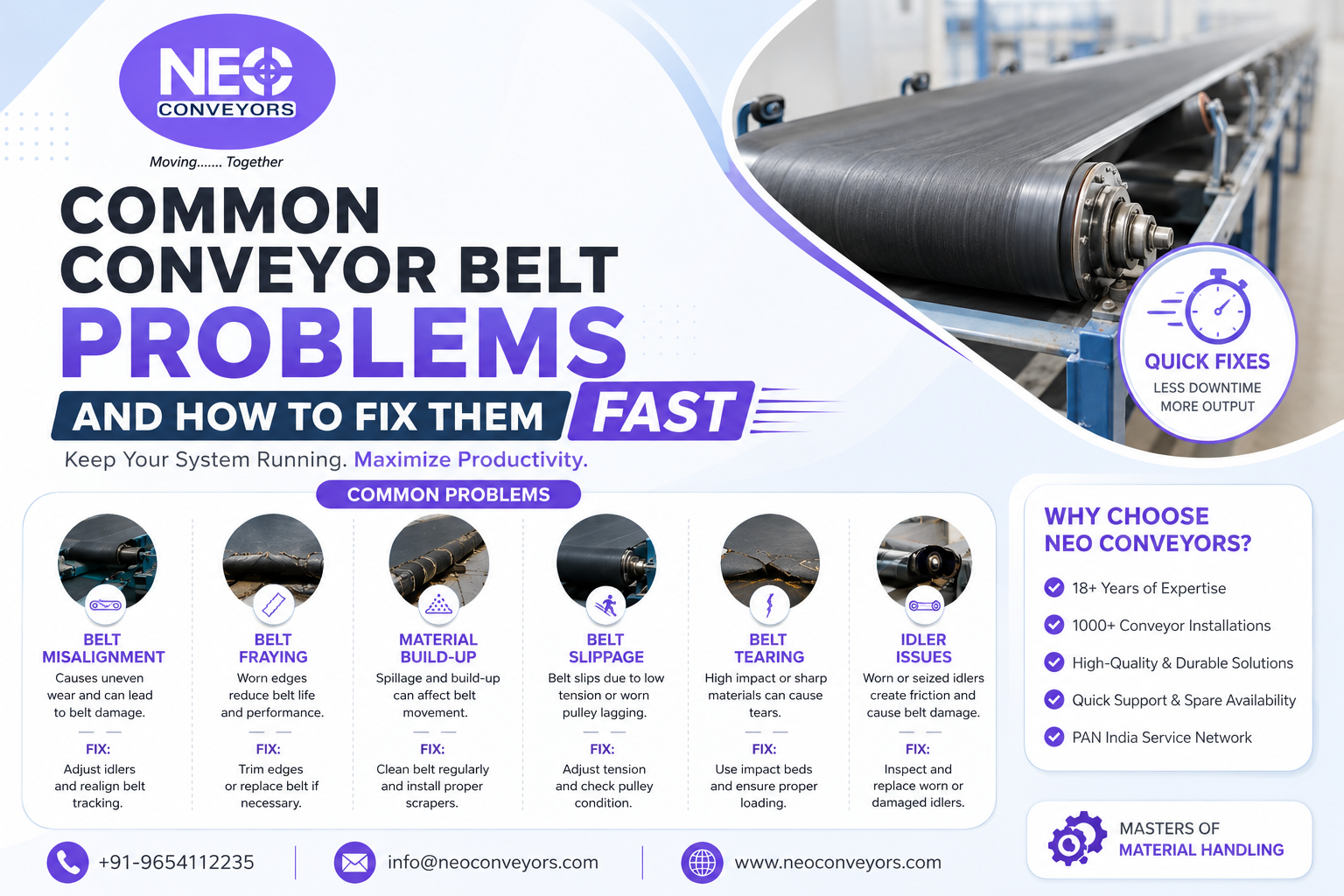
- Common Conveyor Belt Problems and How to Fix Them — for diagnosing a specific belt issue that's already showing up
- 5 Tips to Keep Your Chain Conveyor Operational — chain-specific maintenance, including tension and lubrication points that don't apply to belts
And for the equipment itself: Conveyor Pulleys, Chain Conveyors, Drag Chain Conveyors, Roller Conveyors, Screw Conveyors, Belt Conveyors, and Bucket Elevators.
FAQs
How often should a conveyor system be inspected?
A quick daily check for noise, spillage, and obvious wear, a more thorough weekly check of tracking and tension, and a monthly check of bearings and fasteners covers most conveyors. Higher-duty or continuous-run lines benefit from checking more often.
What is the most common cause of conveyor downtime?
Belt or chain misalignment and worn idlers or bearings account for a large share of unplanned stops, mostly because they start small and get ignored until they cause a bigger failure.
How do I know if my conveyor belt needs re-tensioning?
Slipping at the drive pulley, sagging between idlers, or a belt that drifts to one side are the usual signs. Check tension against the manufacturer's spec rather than by feel alone.
How often should conveyor bearings be lubricated?
It depends on the bearing type, duty cycle, and environment, but monthly is a reasonable default for most industrial conveyors unless the manufacturer specifies otherwise. Dusty or high-temperature environments usually need more frequent lubrication.
Can overloading damage a conveyor?
Yes, consistently loading a conveyor above its rated capacity accelerates wear on the belt, drive, and bearings, and can cause premature failure well before the equipment's expected service life.
Should I keep spare parts on hand for my conveyor?
Yes, keeping common wear parts like belts, idlers, bearings, and fasteners on hand cuts the time a line sits idle waiting for a replacement to arrive.
What's the difference between this guide and a conveyor troubleshooting guide?
This guide covers routine, preventive maintenance to avoid problems in the first place. If a specific issue has already shown up, our guide on common conveyor belt problems walks through diagnosing and fixing it.
Talk to Our Maintenance Team
If a conveyor's already giving you trouble, or you'd rather have someone set up a maintenance schedule for you, we can help with both.
Recent Posts