Truck Loader Conveyors: Types, Sizing and How to Choose
Loading a truck by hand is slow, and it gets slower as the truck fills and workers have to carry each bag or carton deeper inside. A truck loader conveyor takes the carrying out of the job. Goods travel on a belt or rollers into the vehicle, and workers only stack at the far end. The right machine saves hours per truck. The wrong one stands unused in a corner because it doesn't reach the truck bed or can't be moved. This guide explains how to pick one.
What a truck loader conveyor does
It connects your warehouse, packing line or godown to the truck. Depending on the direction of use, it either carries goods into the vehicle or pulls them out and delivers them to a belt, a pallet or a stacking point. Most units are used both ways, which is why the same machine is often called a loading and unloading conveyor.
Types you can choose from
| Type | Best for | Things to know |
|---|---|---|
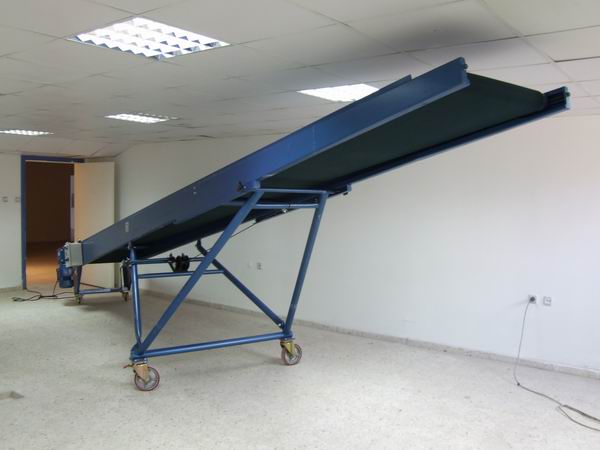
| Telescopic belt conveyor | Bags, cartons, sacks and boxes going deep into trucks and containers | Extends and retracts, so it reaches the far end of the load and stores compactly |
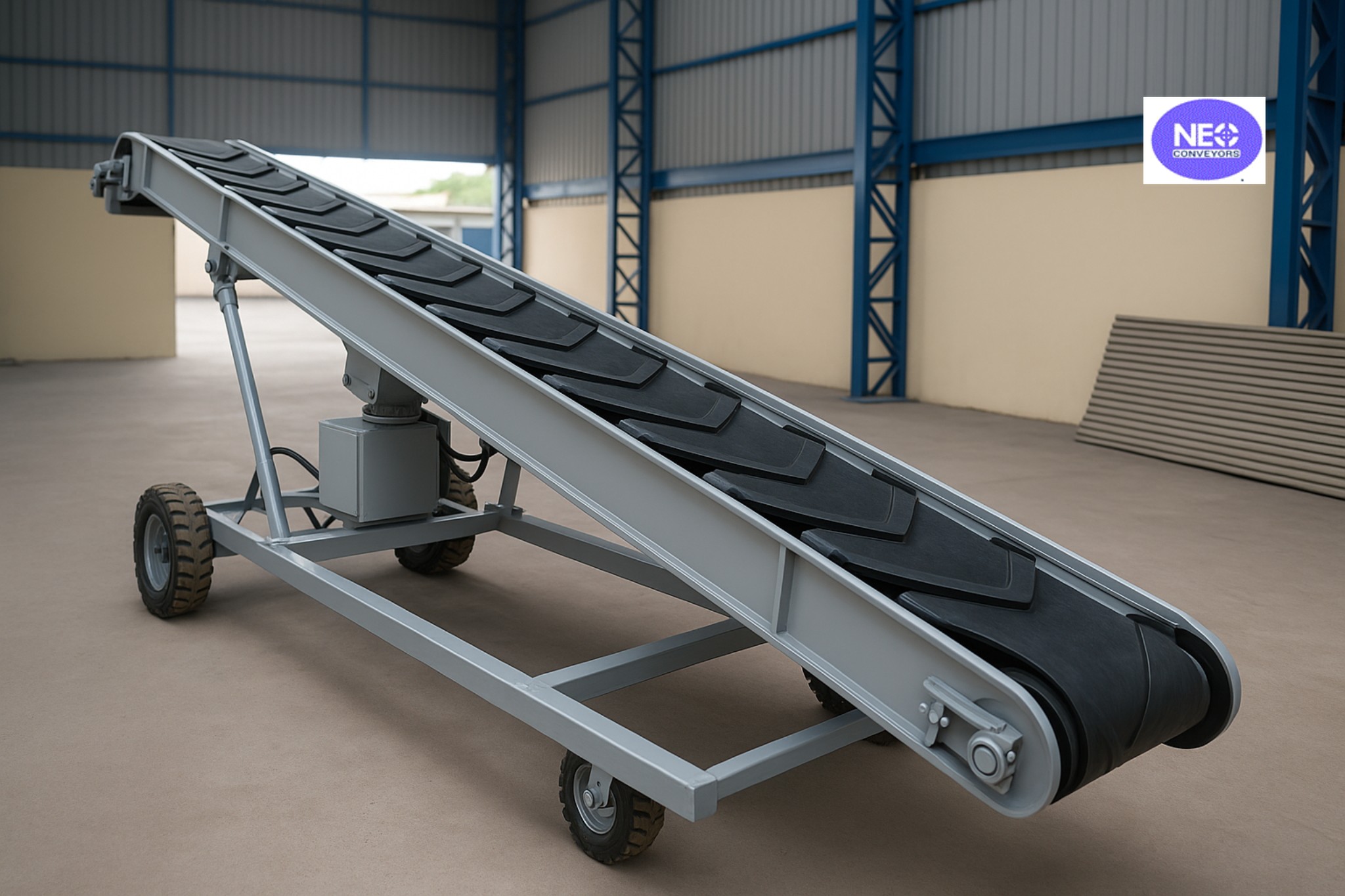
| Mobile (trolley-mounted) loader | Godowns and yards where one machine serves several bays | Wheels and a lifting mechanism let you move and adjust it |
| Fixed-length belt loader | A single dock with trucks of one size | Simpler and cheaper, less flexible |
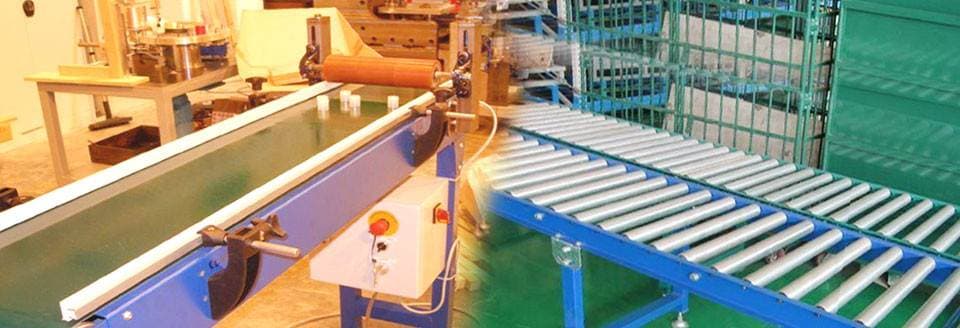
| Flexible roller (gravity) conveyor | Cartons and boxes, light budgets, manual pushing | Expands like an accordion, no motor, limited to flat-bottom goods |
| Powered roller loader | Cartons and totes that need accumulation | Not for loose or soft bags |
For bags of grain, cement, fertiliser, sugar or feed, a belt-type telescopic or mobile loader is the usual choice. For cartons and boxes, belt and roller types both work. Have a look at our loading and unloading conveyors and belt conveyors.
Five things that decide the machine
- Truck bed height. Commercial vehicles and containers have different deck heights. The conveyor must lift to the highest bed you load and still come down low enough to feed from the ground. Measure your actual trucks instead of assuming.
- Reach. How far into the truck must the end of the belt go? Short trucks need less. A 20 ft or 40 ft container needs a longer extension, and a telescopic design keeps the machine compact when parked.
- Load type and weight. A 50 kg bag, a 10 kg carton and a loose sack behave differently on a belt. Say what you load, how heavy it is and how it's packed.
- Throughput. Count how many bags or cartons you need to move per hour.
- Space and mobility. Check how much room you have at the dock, how wide the approach is and whether the machine must travel between bays.
A worked example
A grain trader loads 50 kg bags into trucks and wants to move about 600 bags an hour.
- 600 bags per hour is one bag every 6 seconds.
- A 50 kg bag is roughly 0.75 m long. Add a 0.25 m gap and each bag takes about 1 m of belt.
- So the belt should move about 1 m every 6 seconds, which is around 10 m/min.
- The load on the belt is then about 50 kg per metre of belt, which the frame, rollers and drive must carry with margin.
This is a rough sizing method, not a design. Real selection also considers the incline angle, belt type, and how bags are fed onto the belt.
Incline, lift and stability
When a conveyor is raised to reach a high bed, the incline angle matters. A steeper angle shortens the footprint but makes bags more likely to slide back or tumble. Cleated or rough-top belts help on steeper runs. Check that the machine is stable when fully raised and extended, particularly a mobile one on uneven ground. Locking wheels, outriggers or a wide base are worth asking about.
Safety features to ask for
- Emergency stop within reach at the loading end and the feed end
- Guards on drive and tail pulleys
- Side guards so bags don't fall off the edge
- Overload protection on the motor
- Locking for wheels and for the raised position
- Clear markings and a walkway around the machine
Common mistakes
- Buying for the average truck, not the tallest. The conveyor then can't reach the bed of your biggest vehicle.
- Ignoring reach. A short machine forces workers to carry the last few metres by hand, which defeats the purpose.
- Choosing a roller conveyor for loose or soft bags. They sag between rollers and jam.
- Forgetting the feed. If bags reach the conveyor slowly, the machine sits half empty. Plan the infeed too.
- No plan for maintenance access. Belt, rollers and the lifting mechanism all need servicing.
What to send us for a quote
- Type and weight of goods (bag, carton, sack, loose)
- Throughput per hour
- Truck types and their bed heights
- How deep into the truck you need to reach
- Whether the loader must move between bays
- Power available at the site
What affects the price
Price depends on length and extension, lift mechanism (manual or hydraulic), belt type, motor and drive, controls such as a VFD, frame material, and whether it is fixed or mobile. Stainless steel construction costs more and is used where hygiene or corrosion matters.
FAQs
What is a truck loader conveyor?
A conveyor, usually a belt, that carries bags or cartons into or out of a truck so workers don't have to carry them by hand.
Which type is best for bags?
A telescopic or mobile belt loader. Roller types are better for boxes and cartons.
Can the same conveyor load and unload?
Yes. Most belt units run in both directions with a reversible drive.
Can it reach into a container?
Yes, if you choose a telescopic model with enough extension. Tell us whether it is a 20 ft or 40 ft container.
Is a mobile loader better than a fixed one?
Only if you serve multiple bays or yards. For one dock, a fixed unit is simpler and cheaper.
How do I know the right belt speed?
Work it out from bag or carton size and the number you need per hour, as in the worked example above.
Can you install in other cities?
We supply and install across India.
Talk to us
Tell us what you load, how many per hour and what trucks you use. We'll suggest a type, reach and drive for your dock.
Related: Loading/Unloading Conveyors, Belt Conveyors, Inclined Belt Conveyors, More blogs, All Products