Incline Belt conveyor Manufacturer in India
Inclined Belt Conveyor Manufacturer
Flat, cleated, sidewall, and Z-type inclined belt conveyors engineered for a specific incline angle and material, not picked off a size chart. Fabricated in Ghaziabad, installed by our own team across India.
- 15°–45° incline
- Belt 300–1200 mm
- Cleated / Sidewall / Z-Type
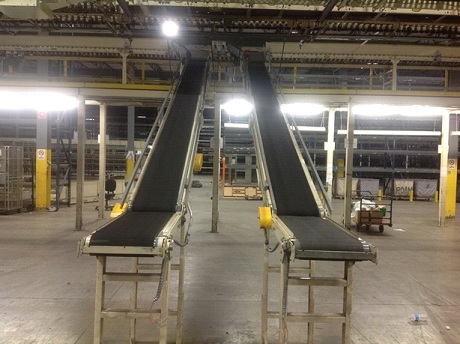
FIG. 01 — INCLINED BELT CONVEYOR, GENERAL ARRANGEMENT
What Is an Inclined Belt Conveyor?
An inclined belt conveyor moves material at an angle to bridge a height difference, floor to mezzanine, dock to truck bed, or one process stage to the next, using a belt selected to hold the product at that specific angle. The core engineering question is simple: at what angle does your product start to slide, and what belt surface stops that.
How It's Engineered for Your Incline Angle
Flat belts grip well up to roughly 20 degrees. Past that, gravity wins unless the belt surface changes, which is why cleats, sidewalls, or a different conveyor type entirely become necessary as the angle climbs. We calculate this against your product's base friction, weight, and the available floor length before recommending a belt type, rather than defaulting to whichever is cheapest to fabricate.
How It Works
Types of Inclined Belt Conveyors We Manufacture
Each type suits a specific angle range and product; picking the wrong one shows up as slippage, spillage, or a conveyor that's simply oversized for the job.
Flat Inclined Belt Conveyor
Standard flat belt on an inclined frame, economical for gentle inclines up to 20°. Suits cartons, packaged goods, and rigid-base products for mezzanine transfer in warehouses and packaging lines.
Cleated Inclined Belt Conveyor
Transverse rubber cleats grip bags, boxes, granules, and agricultural produce at steeper angles. Cleat height and pitch are set per product. The most specified type for loading docks and grain handling.
Sidewall Belt Conveyor
Corrugated sidewalls and cleats form enclosed pockets that contain fine powder, sand, gravel, and bulk grain up to 45° without spillage.
Z-Type Inclined Conveyor
Horizontal infeed, inclined lift, and horizontal discharge combined in one unit, so pickup and delivery happen at the same working height on different floors. SS304/SS316 food-grade builds available.
How Each Unit Is Built
Every inclined conveyor moves through the same four stages at our Ghaziabad workshop before it ships.
Design & Engineering
Angle, belt type, cleat spec, and motor sizing calculated against your product and floor plan.
Frame Fabrication
Structure welded and machined in-house, not outsourced to a third-party workshop.
Belt & Cleat Fitting
Belt splicing and cleat bonding done under controlled conditions for a consistent, even surface.
Testing & Inspection
Every unit runs under load, checked for belt tracking and drive performance before despatch.
Technical Specifications
| Belt width | 300 mm to 1,200 mm |
|---|---|
| Inclination angle | 15° to 45°, engineered per requirement |
| Capacity | Up to 100 TPH; unit loads per line speed |
| Load capacity | Up to 150 kg per metre of belt |
| Belt type | Flat / Cleated / Sidewall / Food-grade PU |
| Cleat height | 25, 40, 60, 75 mm |
| Drive motor | 0.5 to 7.5 HP, calculated per load |
| Speed control | Fixed or Variable Frequency Drive (VFD) |
| Structure (MOC) | MS / SS304 / SS316 |
| Power supply | 415 V, 3 phase, 50 Hz |
Belt Type by Angle
| Belt type | Best for | Angle range |
|---|---|---|
| Flat belt | Cartons, rigid goods | 15°–20° |
| Cleated belt | Bags, grain, loose items | 20°–45° |
| Sidewall belt | Fine powder, bulk material | Up to 45° |
| Food-grade PU | Food, dairy, pharma | 15°–30° |
What Determines the Price
There's no fixed price list, every unit is custom, but these are the variables that move cost up or down. Understanding them helps you compare quotes on a like-for-like basis.
Belt Length & Width
Longer runs and wider belts use more material and a larger frame.
Belt Type
Cleated and sidewall belts cost more than plain flat belt due to the added fabrication step.
Structure Material
SS304/SS316 for food or corrosive environments costs more than mild steel.
Drive & Control
VFD speed control adds cost over a fixed-speed motor but pays back in flexibility.
Incline Angle
Steeper angles need stronger frame bracing and, often, cleats or sidewalls.
Site Conditions
Outdoor, high-humidity, or dusty environments may need additional sealing or coating.
Share your product, incline angle, and floor length; we'll return a firm, itemised quotation, not a rough estimate. Request a quote →
What It Carries
Flat, cleated, or sidewall belt, matched to product size, base shape, weight, and hygiene requirements.
- Bags & sacks
- Cartons & boxes
- Grain & pulses
- Fertilizer granules
- Cement bags
- Fresh produce
- Pharma packs
- Packaged food
- Auto components
- Chemical bags
- Sand & gravel
- E-commerce parcels
Where It's Used
Warehousing & Distribution
Ground floor to mezzanine transfer and dispatch lane elevation, 25°–35°.
E-Commerce Fulfilment
Ground receiving to elevated sortation, 20°–30°, without parcel damage.
Food Processing
Food-grade PU belt units for packed products and ingredients between floors.
Pharmaceutical
SS316 Z-type units for bottles, blister packs, and cartons in GMP-compliant plants.
Cement & Fertilizer
Sidewall and cleated belts for bags and bulk granules, heavy-duty outdoor frames.
FMCG & Packaging
Linking packaging lines across floors, self-tracking belts for continuous operation.
Automobile & Manufacturing
Sub-assembly component transfer between floors of multi-level plants.
Agriculture & Agro Processing
Grain and seed bag transfer from storage to processing floors.
What an Installation Looks Like
Two representative scenarios based on typical project parameters, illustrative rather than a specific named customer.
Warehouse Mezzanine Transfer
A dispatch operation moving mixed-weight cartons from ground floor to a mezzanine pick zone would typically specify a cleated belt at 25–30°, 800 mm width, sized to the busiest hour's carton flow rather than the daily average.
Building Materials Depot
A depot loading cement bags into mixed truck sizes would typically use a cleated belt around 35° with a manual or hydraulic take-up, prioritising cleat durability over speed for continuous outdoor use.
For a verified reference from your sector, contact our team.
Inclined Belt Conveyor vs Bucket Elevator vs Screw Conveyor
In short: inclined belt conveyors suit unit loads (bags, cartons) up to 45° with easy access; bucket elevators suit free-flowing bulk material at near-vertical angles and higher throughput; screw conveyors suit enclosed powder transfer over shorter runs. Full comparisons live on each product's own page.
Inclined Belt Conveyor in Action
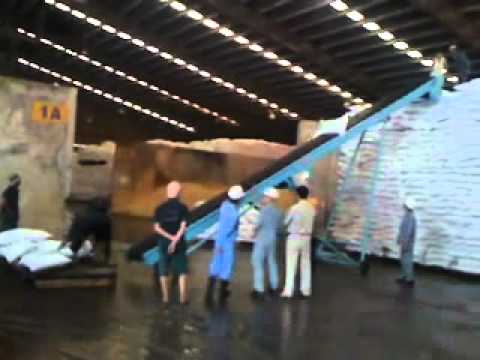
See an inclined belt conveyor operating at a customer facility, commissioned by our own installation team.
Watch on YouTubeWhy Choose Neo Conveyors
Custom Engineering, Not Catalogue Sizing
Angle, belt type, cleat spec, and motor are calculated against your product and layout.
In-House Fabrication
Structure, belt fitting, and testing all happen at our own facility, not a subcontractor.
Own Installation Team
Our engineers erect and commission on-site across Indian states.
Spares & AMC Support
Belt replacement and Annual Maintenance Contracts available after handover.
About Neo Conveyors → · View installation gallery → · Technical support →
FAQs
What angle can an inclined belt conveyor work at?
Flat belts handle 15°–20°, cleated belts handle 20°–45°, and sidewall belts can go up to 45°. Above that, a bucket elevator is usually the more efficient choice.
What is a cleated inclined belt conveyor?
A cleated inclined belt conveyor has transverse rubber fins moulded onto the belt to stop products sliding backward above roughly 20°, commonly used for bags, granules, and loose items.
What is a Z-type inclined conveyor used for?
A Z-type conveyor combines a horizontal infeed, an inclined lift, and a horizontal discharge in one unit, allowing product pickup and delivery at the same working height across different floors without a separate transfer point.
How is an inclined belt conveyor different from a bucket elevator?
An inclined belt conveyor suits unit loads such as bags and cartons at angles up to 45° with easy maintenance access. A bucket elevator suits free-flowing bulk material at near-vertical angles and higher throughput. See our Bucket Elevator page for the full comparison.
What is the price of an inclined belt conveyor?
Price depends on belt width, length, inclination angle, belt type, and structure material. Contact us with your product and layout details for a firm quotation.
Do you offer food-grade inclined belt conveyors?
Yes, with SS304 or SS316 frames, PU food-grade belts, sealed bearings, and hygienic end covers, including Z-type layouts for food and pharma lines.
What is the delivery lead time?
Standard delivery is 3 to 6 weeks from order confirmation depending on customisation, belt type, and structure material.
Do you install inclined belt conveyors across India?
Yes, our own engineers install and commission across Indian states, including Delhi NCR, Ghaziabad, Noida, Gurugram, Ahmedabad, Pune, Hyderabad, Chennai and Mumbai.
Can an inclined belt conveyor be used for both loading and unloading?
Most run in a fixed direction for a specific transfer point, but bidirectional operation can be specified for combined loading and unloading duties.
How is inclination angle decided for a new installation?
Angle is set by the available floor length and the height difference to bridge. Our engineers calculate the minimum practical angle for your space, then select flat, cleated, or sidewall belt accordingly.
Installation Across India
- Delhi NCR
- Ghaziabad
- Noida
- Gurugram
- Faridabad
- Ahmedabad
- Pune
- Hyderabad
- Chennai
- Mumbai
- Bangalore
Send Your Product, Angle & Floor Length
Our engineers will confirm belt type, cleat spec, and motor sizing, then send a firm quotation.