Checkweigher Conveyor Manufacturer in India — Inline Weighing Conveyor Systems
Most checkweigher installations fail on the conveyor side, not the weighing side. The load cell and controller are usually a specialist third-party instrument — what determines whether the whole station actually works is the conveyor built around it: correct belt speed sync so products arrive at the weigh zone at a steady, measurable pace, an accumulation zone that stops cartons queuing into the reject gate, and a frame that gives the checkweigher a stable, vibration-free platform to weigh from.
That's the part Neo Conveyors manufactures and engineers — the conveyor system that makes an inline checkweigher actually work reliably at production speed, not just in a spec sheet.
What is a checkweigher conveyor?
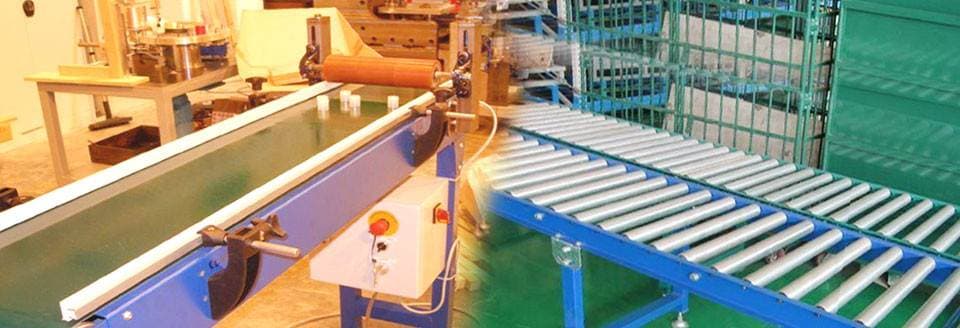
A checkweigher conveyor is the belt or roller conveyor section engineered specifically to carry product through an inline dynamic weighing station — sized, speed-controlled, and zoned so that a checkweigher (typically a specialist weighing instrument with load cells and a controller) can weigh each item accurately while it's in motion, then divert or flag out-of-range items without disrupting the line.
Three things separate a checkweigher conveyor from a standard transport conveyor:
- Precise, synchronised speed — a VFD-controlled drive matched to the checkweigher's required dwell time in the weigh zone, since inconsistent speed is one of the most common causes of inaccurate dynamic weighing
- Vibration-isolated weigh zone — the conveyor section under the load cell needs to be mechanically decoupled from the rest of the line so drive vibration doesn't corrupt the weight reading
- Accumulation and reject integration — a zone immediately before or after the weigh station that can stop or divert product without causing product-on-product collision when a reject gate fires
How a checkweigher conveyor works in a real production line
- Product arrives from an upstream machine (filler, case packer, sealer) at the infeed
- The conveyor carries product through the weigh zone at a synchronised, VFD-controlled speed
- The checkweigher's load cell captures the weight and the controller compares it to preset limits
- In-range product continues; out-of-range product is flagged for a reject gate, pusher, or diverter downstream
- Accumulation zones buffer product before and after the weigh station so a reject event doesn't stall or collide product further back on the line
Real installation: FMCG packaging line, Noida, UP
An FMCG manufacturer needed a conveyor system running from their case packer through an inline checkweigher to a palletiser — cartons weighing 15–22 kg, moving at 12 cartons/minute. Neo Conveyors supplied a 35-metre belt-driven powered roller conveyor with zero-pressure accumulation zones: one at the checkweigher, stopping cartons queuing when the reject gate fired, and one at the palletiser infeed, buffering product when the palletiser was mid-layer-forming. The conveyor's VFD was synced to the checkweigher's speed requirement.
Results over the following operating period:
- Zero carton collisions at the checkweigher zone in 16 months of operation
- Palletiser starvation (idle time from an empty infeed) eliminated — previously running at roughly 8% idle time
- Overall line efficiency improved from 82% to 94%
This is the kind of engineering that goes into a properly specified checkweigher conveyor — the accumulation logic and speed synchronisation matter as much as the conveyor's basic transport function. (See the full case study, with layout and drive specification, on our Powered Roller Conveyor page.)
Conveyor specifications for checkweigher integration
These are Neo Conveyors' standard conveyor engineering ranges — the checkweigher instrument itself (load cell rating, weighing accuracy) is specified by the weighing equipment supplier and should be confirmed against your product weight range and required accuracy separately.
| Parameter | Typical Range |
|---|---|
| Conveyor type | Belt driven or powered roller (zero-pressure accumulation) |
| Frame width | 200 mm to 1,500 mm (custom) |
| Belt/roller speed | 0.1 m/s to 2.5 m/s, VFD adjustable |
| Load capacity | Up to 500 kg/m |
| Frame material | MS (powder-coated) / SS304 / SS316 |
| Drive control | VFD with speed-sync input from checkweigher controller |
| Accumulation | Zero-pressure zone control at weigh station and downstream buffer |
| PLC integration | 24 VDC I/O for reject gate, sensor, and controller interfacing |
| Working height | 700 mm to 1,000 mm (adjustable leg options) |
What to specify before requesting a quote
- Product weight range and base dimensions — determines conveyor width, roller pitch (if roller type), and belt/frame load rating
- Required line speed and cartons/items per minute — sets VFD range and confirms the weigh zone dwell time is achievable at your throughput
- Checkweigher model and dwell-time requirement — needed so the conveyor's weigh-zone length and speed are matched to your specific instrument, not assumed
- Reject mechanism — pneumatic pusher, air blast, diverter arm, or servo reject gate, since each has different space and mounting requirements on the conveyor frame
- Frame material — SS304/SS316 for food, pharma, and washdown environments; MS powder-coated for general FMCG and industrial use
- Upstream and downstream equipment — case packer, labeller, palletiser — so accumulation zones are sized to actually absorb the speed mismatch between machines, as in the Noida installation above
Applications
- FMCG and packaging lines — end-of-line carton weighing between case packer and palletiser
- Food and beverage processing — inline weight verification for packaged and bottled goods
- Pharmaceutical manufacturing — carton and package weight compliance checks
- Logistics and distribution — outbound parcel weight verification before dispatch
Why choose Neo Conveyors for a checkweigher conveyor system
- Established 2007, 1,000+ conveyor installations across FMCG, food, pharma, and logistics sectors
- In-house engineering — VFD speed sync, accumulation zone design, and reject-gate mounting provisions are designed into the conveyor from the start, not retrofitted
- PAN India installation by Neo Conveyors' own engineering team, not third-party contractors
- Frame material options including SS304/SS316 for food-grade and washdown environments
- Related conveyor lines that commonly integrate with checkweighers: Powered Roller Conveyors (accumulation zones), Belt Conveyors (general transport), Assembly Line Conveyors (multi-station packaging lines), and Telescopic Belt Conveyors for the dispatch end of the line
FAQ
Does Neo Conveyors manufacture the checkweigher instrument itself?
Neo Conveyors engineers and manufactures the conveyor system — frame, drive, VFD synchronisation, and accumulation zones — built to integrate with a checkweigher instrument. The weighing electronics and load cell are typically supplied by a specialist weighing equipment manufacturer; we design the conveyor around your chosen instrument's dwell-time and mounting requirements.
What product weight range can a checkweigher conveyor handle?
Conveyor frame and drive are sized to your specific product weight and base dimensions — Neo Conveyors' standard powered roller and belt conveyor ranges handle from light cartons up to 500 kg/m of load capacity. Share your product weight range for a conveyor specification recommendation.
Can the conveyor be integrated with our existing packing line?
Yes — VFD speed synchronisation and PLC I/O for reject gates and sensors are standard design provisions, allowing the conveyor to be matched to your existing checkweigher, case packer, and palletiser speeds.
What reject mechanisms can be mounted on the conveyor?
Pneumatic pushers, air blast rejects, diverter arms, and servo-driven reject gates can all be mounted with provisions designed into the conveyor frame — the correct type depends on your product weight, line speed, and reject rate.
Can the frame be supplied in stainless steel for food or pharma use?
Yes — SS304 and SS316 frame options are available alongside standard powder-coated MS, for washdown and hygiene-sensitive environments.
Do you provide installation support across India?
Yes — PAN India installation and commissioning by Neo Conveyors' own engineering team.
What information do you need for a checkweigher conveyor quotation? Product weight range and dimensions, required throughput (cartons/items per minute), your checkweigher model or dwell-time requirement, reject mechanism preference, and frame material. Send these details for a free system design and quotation.
Final thoughts
A checkweigher is only as reliable as the conveyor carrying product through it — speed synchronisation, vibration isolation at the weigh zone, and accumulation logic around the reject gate are what turn a weighing instrument into a working inline quality-control station. That conveyor engineering, not the weighing electronics, is where Neo Conveyors' 1,000+ installations and 18+ years of experience apply directly.
Get in touch with your product, throughput, and checkweigher details for a free conveyor system design.
Related reading
- Powered Roller Conveyor Manufacturer India — full Noida checkweigher case study and accumulation zone engineering
- Belt Conveyors
- Assembly Line Conveyors