Inspection Conveyor Manufacturer in India
Inspection Conveyor Manufacturer
in Ghaziabad, Delhi NCR & India
Slow-speed flat belt conveyors engineered for quality control, visual inspection, label verification, coding checks, and reject handling in pharmaceutical, FMCG, food, cosmetics, and electronics packaging lines. The only conveyor type designed around operator QC workflow — not just product transfer. Fabricated in Ghaziabad. PAN India installation since 2007.
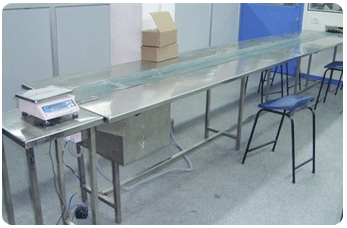
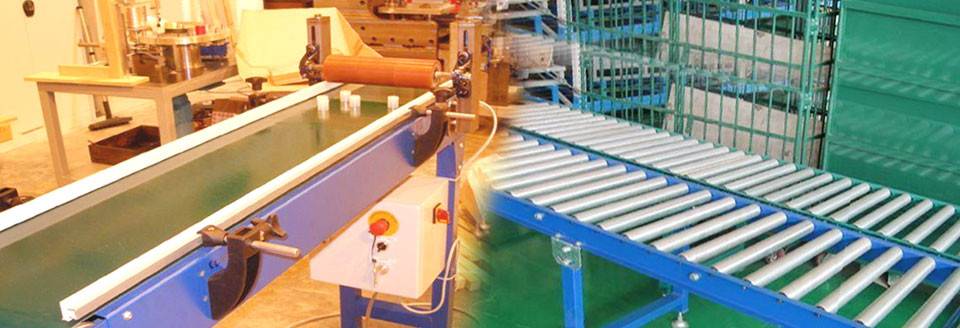
An inspection conveyor is a slow-speed flat belt conveyor specifically engineered to present products to quality control operators or automated inspection systems at a controlled, consistent pace. Unlike standard belt conveyors designed for maximum transfer speed, an inspection conveyor is designed for operator interaction — with ergonomic working heights, LED lighting integration, very slow belt speed (0.05–0.3 m/s), and reject gate provisions built into the frame design. Every feature serves one goal: giving operators adequate time and proper working conditions to verify product quality before it reaches the customer. Neo Conveyors has manufactured inspection conveyors for pharmaceutical, FMCG, food, cosmetics, and electronics companies since 2007, in Mild Steel and SS304/SS316 food-grade configurations. See also our slider bed belt conveyor → for light product transfer and our assembly line conveyors → for paced production lines. Watch a Neo Conveyors inspection conveyor running in a real packaging quality control line — controlled slow-speed belt, operator QC interaction, and smooth product presentation through the inspection zone. ▶ Inspection Belt Conveyor — QC Line Operation | Neo Conveyors ▶ Packaging Line Belt Conveyor Operation | Neo Conveyors An inspection conveyor is not a standalone product — it is a complete quality control workstation integrated into your packaging line. Understanding the five stages helps specify the correct conveyor length, speed, lighting, and reject provisions. Products enter the inspection conveyor from the upstream packaging machine via a smooth infeed — no gap, no bump, no product tipping during the transfer from fast to slow belt. Belt speed reduces to 0.05–0.2 m/s — giving each operator adequate time to examine labels, seals, codes, fill level, and packaging integrity without stopping the line. Integrated LED lighting illuminates the inspection surface — critical for detecting cosmetic defects, label displacement, and print quality on pharma and cosmetic packaging. Failed products are removed manually or automatically via a pneumatic reject gate — without stopping the belt or disrupting the flow of accepted products to the discharge end. Accepted products transfer to the next packaging stage — cartoning, case packing, or palletising — with speed-matched belt transition preventing product jamming at the outfeed junction. Many production managers ask whether a standard slow-speed belt conveyor can substitute for an inspection conveyor. The engineering differences below explain why purpose-built inspection conveyors deliver better QC outcomes and operator ergonomics. Every inspection conveyor is custom-engineered to your product dimensions, inspection workflow, ergonomic requirements, and integration needs. Every order begins with a discussion of your inspection process — before a dimension is finalised. Integrated LED strip lighting above or alongside the belt — illuminates product for label, print, and cosmetic defect detection. Colour temperature selectable. Pneumatic or manual height adjustment for both standing and seated operator ergonomics — reducing operator fatigue during long inspection shifts. Barcode reader, RFID, and vision camera mounting provisions with cable management — both mechanical and electrical integration by our team. Automatic reject gate triggered by operator foot switch, sensor, or vision system — diverts failed products without stopping belt flow. SS304/SS316 frame with white PU food-grade belt, polished interior, sealed bearings, washdown end covers — GMP-compliant for pharma and food environments. Everything about the inspection conveyor frame — height, width, access, open-frame design — is sized around the operator, not just the product. Operators can access both sides of the belt comfortably at all points along the inspection run. Belt speed as low as 0.05 m/s — giving operators 5–15 seconds to examine each product. Speed is adjustable from the panel to match the inspection cycle time for different product types without stopping the line. Overhead or side-mounted LED lighting integrated into the conveyor frame — not a separate add-on lamp. Correct illumination for label reading, seal inspection, and cosmetic defect detection without shadows or glare. Low-noise geared motor and smooth belt-on-bed operation — inspection conveyors must be quiet so operators can hear packaging defects (rattles, loose caps) during product handling in the inspection zone. Pneumatic reject gate provisions are designed into the frame — not retrofitted. Foot switch or sensor-triggered reject gates divert failed products automatically without operator interruption of the main belt flow. SS304/SS316 frame, white PU food-grade belt, washdown end covers, and smooth frame profiles for GMP pharmaceutical, food, dairy, and cosmetic inspection environments. No crevices, no particle traps. Every application below requires a controlled, slow, consistent product presentation to operators or automated systems — which is exactly what an inspection conveyor delivers. Standard transfer conveyors cannot serve these applications. Pharma blister packs and cartons verified for seal integrity, label print, and batch number before cartoning or case packing. Label application, position, and legibility checked — MRP, batch, expiry date, barcode — before downstream sticker sealing. Inkjet or laser code verification — manufacturing date, expiry date, lot number on bottles, pouches, and cartons. Pharma and cosmetic bottles checked for fill level, cap torque, seal, label application, and print quality. Carton flap sealing, glue integrity, and print verification before secondary packaging or dispatch. Seal integrity, fill verification, and labelling on flexible pouches and sachets for food, pharma, and FMCG. Medical device packaging inspection for completeness, label accuracy, and tamper evidence before final dispatch. PCB and electronic component visual inspection on slow-speed conveyor before final packaging — ESD-safe belt option available. Every packaging line in a regulated industry requires inspection conveyors between high-speed packaging machines — they are the quality gateway that protects the brand, the patient, and the consumer. Blister pack, bottle, vial, and carton inspection between filling, blister, labelling, and cartoning. GMP-compliant SS316 design with validated speed control, reject gate provisions, and coding reader integration. Mandated by cGMP QA requirements across all regulated pharma markets. Label verification, coding checks, and seal inspection on cartons, pouches, and sachets in high-speed FMCG packaging lines. Inspection conveyors sit between the packaging machines and the case packer — the last manual QC opportunity before case sealing. Seal verification, label accuracy, and fill-level inspection on food packs, dairy pouches, and beverage cartons. White PU food-grade belt, SS304 frame, and washdown-rated end covers — meeting food safety authority requirements for hygienic QC conveyor construction. Tube, bottle, jar, and aerosol inspection for label placement, code correctness, cap application, and cosmetic defects. Vibration-free belt ensures product orientation is maintained through the inspection zone — critical for label position verification. PCB, electronic component, and finished product visual inspection on slow-speed ESD-safe belt conveyors — anti-static belt with grounded frame prevents component damage during inspection. Operator-paced inspection at controlled belt speed. Container inspection for label accuracy, lot coding, seal integrity, and fill level on bottles and pouches in chemical and agrochemical packaging lines. Chemical-resistant frame finish for environments with aggressive vapours. Tell us your product type, dimensions, inspection requirements, number of operators, and packaging line speed. Our engineers will design the right inspection conveyor configuration — free of charge. Most packaging lines in India still use static inspection tables or ad-hoc manual inspection stations. Here is what changes when a purpose-built inspection conveyor replaces them. Three representative quality control installations across pharma, FMCG, and cosmetics — showing what changed in the QC process after an inspection conveyor replaced static inspection stations. A pharmaceutical plant running three blister packaging lines needed inline inspection between the blister machine and the cartoner for each line. Static table inspection was causing batch queuing at the cartoner — cartoners sat idle while inspectors cleared the accumulated blister queue, then ran at overload when inspection cleared. Batch coding errors (wrong expiry dates) were passing through undetected. Neo Conveyors supplied three SS316 inspection conveyors — 400 mm belt, 3 m length, white PU food-grade belt at 0.1 m/s VFD, integrated LED lighting, barcode reader mount for expiry date verification, pneumatic reject gate with foot switch. Each conveyor positioned between blister machine and cartoner infeed. An FMCG manufacturer packaging spice pouches needed to verify label application and inkjet coding (MRP, batch, expiry) before the pouches entered the cartoner. Static table inspection was allowing approximately 3–4% mislabelled and uncoded pouches into cartons — generating customer complaints and occasional regulatory notices for incorrect expiry date printing. Neo Conveyors supplied a 600 mm MS inspection conveyor — 5 m length, two operator positions on each side, PVC belt at 0.15 m/s VFD, integrated LED lighting, manual reject bin provision. Two operators per shift verify labels and codes at the belt as product flows continuously. A cosmetic company filling and labelling hair care bottles needed to inspect label placement, cap application, and fill level before secondary packaging. Manual inspection on a static table was slow, inconsistent, and producing 5–7% post-pack rejects — bottles with tilted labels or loose caps reaching retail cartons. Neo Conveyors installed an SS304 inspection conveyor — 300 mm belt, 4 m length, white PU belt at 0.08 m/s VFD, height-adjusted to seated operator ergonomics, LED strip lighting, pneumatic reject gate triggered by operator foot pedal. Quiet motor essential — operators listen for loose caps during inspection. We do not supply a conveyor and tell you to figure out the inspection workflow. Our engineers review your product, inspection requirements, and line speed before finalising any dimension or specification. SS304 and SS316 inspection conveyors for GMP pharmaceutical, food, and regulated environments have been part of our product range since 2007 — not an occasional configuration. We handle the barcode reader, vision camera, reject gate, and LED lighting integration ourselves — not just the mechanical conveyor frame. One supplier for the complete inspection station. Installation, belt speed commissioning, reject gate testing, and QC workflow trial by Neo Conveyors' own engineers. No sub-contractors — consistent performance on every project. 1,000+ installations across pharmaceutical, food, FMCG, cosmetics, and electronics packaging lines in India, UAE, Africa, and Southeast Asia. We understand regulated packaging environments. Replacement belts, reject gate solenoids, LED lighting, and VFD servicing available for every inspection conveyor we manufacture. Annual Maintenance Contracts for continuous GMP compliance. Flat, slider bed, inspection, and assembly line belt conveyors compared for packaging and production engineers. How flat belt conveyors integrate with inspection stations in paced assembly and packaging operations. ESD-safe conveyor design, anti-static belt selection, and inspection integration for electronics lines. How to select the correct belt material for pharma, food, and inspection conveyor applications. Belt, slider bed, and inspection conveyor selection for warehouse dispatch and QC automation. Browse all Neo Conveyors technical articles, installation guides, and packaging line resources. Neo Conveyors supplies and installs inspection belt conveyor systems for pharmaceutical, FMCG, food, cosmetics, and electronics packaging lines across all major industrial and pharma manufacturing cities in India. Share your product type, dimensions, inspection requirements, number of operator stations, and line speed. Our engineers will design the right inspection conveyor configuration — no obligation, no charge.The Quality Control Conveyor — Engineered Around Your Operators
Inspection Conveyor — Live QC Line Operation
Inspection Conveyor Workflow — 5 Stages of a QC Line
Product Infeed
Slow Inspection Zone
LED Illumination
Reject Handling
Outfeed to Next Stage
Inspection Conveyor vs Standard Belt Conveyor — What Makes It Different
Feature
✅ Inspection Conveyor
Standard Belt Conveyor
Primary purpose Operator QC interaction — designed for inspection Material transfer — designed for speed Belt speed range 0.05–0.3 m/s — slow controlled inspection speed 0.1–2.5 m/s — transfer speed, too fast for inspection Ergonomic working height Custom height for standing or seated operators Standard frame height — not ergonomically optimised LED inspection lighting Integrated LED lighting mounts — standard option No lighting provision — external lighting needed Reject gate provision Pneumatic reject gate provision built in No reject provision — products must be manually removed Frame design Smooth, open frame for operator access on both sides Standard frame — operator access not prioritised Sensor integration mounts Sensor, camera, and scanner mounting provisions built in Retrofitting required — not designed for inspection integration Noise level Very quiet — essential for operator concentration during inspection Standard noise level — acceptable for transfer, not inspection GMP / food grade SS304/SS316 with washdown design — standard option SS options available but not inspection-optimised Inspection Conveyor Technical Specifications
Belt Width 200 mm to 1,000 mm — as per product size Conveyor Length 1 metre to 10 metres — as per inspection stations Belt Speed 0.05 m/s to 0.3 m/s — VFD adjustable Inspection Height Ergonomic — custom height for standing or seated operators Belt Type PVC / PU food-grade / Anti-static / White inspection belt Frame Material MS painted / SS304 / SS316 Bed Type Slider bed (light load) or Roller bed (medium load) Side Rails MS or SS adjustable height side guides Drive Motor Low-noise geared motor — 0.25 HP to 1 HP Speed Control VFD — adjustable from control panel without stopping Lighting LED strip lighting — integrated into frame (optional) Reject Provision Pneumatic reject gate provision (optional) Sensor Mounts Barcode reader, vision camera, presence sensor mounts Surface Finish Powder Coated / Painted / Food Grade Polished (SS) Customisation Options
💡 LED Inspection Lighting
🔧 Height-Adjustable Frame
📡 Barcode & Vision Integration
❌ Pneumatic Reject Gate
🍎 Food Grade SS Configuration
What Makes an Inspection Conveyor Different from Any Other Belt Conveyor
Engineered for Operator Interaction
Slow VFD Speed — Adjustable per Product
Integrated LED Lighting
Very Quiet Operation
Reject Gate Provision Built In
Food-Grade & Pharma-Ready
Applications of Inspection Conveyors in Packaging Lines
Blister & Carton Inspection
Label Verification
Coding & Date Verification
Bottle & Vial Inspection
Carton Seal Inspection
Pouch & Sachet Checking
Medical Device Visual QC
Electronic Component Inspection
Industries Using Inspection Belt Conveyors
💊Pharmaceutical & Healthcare
🧴FMCG & Consumer Goods
🍎Food Processing
💄Cosmetics & Personal Care
💻Electronics Assembly
🧪Chemical & Agrochemical
Share Your Product & QC Workflow — Get Free Inspection Line Design
Inspection Table vs Inspection Belt Conveyor — What Changes
❌ Static Inspection Table / Manual Station
✅ With Inspection Belt Conveyor
Products batch-transferred to a static table — inspection happens in uncontrolled bursts, not continuously Continuous controlled product flow at the inspection belt speed — consistent operator throughput all shift Operator must handle and reposition products on table — adding ergonomic risk and slowing inspection Belt presents each product at the correct speed — operator only inspects, does not handle or reposition Inspection table has no lighting — operators work under general factory lighting, missing defects Integrated LED lighting illuminates each product in the inspection zone — defect detection rate improves No reject gate — failed products mixed back with accepted batch, causing traceability failures Reject gate diverts failed products immediately — clean separation, full traceability, no rework mix No integration with coding readers or vision systems — all inspection is manual Barcode readers and vision systems can be mounted on the conveyor frame — automated verification alongside manual Batch inspection creates downstream queuing — downstream packaging machine idles while inspection catches up Inline continuous inspection — downstream machine receives products at consistent rate, no queuing Inspection Conveyor — Real Installations by Neo Conveyors
SS316 Inspection Conveyor — Blister & Carton QC Line
MS Inspection Conveyor — Pouch Label & Code Verification
SS304 Inspection Conveyor — Bottle Label & Cap Inspection
Inspection Conveyor — Buyer FAQs
Why Choose Neo Conveyors as Your Inspection Conveyor Manufacturer?
Inspection Process Engineering — Not Just Conveyor Selling
GMP Pharma & Food Grade Specialists
Full Integration — Mechanical & Electrical
PAN India — Our Own Engineers Commission
18+ Years Pharma & FMCG Experience
AMC & Spare Parts — Long-Term QC Line Support
Learn More — Inspection Conveyor & Packaging QC Guides
Belt Conveyor Complete Guide — All Types & Applications
Assembly Line Conveyor Guide — Takt Time & Workstation Design
Industrial Conveyor for Electronics Manufacturing
Conveyor Belt Types — PVC vs PU vs Food Grade vs Anti-Static
Warehouse Conveyor Systems Guide
All Conveyor Blogs & Technical Guides
Inspection Conveyor Manufacturer Across India
Get a Custom Inspection Conveyor Quote — Free QC Layout Design