Bucket Elevator Working Principle: Complete Guide to Types, Components & Applications (2026)
Bucket Elevator Working Principle – Complete Guide
A bucket elevator looks simple from the outside, a tall enclosed casing with a motor at the top, but the way it lifts material determines everything from your plant's throughput to how much product you lose to breakage or dust. This guide walks through exactly how a bucket elevator works, component by component, covers all three discharge types, gives you the actual capacity formula, and explains how to keep one running reliably for years.
- Est. 2007
- 18+ Years Manufacturing
- 1,000+ Installations
- PAN India Service
- Ghaziabad Manufacturing Facility
Quick answer
A bucket elevator lifts bulk material using buckets fixed to a moving belt or chain. Material is scooped at the boot, carried up inside a sealed casing, and discharged at the head by centrifugal force, gravity, or a positive tipping motion, depending on the elevator type.
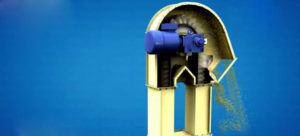
FIG. 01 — BUCKET ELEVATOR, BOOT TO HEAD, GENERAL ARRANGEMENT
Looking to buy, not just learn? See specifications, discharge types, and get a quote on our Bucket Elevator product page.
What is a Bucket Elevator?
A bucket elevator is a mechanical conveying system that lifts bulk material vertically using a continuous series of buckets mounted on a belt or chain. Instead of covering distance across a floor like a horizontal conveyor, it covers height, moving material from a low feed point to a high discharge point, often between an intake pit and an overhead silo, bin, or storage floor.
Bucket elevators exist because vertical lift is one of the hardest material handling problems to solve efficiently. A horizontal belt conveyor angled steeply enough to gain real height needs an enormous footprint and struggles to hold material on the belt above roughly 20 degrees without cleats. A bucket elevator solves this by physically containing the material in a bucket, so it can climb straight up, or even overhang slightly, inside a compact enclosed casing.
In short: a bucket elevator trades floor space for height. It delivers the highest lifting capacity per square metre of any vertical conveyor, which is why cement plants, grain silos, and fertilizer blending stations rely on them by default.
Main Components of a Bucket Elevator
Six parts appear on every bucket elevator, regardless of discharge type or size. The next section walks through what each one does during the working cycle; the section after that goes deeper into construction options for each.
Boot Section
The base of the elevator. Houses the tail pulley or sprocket and the material infeed point.
Buckets
The load-carrying element, bolted to the belt or chain at fixed spacing.
Belt or Chain
The driving medium that carries the buckets from boot to head and back.
Casing
The enclosed housing that protects the buckets and contains dust along the full lift.
Head Section
Houses the drive pulley or sprocket, motor, and gearbox that power the elevator.
Discharge Chute
Directs material from the head into the receiving bin, silo, or downstream equipment.
Working Principle (Step-by-Step)
Four stages make up one working cycle. Every bucket on the belt or chain repeats this cycle continuously while the elevator runs.
Material Infeed at the Boot
Material enters through a feed inlet or is scooped directly from a pit as buckets pass the tail pulley. Each bucket fills with a metered charge of material.
Vertical Lift Inside the Casing
Loaded buckets travel upward on the carrying run, fully enclosed. The sealed casing prevents dust escaping and protects the material from the surrounding environment.
Discharge at the Head
As each bucket rounds the head pulley or sprocket, material leaves the bucket, thrown by centrifugal force, tipped by gravity, or inverted by a positive-discharge mechanism, and falls into the discharge chute.
Return of Empty Buckets
Empty buckets travel back down inside the same sealed casing to the boot, where the cycle repeats for as long as the elevator runs.
Material Flow Process
Zooming out from the four working-cycle stages, material moves through the whole system like this:
- Material arrives at the elevator boot from an upstream conveyor, hopper, or pit.
- The boot pulley or sprocket rotation causes buckets to scoop or receive material as they pass through.
- Buckets carry their load up the carrying run at a controlled belt or chain speed.
- At the head, the discharge mechanism (centrifugal, gravity, or positive) releases material into the chute.
- Discharged material flows by gravity into the receiving silo, bin, or downstream conveyor.
- Emptied buckets descend on the return run, ready to refill at the boot.
Types of Bucket Elevators
The discharge mechanism is the single most important design decision, and depends almost entirely on how fragile, lumpy, or free-flowing your material is.
| Factor | Centrifugal | Continuous | Positive |
|---|---|---|---|
| Speed | High | Low | Low |
| Best material | Free-flowing | Fragile / lumpy | Sticky / cohesive |
| Breakage risk | Moderate | Low | Low |
| Throughput per casing size | Highest | Lower | Lowest |
| Typical use | Grain, cement, fertilizer | Clinker, coal, minerals | Wet sugar, starch, cake |
Bucket Elevator Components Explained
Each component has real construction choices that affect cost, durability, and suitability for your material.
Bucket Elevator Capacity Formula
Capacity in tonnes per hour (TPH) is calculated from bucket geometry, belt or chain speed, and material bulk density.
Standard capacity formula
Capacity (TPH) = V × F × N × S × ρ × 0.06
This is the industry-standard calculation used to size bucket volume, spacing, and belt speed for a target throughput. In practice, our engineers run this calculation against your actual material's bulk density and required TPH rather than a catalogue estimate, since bulk density varies significantly even within one material category (dry vs damp grain, fine vs granular fertilizer, and so on).
Advantages
Highest Capacity per Floor Area
No vertical conveyor delivers more TPH per square metre of footprint.
Enclosed, Dust-Free Operation
Sealed casing contains material and dust along the entire lift.
Handles Any Height
Standard designs reach up to 40 m, with custom units for taller lifts.
Low Power per Tonne Lifted
Efficient use of drive power compared with pneumatic or screw alternatives at height.
Wide Material Range
Discharge type selection covers free-flowing, fragile, and sticky materials.
Limitations
Not for Large Lumps
Materials above roughly 50 mm lump size need continuous or chain-type elevators, or a different conveyor entirely.
Height-Fixed Installation
Unlike a telescopic conveyor, a bucket elevator's height and discharge point are fixed once built.
Requires Scheduled Maintenance
Belt/chain tension, bucket wear, and bearing lubrication need routine attention to avoid unplanned downtime.
Discharge Type Must Match Material
Choosing centrifugal for a fragile material, or continuous for a low-throughput free-flowing one, wastes either product or capacity.
Industrial Applications
Cement Plants
Raw meal, clinker, and cement powder between grinding, storage, and packing.
Grain & Rice Mills
Wheat, rice, maize, and pulses between cleaning, storage, and milling stages.
Fertilizer Plants
Urea, DAP, and granulated fertilizer between blending and bagging lines.
Food Processing
Sugar, flour, and food ingredients in food-grade SS elevators.
Power Plants
Fly ash and coal handling from ESP hoppers and crushers.
Mining & Minerals
Ore, coal, and mineral processing between plant stages.
For material-handling systems upstream or downstream of the elevator, see our Belt Conveyors and Screw Conveyors ranges.
Maintenance Checklist
Daily
- Listen for unusual noise or vibration at the head and boot.
- Check belt or chain tracking visually.
- Confirm discharge chute is not blocked.
Weekly
- Inspect buckets for wear, cracking, or loose bolts.
- Check for material build-up in the boot.
- Verify take-up tension is within range.
Monthly
- Grease bearings per the manufacturer's schedule.
- Inspect belt/chain splice or joint condition.
- Check casing seals for dust leakage.
Annually
- Full inspection of head and boot pulleys or sprockets.
- Test the backstop device under controlled conditions.
- Review motor and gearbox condition, replace worn couplings.
Common Problems and Solutions
Belt Slip at the Drive
Usually insufficient take-up tension or worn pulley lagging. Re-tension first, re-lag if that doesn't resolve it.
Bucket Wear or Cracking
Abrasive material wears standard buckets faster than expected. Switch to a harder bucket material or add liners.
Spillage at the Boot
Often incorrect boot geometry for the material, an over-filled pit, or worn buckets not clearing properly.
Excess Dust at Discharge
Check casing seals first; if sound, consider switching from centrifugal to continuous discharge for the material.
Safety Guidelines
- Fit a backstop device to prevent the elevator running backward under load if power is lost.
- Install belt speed or slip sensors to detect drive failure before it causes damage.
- Use motion sensors linked to an automatic shutdown for jams or blockages.
- Guard all moving parts, especially at the head and boot access points.
- Fit explosion relief panels or venting where combustible dust, such as grain or fine coal, is handled.
- Lock out and tag the drive before any inspection or maintenance work begins.
How to Select the Right Bucket Elevator
Five questions determine the correct specification. Answer these before requesting a quote.
Share these five answers with our engineers and you'll get a specific recommendation, not a generic catalogue size. Send your material details →
Why Choose Neo Conveyors
Every bucket elevator is designed from your material data, fabricated in-house at our Ghaziabad plant, and installed by our own engineers.
18+ Years Manufacturing
Bucket elevator engineering experience since 2007.
1,000+ Installations
Across cement, grain, fertilizer, and mining sectors.
All Discharge Types
Centrifugal, continuous, and positive discharge manufactured in-house.
PAN India Installation
Our own engineers install and commission, not third-party contractors.
See full specifications on our Bucket Elevator product page, or learn more about Neo Conveyors →
FAQs
What is the working principle of a bucket elevator?
A bucket elevator lifts bulk material using a series of buckets fixed to a moving belt or chain. Material is scooped or fed in at the boot, carried upward inside an enclosed casing, and discharged at the head by centrifugal force, gravity, or a positive-discharge motion, depending on the elevator type.
What are the main components of a bucket elevator?
The main components are the boot section with tail pulley and take-up device, the buckets themselves, the belt or chain, the casing, the head section with the drive pulley and motor, and the discharge chute.
What is the difference between centrifugal and continuous discharge?
Centrifugal discharge elevators run at higher speed with spaced buckets that fling material out by centrifugal force, suited to free-flowing materials. Continuous discharge elevators run slower with closely spaced buckets that empty gently into a guide chute, suited to fragile or lumpy materials.
What is positive discharge in a bucket elevator?
Positive discharge uses a secondary sprocket at the head to briefly invert each bucket, tipping material out under full control rather than relying on speed or gravity. It is used for sticky, sluggish, or fine cohesive materials that would otherwise cling to the bucket.
How do you calculate bucket elevator capacity?
Capacity in tonnes per hour is calculated as bucket volume in litres, multiplied by the fill factor, multiplied by buckets per metre of belt or chain, multiplied by belt speed in metres per minute, multiplied by material bulk density in kg per litre, multiplied by 0.06, using consistent units throughout.
What materials can a bucket elevator handle?
Bucket elevators handle grain, cement, fly ash, sugar, salt, fertilizer, sand, coal, minerals, chemical powder, biomass pellets, and similar dry bulk materials, with the type and bucket material selected to suit abrasiveness and fragility.
What is the advantage of a bucket elevator over a screw conveyor for vertical lifting?
A bucket elevator delivers higher capacity per unit of floor space and handles far greater lift heights, up to 40 metres, than a screw conveyor, which is generally limited to shorter vertical lifts before efficiency drops sharply.
How often should a bucket elevator be inspected?
Daily checks should cover unusual noise and belt tracking, weekly checks should cover bucket condition and bolt tightness, and a full inspection of bearings, belt tension, and casing seals should be carried out monthly, with more frequent checks on high-duty lines.
What causes a bucket elevator to slip or run backward?
Belt slip is usually caused by insufficient take-up tension or a worn drive pulley lagging, while running backward under load after a power loss is normally due to a failed or missing backstop device on the head shaft.
What safety devices should a bucket elevator have?
Standard safety devices include a backstop to prevent reverse rotation, belt speed or slip sensors, motion sensors, bucket-alignment guards, and explosion relief panels or venting where combustible dust is present.
Can a bucket elevator handle fragile materials without breakage?
Yes, a continuous discharge bucket elevator is specifically designed for this. Closely spaced buckets move at low speed and tip gently by gravity rather than being thrown by centrifugal force, which significantly reduces breakage in grain, seeds, and similar products.
What is the difference between a bucket elevator and a conveyor belt?
A bucket elevator is purpose-built for vertical lift using discrete buckets, while a conveyor belt moves material horizontally or at a shallow incline on a continuous open belt surface. They are often used together, with a belt conveyor feeding material into the elevator boot.
What bucket materials are available?
Mild steel buckets suit abrasive industrial materials such as cement and minerals. HDPE or polymer buckets suit grain, fertilizer, and food applications where metal contamination must be avoided. Nylon buckets suit high-temperature or high-impact duty.
How tall can a bucket elevator be built?
Standard industrial bucket elevators are commonly built up to 40 metres in height, with custom-engineered designs available for taller installations depending on structural support and belt or chain tension limits.
Is a bucket elevator suitable for dusty materials like fly ash and cement?
Yes, provided the casing is fully sealed. Fly ash and cement are commonly elevated using centrifugal discharge bucket elevators with sealed MS or SS casing to prevent dust escaping into the plant environment.
What is the typical fill factor used in bucket elevator design?
Fill factor is typically 75 to 85 percent of bucket volume for centrifugal discharge elevators handling free-flowing material, and somewhat lower for continuous discharge elevators or less free-flowing materials, to avoid spillage during the lift.
Get a Bucket Elevator Recommendation for Your Material
Share your material, bulk density, required TPH, and lift height. See full specifications and request a quote on the Bucket Elevator product page.
Recent Posts