Bucket Elevator Manufacturer in India
Bucket Elevator Manufacturer in India — Belt & Chain Type
Centrifugal, continuous, belt-type, chain-type, and food-grade bucket elevators, custom-engineered for cement, grain, fertilizer, food, chemical, and mining industries. Up to 200 TPH, up to 40 metres lift. Fabricated in Ghaziabad with PAN India installation.
- Centrifugal Discharge
- Continuous Discharge
- Belt Type Elevator
- Chain Type Elevator
- Food Grade SS
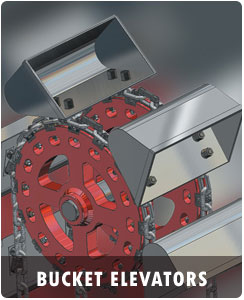
FIG. 01 — BUCKET ELEVATOR, GENERAL ARRANGEMENT
Industrial Bucket Elevator Systems — Vertical Bulk Material Handling
Neo Conveyors is a leading bucket elevator manufacturer in India since 2007, engineering custom vertical material handling systems for cement, grain, fertilizer, food, chemical, and mining industries. A bucket elevator delivers the highest volumetric capacity per unit of floor space of any vertical conveyor type, moving material from a lower feed point to an upper discharge point using a continuous series of buckets on a belt or chain.
Free capacity calculation included: share your material name, bulk density, required capacity (TPH), and lifting height. Our engineers calculate bucket size, spacing, belt/chain speed, and motor power, and send a GA drawing with the quotation at no charge. Send material details →
5 Types of Bucket Elevators We Manufacture
Choosing the wrong elevator type is the most common cause of bucket elevator failure. Our engineers specify correctly for your material before manufacture.
Centrifugal Discharge Bucket Elevator
High-speed operation, centrifugal force at the head pulley throws material into the discharge chute without tipping. Buckets are spaced apart. Highest throughput at lowest cost. Ideal for free-flowing, non-fragile materials.
Best for: Grain, fertilizer, sand, cement, salt, granules
View Centrifugal Elevator →Continuous Discharge Bucket Elevator
Low-speed operation, closely spaced buckets tip material gently into the chute without centrifugal impact. Prevents material degradation and dust generation on discharge. Essential for fragile, abrasive, or lumpy materials.
Best for: Clinker, coal, minerals, lumpy material
View Continuous Elevator →Belt Type Bucket Elevator
Rubber-reinforced belt carries the buckets. Most common drive type for standard industrial materials. Lower cost than chain type, easier maintenance, suitable for ambient temperature applications up to ~80°C.
Best for: Grain, fertilizer, cement, sugar, sand
Enquire for Belt Type →Chain Type Bucket Elevator
Heavy forged steel chain replaces the belt, required for abrasive, high-temperature, or very heavy bulk materials. Handles hot clinker, limestone, coal, and minerals at temperatures up to 250°C.
Best for: Hot clinker, limestone, coal, pet coke (>80°C)
Enquire for Chain Type →Food Grade Bucket Elevator
SS304 or SS316 casing with food-grade bucket material, polished interior, hygienic seals, and cleanout doors. GMP-compliant construction and documentation available on request.
Best for: Flour, sugar, spices, milk powder, pharma API
Enquire for Food Grade →Quick Type Selection Guide
| Your material | Recommended type | Drive | Discharge |
|---|---|---|---|
| Grain, rice, wheat, pulses | Centrifugal | Belt | Centrifugal throw |
| Cement powder, fly ash | Centrifugal | Belt or chain | Centrifugal throw |
| Fertilizer (urea, DAP, potash) | Centrifugal | Belt | Centrifugal throw |
| Sugar, salt, food powder | Centrifugal / Food Grade | Belt (SS) | Centrifugal throw |
| Clinker, limestone, coal | Continuous | Chain | Gentle tipping |
| Minerals, pet coke, gypsum | Continuous | Chain | Gentle tipping |
| Pharma powder, milk powder | Food Grade SS | Belt (SS) | Centrif. or continuous |
| Hot clinker (>100°C) | Continuous Chain | Chain (high-temp) | Gentle tipping |
Bucket Elevator — Live Industrial Operation
Real Neo Conveyors installations, continuous vertical material lifting, enclosed dust-free casing, and high-capacity throughput in operation at customer plants.
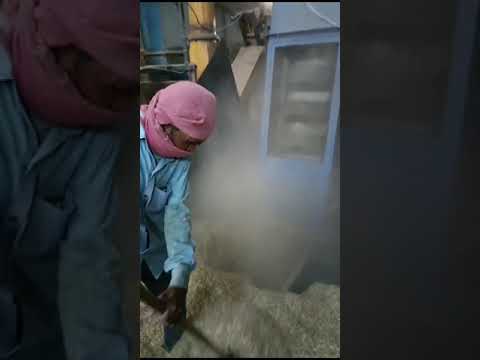
Watch a Neo Conveyors bucket elevator running at a customer plant.
Watch on YouTubeMore installation videos: youtube.com/@neoconveyors
Bucket Elevator Technical Specifications
All systems are made-to-order. Parameter ranges are a guide, every order starts with a fresh capacity calculation using your actual material bulk density and required TPH.
| Elevator type | Centrifugal or continuous discharge |
|---|---|
| Drive type | Belt (rubber) or chain (forged steel) |
| Capacity | Up to 200 TPH (calculated per material) |
| Lifting height | Up to 40 metres (custom designs available) |
| Bucket type | Deep / Shallow / Triangular, as per material |
| Bucket material | MS / SS / Plastic / Rubber-lined |
| Bucket width | 100 mm to 600 mm |
| Casing material | MS / SS304 / SS316 |
| Casing thickness | 3 mm to 6 mm (as per abrasiveness) |
| Speed control | Fixed speed or VFD |
| Dust control | Enclosed casing with sealed joints |
| Power supply | 415 V, 3 Phase, 50 Hz |
Bulk Density
Determines bucket fill factor, belt/chain speed, and motor sizing. Denser materials need wider buckets and controlled speeds to prevent spilling at discharge.
Capacity (TPH)
Determines bucket volume and spacing. Higher TPH needs larger buckets, shorter spacing, or higher belt speed, calculated for your material.
Lifting Height
Determines casing sections, number of belt/chain joints, and motor power. Taller elevators need higher belt tension and heavier drive systems.
Temperature
Abrasive materials require harder bucket liners and thicker casing. Materials above 80°C require chain drive and heat-resistant construction.
Materials We Handle
- Cement & Fly Ash
- Wheat & Grain
- Rice & Rice Husk
- Sugar & Salt
- Fertilizer (Urea, DAP)
- Sand & Silica
- Coal & Pet Coke
- Limestone
- Clinker (Hot/Cold)
- Pharma Powder
- Chemical Powder
- Flour & Spices
- Minerals & Ores
- Soybean Meal
- Biomass Pellets
- Bottom Ash
Choosing the Right Elevator — Key Comparisons
Centrifugal vs Continuous Discharge Bucket Elevator
| Factor | Centrifugal discharge | Continuous discharge |
|---|---|---|
| Operating speed | High speed, max throughput | Low speed, gentle handling |
| Discharge mechanism | Centrifugal throw at head | Gravity tipping, no impact |
| Best material | Free-flowing, grain, cement, fertilizer | Fragile/abrasive/lumpy, clinker, coal |
| Material degradation risk | Risk with fragile materials | Minimal, no centrifugal impact |
| Dust on discharge | Higher, fast discharge | Lower, gentle tipping |
| Capital cost | Lower, simpler design | Higher, more buckets |
| Typical industries | Grain, cement, fertilizer, food | Clinker, coal, mining, minerals |
Bucket Elevator vs Vertical Screw Conveyor
| Factor | Bucket elevator | Vertical screw conveyor |
|---|---|---|
| Vertical lift capacity | Up to 200 TPH, highest capacity | Up to 50 TPH, lower |
| Lifting height | Up to 40 m, any height | Up to 10–15 m practical limit |
| Material fragility | Gentle, continuous type | Screw can degrade fragile granules |
| Power consumption | Lower per TPH at height | Higher, screw friction losses |
| Dust control | Fully enclosed, excellent | Fully enclosed, excellent |
| Best application | High TPH, any height, grain/cement | Low-medium TPH, short lifts, powder |
For lower-volume powder vertical lifting: Vertical Screw Conveyors →
Bucket Elevator — Installation Case Studies
Three representative projects across different materials, industries, and lifting requirements.
Cement Plant — Chain Type Continuous, Hot Clinker
Hot clinker at 120–150°C needed lifting 28 m at 80 TPH. Belt-type elevators were failing from heat degradation within 6–8 months. Heavy-duty chain-type continuous elevator installed with heat-resistant buckets and expansion joints in casing.
- Operating 18+ months, zero belt replacement
- 28 m lift, 80 TPH maintained
- Zero clinker spillage since commissioning
Rice Mill — Belt Type Centrifugal, Paddy & Rice
Paddy and milled rice needed 12 m lift at 50 TPH without grain breakage. Existing inclined screw was causing 3–5% grain breakage. Belt-type centrifugal elevator with plastic buckets installed, gentle scooping at boot, centrifugal discharge at head.
- Grain breakage: 4% down to under 0.5%
- 12 m lift, 50 TPH maintained
- Fully enclosed, pest-proof operation
Fertilizer Plant — Belt Type Centrifugal, Urea Granules
Urea granules needed 18 m lift at 120 TPH for three-shift daily operation. Urea's hygroscopic nature required fully sealed casing. Belt-type centrifugal elevator with deep steel buckets, sealed MS casing, PVC moisture strips, and VFD speed control.
- 18 m lift, 120 TPH, 3-shift sustained
- Zero moisture ingress in 12 months
- VFD adjusts throughput between grades
Industries Using Bucket Elevator Systems
Bucket elevators are the preferred vertical conveying solution wherever large TPH volumes must be elevated with minimal floor space.
Cement Industry
Raw meal, cement powder, clinker, and fly ash elevation between grinding mills, preheaters, silos, and packing lines. Chain type for hot clinker; belt type for cement powder.
Grain & Rice Mills
Wheat, rice, maize, soybean, and pulse elevation in grain silos, flour mills, and rice processing plants. Food-safe, non-contaminating, easy to clean.
Fertilizer Industry
Urea, DAP, MOP, NPK, and granulated fertilizer elevation at blending plants, bagging lines, and bulk storage silos. Sealed casing prevents moisture ingress and caking.
Food Processing
Sugar, flour, spices, milk powder, and food ingredients in SS304/SS316 food-grade bucket elevators with polished interiors and hygienic seals.
Chemical & Pharmaceutical
Chemical powder, pigments, and pharma excipients elevated in enclosed SS bucket elevators. Explosion-proof motor options available for hazardous areas.
Mining & Minerals
Limestone, coal, pet coke, minerals, and ores elevated in heavy-duty chain type continuous discharge elevators engineered for high abrasion resistance.
Biomass & Power Plants
Rice husk, wood pellets, biomass chips, and bottom ash elevation. High-temperature chain type options for hot ash handling.
Fly Ash Handling
Fly ash elevation from ESP hoppers and silos at thermal power plants and cement plants. Chain type available for hot ash above 80°C.
Manufacturer, Not a Trader
Every bucket elevator is designed, calculated, fabricated, and tested in-house at our Ghaziabad plant, then installed by our own engineers at your plant. No dealers, no sub-contractors.
Material-First Engineering Since 2007
We do not sell catalogue elevators. Every system starts with your material's bulk density, abrasiveness, and temperature, then bucket size, spacing, and motor are calculated accordingly.
Full Range — Belt to Chain, Centrifugal to Continuous
All five variants manufactured in-house. You get the correct engineering solution without being pushed toward a type we happen to stock.
Up to 200 TPH — Up to 40 Metres
We engineer for high-capacity industrial requirements, cement plants, grain silos, fertilizer blending, and mining where other manufacturers' limits are a constraint.
PAN India — Own Engineers Install
Installation, commissioning, and handover by Neo Conveyors' own engineering team. No third-party erection contractors, we remain accountable for performance from first start.
Enclosed Dust-Free Casing — Standard
Sealed casing with proper joints on all sections, not an optional extra. Dust containment is standard, meeting plant safety and pollution control board requirements.
AMC & Long-Term Spare Parts Support
Belt replacement, bucket replacement, chain servicing, and Annual Maintenance Contracts for the full operational life of your elevator.
Bucket Elevator — Industrial Buyer FAQs
What is a bucket elevator and how does it work?
A bucket elevator is a vertical material handling system that uses a series of buckets attached to a continuous belt or chain to lift bulk materials from a lower feed point to a higher discharge point. It delivers the highest volumetric capacity per unit of floor space of any vertical conveyor type. Used in cement, grain, fertilizer, food, chemical, and mining industries.
What is the difference between centrifugal and continuous discharge bucket elevators?
Centrifugal discharge elevators run at high speed, centrifugal force at the head pulley throws material into the discharge chute. Best for free-flowing materials like grain, fertilizer, and cement. Continuous discharge elevators run slowly, closely spaced buckets tip material gently without impact. Best for fragile, abrasive, or lumpy materials like clinker, coal, and minerals.
What is the difference between a belt type and chain type bucket elevator?
A belt type bucket elevator uses a reinforced rubber belt, suitable for standard materials at ambient temperature, grain, fertilizer, cement, up to ~80°C. A chain type uses forged steel chain, required for heavy, abrasive, or high-temperature materials like clinker, limestone, and coal above 80°C. Chain type costs more but has significantly longer service life in harsh conditions.
What materials can bucket elevators handle?
Bucket elevators handle cement, fly ash, grain (wheat, rice, maize), sugar, salt, fertilizer (urea, DAP, potash), sand, coal, pet coke, limestone, clinker, minerals, chemical powder, biomass pellets, pharmaceutical excipients, and similar dry bulk materials. For sticky, wet, or fibrous materials, a screw conveyor or other type is more appropriate.
What is the maximum lifting height and capacity?
Neo Conveyors manufactures bucket elevators up to 40 metres standard lifting height, with custom designs available for greater heights based on site requirements. Capacity goes up to 200 TPH depending on bucket size, spacing, belt/chain speed, and material bulk density.
Can bucket elevators handle food-grade and pharmaceutical materials?
Yes. Neo Conveyors manufactures food-grade bucket elevators with SS304 or SS316 casing, food-grade bucket material, polished interiors, hygienic seals, and cleanout doors for sanitisation. Used for flour, sugar, spices, milk powder, and pharmaceutical excipients. GMP-compliant construction and documentation available on request.
What is the price of a bucket elevator in India?
Price depends on elevator type (centrifugal/continuous), drive type (belt/chain), lifting height, capacity (TPH), bucket material (MS/SS/plastic), and casing construction. Contact Neo Conveyors at +91-9654112235 for a detailed, no-obligation quotation.
What is the delivery lead time?
Standard delivery is 4 to 6 weeks from order confirmation depending on customisation, lifting height, and drive type. For taller elevators requiring more casing sections, 6–8 weeks may apply. All lead times are committed in writing before order placement.
Do you install bucket elevators across India?
Yes, PAN India installation and commissioning by Neo Conveyors' own engineers across all Indian states. We serve Delhi NCR, Ghaziabad, Noida, Gurugram, Ahmedabad, Pune, Hyderabad, Chennai, Mumbai, Kolkata, Ludhiana, Rajasthan, Gujarat, and all major industrial cities.
Bucket Elevator Manufacturer Across India
Manufactured at our Ghaziabad facility, installed by our own engineers across all Indian states and internationally.
Uttar Pradesh & Delhi NCR
Ghaziabad (HQ), Noida, Greater Noida, Lucknow, Kanpur, Agra, Varanasi, Meerut, Moradabad, Mathura, Aligarh, Bareilly, Gorakhpur, Sahibabad, New Delhi, Gurugram, Faridabad, Manesar, Bhiwadi, Bawal, Sonipat, Kundli, Rohtak
Haryana & Punjab
Panipat, Ambala, Hisar, Karnal, Yamunanagar, Rewari, Palwal, Kurukshetra, Ludhiana, Amritsar, Jalandhar, Patiala, Bathinda, Mohali, Phagwara
Rajasthan & Gujarat
Jaipur, Jodhpur, Udaipur, Kota, Ajmer, Bikaner, Alwar, Sikar, Chittorgarh, Ahmedabad, Surat, Vadodara, Rajkot, Gandhinagar, Bharuch, Anand, Vapi, Mundra, Morbi
Maharashtra & Madhya Pradesh
Mumbai, Pune, Nagpur, Nashik, Aurangabad, Thane, Navi Mumbai, Solapur, Kolhapur, Pimpri-Chinchwad, Chakan, Indore, Bhopal, Jabalpur, Gwalior, Ratlam, Pithampur, Dewas, Ujjain
Telangana, AP & Tamil Nadu
Hyderabad, Secunderabad, Visakhapatnam, Vijayawada, Warangal, Nellore, Tirupati, Kakinada, Guntur, Chennai, Coimbatore, Madurai, Salem, Tiruchirappalli, Tirunelveli, Hosur, Vellore, Erode
Karnataka, Kerala & West Bengal
Bangalore, Mysuru, Hubli, Mangaluru, Belagavi, Tumkur, Dharwad, Kochi, Thiruvananthapuram, Kozhikode, Thrissur, Kollam, Kannur, Kolkata, Howrah, Durgapur, Asansol, Siliguri, Haldia, Kalyani
Odisha, Jharkhand, Bihar & Chhattisgarh
Bhubaneswar, Cuttack, Rourkela, Sambalpur, Paradeep, Jharsuguda, Ranchi, Jamshedpur, Dhanbad, Bokaro, Patna, Muzaffarpur, Gaya, Raipur, Bhilai, Durg, Bilaspur, Korba
Uttarakhand, HP, North East & International
Dehradun, Haridwar, Roorkee, Rudrapur, Kashipur, Shimla, Baddi, Solan, Guwahati, Dibrugarh, Silchar, Imphal, Shillong, Agartala; UAE, Africa, Southeast Asia, Bangladesh, Nepal, Sri Lanka
Get Bucket Elevator Capacity Calculation — Free
Share your material name, bulk density, required TPH, and lifting height. Our engineers calculate the correct bucket size, drive type, and motor, and send a detailed quotation at no charge.
Skip to conten