Telescopic Belt Conveyor for Loading & Unloading: Complete Guide
In today's fast-moving manufacturing, logistics, and warehousing sectors, every minute spent loading or unloading a truck affects operational efficiency. Delays at loading docks increase labour costs, extend vehicle turnaround time, and slow the entire supply chain.
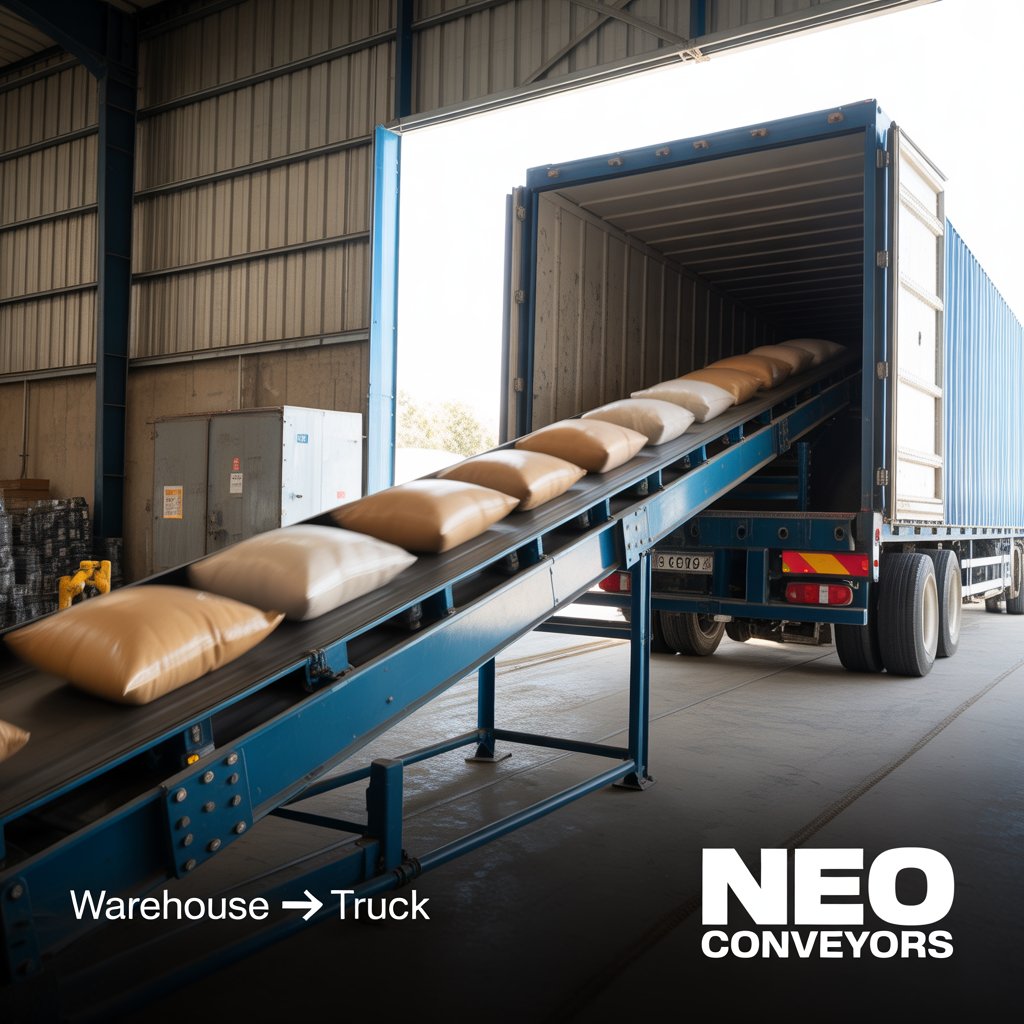
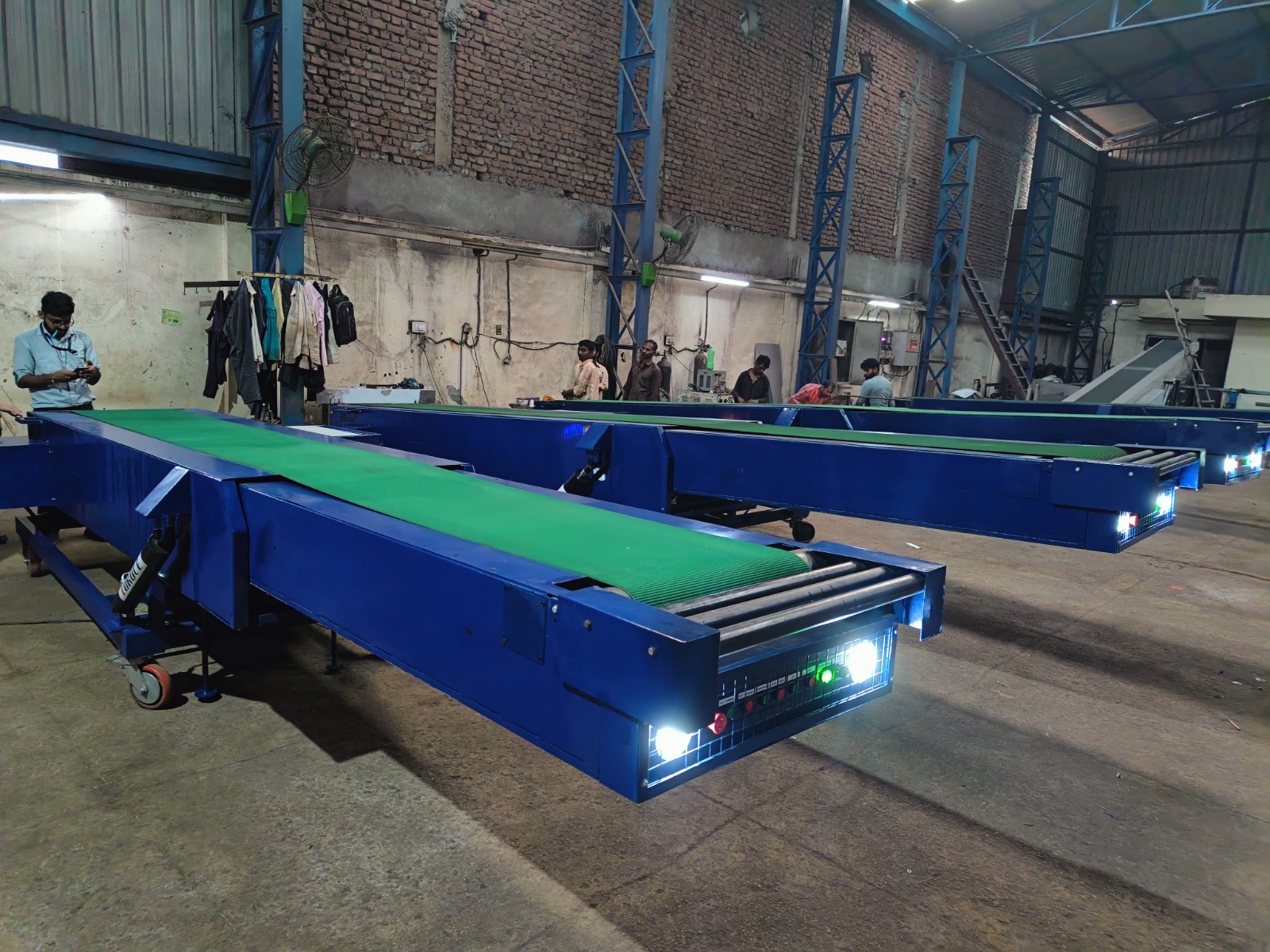
A telescopic belt conveyor is designed to solve these challenges. Its extendable structure reaches directly into trucks, trailers, or shipping containers, allowing goods to move quickly and safely with minimal manual handling. Instead of workers carrying cartons over long distances, products travel smoothly on the conveyor belt, reducing fatigue and improving productivity. (Neo Conveyors)
Whether you operate a warehouse, distribution centre, manufacturing plant, or e-commerce fulfilment hub, investing in a telescopic conveyor can significantly improve loading and unloading operations.
Explore our Telescopic Belt Conveyor solutions:
https://www.neoconveyors.com/products/telescopic-belt-conveyor-manufacturers-India
What Is a Telescopic Belt Conveyor?
A telescopic belt conveyor is an extendable conveyor system consisting of multiple nested conveyor sections that slide in and out like a telescope. It extends directly into trucks or containers during loading and retracts when the job is complete, saving valuable dock space. (Neo Conveyors)
Unlike conventional fixed conveyors, telescopic conveyors provide greater flexibility because they can accommodate different vehicle lengths without repositioning equipment.
They are commonly used for:
Truck loading
Truck unloading
Container loading
Container unloading
Warehouse dispatch
Parcel handling
Distribution centres
Manufacturing plants
How Does a Telescopic Belt Conveyor Work?
The conveyor is positioned at the loading dock and extended into the truck or container. Products are placed on the infeed section, and the moving belt transports them directly to the desired location inside the vehicle.
Many systems include:
Variable-speed drives
Hydraulic or electric height adjustment
Extendable boom
Heavy-duty conveyor belt
Operator controls
Emergency stop systems
Safety sensors
After loading or unloading is complete, the conveyor retracts, allowing the next vehicle to be positioned quickly. (Neo Conveyors)
Why Businesses Are Replacing Manual Loading
Manual loading requires workers to carry cartons, bags, or parcels repeatedly between the dock and the truck. This process is slow, physically demanding, and prone to product damage.
A telescopic conveyor transforms the workflow by:
Reducing walking distance
Increasing loading speed
Minimising product handling
Improving worker safety
Lowering labour dependency
Supporting continuous material flow
For facilities handling hundreds or thousands of packages daily, these improvements translate into measurable productivity gains.
Key Benefits of Telescopic Belt Conveyors
1. Faster Loading and Unloading
An extendable conveyor significantly reduces the time required to load or unload trucks and containers, helping businesses process more vehicles each day. Neo Conveyors notes labour reductions of approximately 60–80% and substantially faster truck handling compared with manual methods. (Neo Conveyors)
2. Lower Labour Costs
Instead of multiple workers carrying products manually, fewer operators can manage the entire loading process efficiently.
Benefits include:
Reduced manpower
Lower operating expenses
Improved workforce utilisation
3. Improved Worker Safety
Repeated lifting, carrying, and bending increase the risk of workplace injuries.
A telescopic conveyor helps reduce:
Heavy lifting
Repetitive movement
Slips and falls
Worker fatigue
This creates a safer and more ergonomic loading environment.
4. Reduced Product Damage
Manual handling often results in dropped cartons, damaged packaging, and broken products.
Continuous belt movement ensures gentle handling, helping maintain product quality throughout dispatch and receiving operations.
5. Higher Warehouse Productivity
Faster truck turnaround means:
More shipments per shift
Better dock utilisation
Reduced waiting time
Improved customer service
Increased operational efficiency
Industries That Use Telescopic Belt Conveyors
These systems are widely adopted across industries where loading speed and material handling efficiency are critical.
Warehousing & Distribution
Move cartons, totes, and packaged goods efficiently between storage areas and transport vehicles.
E-commerce Fulfilment Centres
Support high-volume parcel movement while meeting tight delivery schedules.
FMCG Industry
Handle packaged food, beverages, and consumer products quickly and safely.
Food Processing
Transfer bags, cartons, and packaged food products while maintaining smooth workflow.
Pharmaceutical Industry
Move cartons and packaged medicines with controlled, reliable handling.
Logistics & 3PL
Improve truck turnaround time and maximise dock productivity.
Manufacturing
Streamline the movement of finished goods from production to dispatch.
Products Commonly Handled
A telescopic belt conveyor can transport a wide variety of products, including:
Cartons
Corrugated boxes
Parcels
Bags
Sacks
Plastic crates
FMCG products
Pharmaceutical cartons
Consumer goods
E-commerce packages
Lightweight industrial components
Types of Telescopic Belt Conveyors
Depending on operational requirements, telescopic conveyors are available in different configurations.
Fixed Telescopic Conveyor
Installed permanently at loading docks with dedicated dispatch operations.
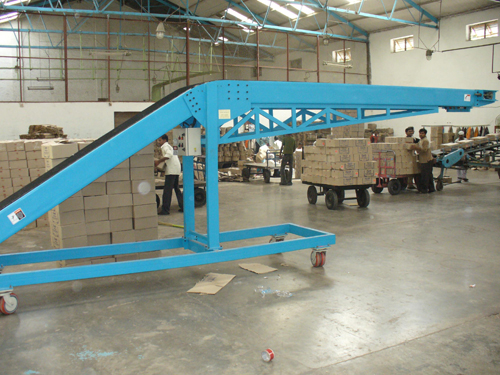
Mobile Telescopic Conveyor
Mounted on heavy-duty wheels for movement between multiple loading bays.
Hydraulic Height Adjustable Conveyor
Allows operators to match different truck floor heights for smoother loading.
Container Loading Conveyor
Designed specifically for efficient loading and unloading of 20-foot and 40-foot shipping containers.
How to Choose the Right Telescopic Belt Conveyor
Before purchasing a telescopic conveyor, evaluate:
Type of products being handled
Weight of individual items
Conveyor belt width
Required extension length
Truck and container sizes
Loading dock layout
Daily throughput
Height adjustment requirements
Safety features
Future automation plans
Selecting a conveyor based on these factors ensures long-term efficiency and reliability.
Features to Look For
A high-quality telescopic conveyor should include:
Heavy-duty structural frame
Variable frequency drive (VFD)
Adjustable belt speed
Smooth telescopic extension
Emergency stop buttons
Anti-collision protection
Low-maintenance design
Energy-efficient drive system
Easy operator controls
Durable industrial-grade belt
Maintenance Tips
Routine maintenance extends equipment life and maintains consistent performance.
Recommended inspections include:
Belt tracking
Belt tension
Drive motor condition
Roller inspection
Lubrication of moving components
Hydraulic system checks (if applicable)
Electrical connections
Emergency stop functionality
Safety sensor operation
Preventive maintenance helps minimise unexpected downtime.
Related Conveyor Solutions
Depending on your application, you may also be interested in:
Truck Loading & Unloading Conveyor
https://www.neoconveyors.com/products/loading-unloading-conveyors
Belt Conveyor Systems
https://www.neoconveyors.com/products/belt-conveyors
Inclined Belt Conveyor
https://www.neoconveyors.com/products/inclined-belt-conveyor-manufacturers-india
Related guides:
Belt Conveyors: Major Uses and Applications
How to Choose the Right Conveyor Belt for Your Project
What Are the Most Common Conveyor Belt Problems?
Why Choose Neo Conveyors?
Since 2007, Neo Conveyors has been manufacturing customised conveyor systems for warehouses, logistics companies, manufacturing facilities, and distribution centres across India. Our telescopic belt conveyors are engineered for durability, operational efficiency, and seamless integration into modern loading docks. (Neo Conveyors)
We offer:
Custom-engineered solutions
Heavy-duty construction
PAN India installation support
Automation-ready designs
Reliable after-sales service
Solutions tailored to your facility layout
Frequently Asked Questions
What is a telescopic belt conveyor used for?
It is used to load and unload cartons, bags, parcels, and packaged goods directly into trucks, trailers, and containers while reducing manual handling.
What are the advantages of a telescopic conveyor?
It improves loading speed, reduces labour costs, enhances worker safety, minimises product damage, and increases warehouse productivity.
Which industries benefit most?
Warehousing, logistics, e-commerce, FMCG, food processing, pharmaceuticals, manufacturing, and third-party logistics providers commonly use telescopic belt conveyors.
Can a telescopic conveyor be customised?
Yes. Length, belt width, extension range, height adjustment, controls, and safety features can all be customised to suit operational requirements.
Is a telescopic belt conveyor suitable for 20-foot and 40-foot containers?
Yes. Modern telescopic conveyors are available in different extension lengths to efficiently load and unload both 20-foot and 40-foot containers. (Neo Conveyors)
Conclusion
A telescopic belt conveyor is one of the most practical investments for businesses seeking to improve loading dock efficiency. By reducing manual handling, accelerating truck turnaround, and protecting products during transport, it helps lower operating costs while supporting higher throughput.
Whether you manage a manufacturing plant, warehouse, logistics hub, or e-commerce fulfilment centre, choosing the right telescopic conveyor can transform your loading and unloading process.
At Neo Conveyors, we design customised telescopic belt conveyors that match your material, dock layout, and throughput requirements, delivering reliable performance and long-term value.
Recent Posts