Magnetic Conveyor Manufacturer in India
Magnetic Conveyor & Magnetic Belt Conveyor Manufacturer
Belt-type and roller-type magnetic conveyors, suspended overband separators, and magnetic head pulleys, moving ferrous parts or removing tramp iron from your material stream before it reaches a crusher, mill, or bagging line. Manual on/off or automatic self-cleaning, fabricated in Ghaziabad, installed PAN India.
- Belt-type magnetic conveyor
- Roller-type magnetic conveyor
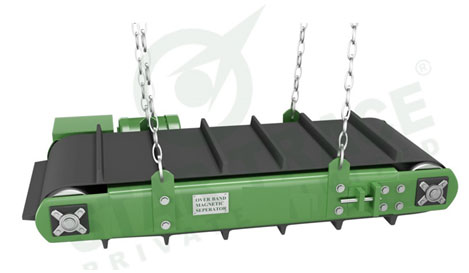
- Overband separator
FIG. 01 — MAGNETIC BELT CONVEYOR (LEFT) vs OVERBAND SEPARATOR (RIGHT)
What Is a Magnetic Conveyor?
A magnetic conveyor uses magnetic force to move, hold, or separate ferrous material as it travels along a line. There are two distinct mechanisms, and knowing which one your application needs is the first decision:
Separately, for bulk material streams (rather than discrete parts), Neo Conveyors builds overband magnetic separators and magnetic head pulleys, which pull ferrous tramp iron, nuts, bolts, wire, and stray steel, out of a bulk material stream before it reaches a crusher or mill. A single piece of tramp iron reaching a crusher can cause hours of downtime and expensive damage.
Free selection guidance: tell us whether you're conveying/holding ferrous parts, or separating tramp iron from a bulk stream, plus your belt width and material depth. We'll recommend the correct mechanism and configuration. Send details →
Types We Manufacture
Belt-Type Magnetic Conveyor
Magnets embedded in the belt hold ferrous parts, chips, or stampings securely during transport, including on inclines where gravity alone would cause slippage.
Roller-Type Magnetic Conveyor
Magnets built into the rollers rather than the belt, suited to continuous ferrous separation duty at a fixed point on the line.
Suspended Overband Magnetic Separator
Mounted above an existing conveyor belt, lifts ferrous material off the top of the material stream. Manual on/off or automatic self-cleaning.
Magnetic Head Pulley
Replaces the conveyor's own head pulley, holding ferrous fines to the belt through the discharge curve for a thinner material bed.
Technical Specifications
| Mechanism | Belt-type (magnets on belt) or roller-type (magnets on rollers) |
|---|---|
| Separator type | Suspended overband, magnetic pulley, plate, or drum (for bulk streams) |
| Magnet type | Permanent ferrite (standard) or rare-earth neodymium (high-strength) |
| Belt width covered | 300 mm to 1,500 mm |
| Cleaning operation | Manual on/off or automatic self-cleaning belt |
| Construction | MS frame, food/pharma SS options available |
| Power supply | 415 V, 3 Phase, 50 Hz (automatic/driven type) |
Applications
Machine Tool & Metalworking
Belt-type conveying of metal chips, stampings, and small parts.
Recycling & Aggregates
Overband separators protecting crushers from tramp metal.
Mining & Minerals
Ore stream protection ahead of crushers and screens.
Biomass & Wood
Removing wire and nails from wood chips before chippers.
Grain & Food
Removing stray metal from grain and food ingredient streams.
Plastics Recycling
Ferrous removal ahead of granulators and shredders.
Why Choose Neo Conveyors
Both Mechanisms In-House
Belt-type and roller-type magnetic conveyors, plus overband separators, all manufactured at our Ghaziabad facility.
Retrofit or New Line
Fitted above an existing conveyor or supplied as part of a new belt conveyor system.
PAN India Installation
Our own engineers handle site survey, mounting, and commissioning.
18+ Years, 1,000+ Installations
Manufacturing conveyor and material handling systems since 2007.
FAQs
What is a magnetic conveyor?
A magnetic conveyor uses magnetic force, either from magnets built into the belt or into the rollers, to move or hold ferrous parts and material as they travel along the line, or to separate tramp iron from a bulk material stream, protecting downstream crushers, mills, and processing equipment.
What is the difference between belt-type and roller-type magnetic conveyors?
In a belt-type magnetic conveyor, magnets are built into the belt itself, holding ferrous parts to the surface as they travel, useful for moving metal chips, stampings, or small parts without slipping. In a roller-type magnetic conveyor, magnets are built into the rollers, which suits continuous separation duty at the head end of a line.
What is the difference between a suspended overband and a magnetic pulley?
A suspended overband magnetic separator hangs above the conveyor belt and lifts ferrous material off the top of the material stream, suited to larger tramp metal in a deep burden. A magnetic head pulley replaces the conveyor's own head pulley and holds ferrous fines to the belt through the discharge curve, suited to fine ferrous contamination in a thinner material bed.
What is the difference between manual and automatic self-cleaning separators?
A manual on/off separator requires the belt to be stopped periodically so captured tramp metal can be removed by hand. An automatic self-cleaning separator has its own moving belt or scraper that continuously discharges captured metal to one side, without stopping the main conveyor.
What materials and parts benefit from magnetic conveying or separation?
Metal chips, stampings, and small parts in machine tool and metalworking operations benefit from belt-type magnetic conveying, while recycled aggregates, quarried stone, coal, wood chips, grain, and mineral ore benefit from overband or pulley-type magnetic separation to remove tramp iron contamination.
Can a magnetic separator be retrofitted onto an existing conveyor?
Yes, suspended overband separators are commonly retrofitted above an existing belt conveyor without modifying the conveyor itself, using a support frame spanning the belt.
What is the price of a magnetic conveyor in India?
Price depends on mechanism (belt or roller type), magnet type (ferrite or rare-earth), separator type, belt width covered, and whether manual or automatic self-cleaning operation is specified. Contact us with your application details for a firm quotation.
Do you install magnetic conveyors and separators across India?
Yes, PAN India installation by our own engineers, alongside our belt conveyor and material handling installations.
Protect Your Downstream Equipment
Share your application, belt width, and material or parts details. Our engineers will recommend the right mechanism and configuration.