conveyor pulley Manufacturer in India
Conveyor Pulley Manufacturer in India
Neo Conveyors manufactures drive, tail, bend, snub, take-up, wing, and magnetic conveyor pulleys, standard-duty to mine-duty, engineered to CEMA / DIN / IS 8598 standards for cement, mining, steel, ports, and bulk material handling. Fabricated in Ghaziabad with PAN India supply and installation.
- Drive Pulley
- Tail Pulley
- Rubber Lagged
- Mine-Duty
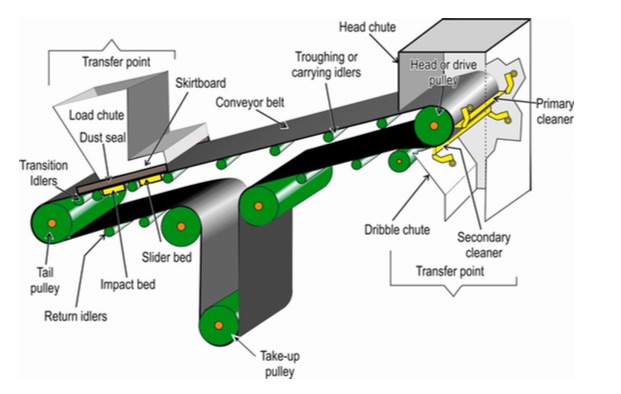
FIG. 01 — DRIVE PULLEY, SHELL / LAGGING / SHAFT / BEARING HUB / END DISC
What Is a Conveyor Pulley?
A conveyor pulley is a cylindrical, rotating component that drives, supports, or redirects the belt in a belt conveyor system. Every belt conveyor uses at least two pulleys, a head (drive) pulley and a tail pulley, with additional pulleys such as snub, bend, and take-up pulleys added depending on the conveyor's design, length, and load requirements. Pulleys are central to how a conveyor functions: they generate the traction that moves the belt and control how tightly it wraps and travels along the frame.
Every Neo Conveyors pulley is built around a welded steel shell, a precision-machined shaft, and an end-disc and hub configuration engineered to the specific belt tension, speed, and load of your line. Where grip matters, shells are finished with rubber, ceramic, or diamond-groove lagging to resist slippage and reduce belt wear. Neo Conveyors manufactures standard-duty, heavy-duty, and mine-duty pulleys engineered for continuous industrial use, serving FMCG, cement, mining, power, ports, food processing, e-commerce, and logistics operations.
Why Pulley Selection Matters
Get the pulley selection wrong and you inherit belt slip, premature bearing failure, and unplanned downtime. Get it right, and it becomes one of the lowest-maintenance components on the conveyor line. Diameter, shaft grade, lagging type, and bearing arrangement all interact, a pulley undersized for belt tension will fatigue at the shaft; one with the wrong lagging for the material will slip under load. Our engineers size every pulley against your actual belt specification rather than a generic catalogue entry.
Types of Conveyor Pulleys We Manufacture
Eight pulley configurations, each engineered for a specific role on the belt line, from primary drive to belt tensioning and tramp iron removal.
Drive (Head) Pulley
Located at the discharge end, usually connected to the motor and typically larger in diameter than other pulleys. Often lagged with rubber or ceramic to improve grip and reduce belt slippage.
Tail Pulley
Positioned at the loading end, supports the return side of the belt and helps maintain proper tension. Can have a flat face or a slatted wing profile that lets material fall through and prevents buildup.
Bend Pulley
Redirects belt travel with minimal wear, placed where the conveyor layout requires an angle change or a return-run adjustment.
Snub Pulley
Installed near the head pulley, increases the belt's wrap angle around the drive pulley, improving traction and reducing slippage risk under heavy loads.
Take-Up Pulley
Mounted on a movable frame to maintain correct belt tension as the belt stretches over time, preventing slack and slip as the belt ages.
Wing Pulley
Open, finned construction sheds sticky material build-up, ideal for wet aggregate, minerals, and materials prone to caking on a solid-face pulley.
Magnetic Pulley
Embedded magnets extract tramp iron from the material stream, protecting crushers, screens, and downstream equipment from metal damage.
Custom Conveyor Drums
Shell-and-shaft drums fabricated to your drawing for non-standard installations, retrofits, and older conveyor lines needing an exact match.
How Conveyor Pulleys Work
Four stages, one continuous loop, the principle behind every belt conveyor line.
Torque Input
The motor and gearbox deliver rotational torque to the drive pulley shaft.
Friction Grip
Lagging on the pulley shell grips the belt's inner surface, converting rotation into linear motion.
Belt Routing
Bend and snub pulleys redirect the belt path and increase the wrap angle for traction.
Tension Hold
The take-up pulley maintains constant belt tension as the belt elongates with use.
Construction Materials & Manufacturing Process
Every pulley moves through the same five-stage process at our Ghaziabad workshop before it ships, from shell fabrication to final balancing and testing.
Shell Fabrication
Mild steel or stainless steel plate is rolled and welded into the pulley shell, sized to your face width and diameter specification.
Shaft Machining
EN8, EN19, or EN24 grade shafts are turned and machined to the tolerances required for your bearing and coupling arrangement.
End Disc & Hub Assembly
End discs and locking hub assemblies are welded and fitted, transferring shaft torque into the shell without slip at the joint.
Lagging Application
Rubber, ceramic, or diamond-groove lagging is bonded or vulcanised onto the shell face, selected for your material's slip and abrasion profile.
Balancing & Testing
Static or dynamic balancing is performed depending on pulley speed and diameter, followed by dimensional and weld inspection before despatch.
Painting & Dispatch
Primer and topcoat are applied for corrosion protection, and the pulley is packed for PAN India dispatch or direct site delivery.
Pulley Design Standards & Engineering Specifications
Conveyor pulleys are structural components under cyclic load, design against a recognised standard rather than a rule of thumb.
CEMA / DIN / IS 8598 Standards
Neo Conveyors engineers pulleys against CEMA (Conveyor Equipment Manufacturers Association), DIN (German industrial standard), and IS 8598 (Indian Standard for conveyor pulleys), covering shell thickness, shaft sizing, and locking device requirements for a given load class. Working to a recognised standard ensures the pulley integrates correctly with third-party idlers, belting, and drive components already on your line.
Shaft Specifications
Shaft diameter is calculated from drive torque, belt tension, and bearing span, typically 50 mm to 350 mm in EN8, EN19, or EN24 grade steel depending on duty class. Higher-tension and mine-duty applications use EN24 for its higher fatigue strength under cyclic bending loads.
Bearing Selection
Bearing type and brand (SKF, NTN, NBC, or sealed units) are selected against radial load, speed, and environment. Pillow block housings suit standard installations; flange-mounted and sealed units suit wet, dusty, or corrosive environments where contamination ingress would shorten bearing life.
Pulley Balancing — Static vs Dynamic
Unbalanced pulleys cause vibration, accelerated bearing wear, and belt tracking problems, especially at higher belt speeds.
| Balancing type | When used | What it corrects |
|---|---|---|
| Static balancing | Standard-duty pulleys, lower belt speeds | Single-plane weight distribution around the shaft axis |
| Dynamic balancing | Heavy-duty and mine-duty pulleys, higher speeds | Two-plane balance, eliminating vibration at operating RPM |
Technical Specifications
| Pulley diameter | 200 mm to 2,000 mm, sized to belt speed and wrap angle |
|---|---|
| Face width | 400 mm to 3,000 mm, matched to belt width |
| Shaft diameter | 50 mm to 350 mm, calculated against drive torque |
| Lagging options | Rubber / Ceramic / Diamond Groove / Plain |
| Bearing assembly | SKF / NTN / NBC / Sealed units, pillow block or flange mounted |
| Shell thickness | 6 mm to 25 mm, per CEMA / DIN load class |
| Balancing | Static or dynamic |
| Standard | CEMA / DIN / IS 8598 |
Lagging Options
General-purpose grip for standard-duty and heavy-duty applications, cost-effective and easy to replace.
High-abrasion resistance for cement clinker, ore, and mineral handling where rubber wears too fast.
Sheds water and fines from wet material, restoring grip on lines handling damp coal, sand, or aggregate.
Used on bend, snub, and idler-role pulleys where high grip isn't required.
Bearings
Industry-standard for demanding continuous-duty applications.
Reliable mid-range option for standard and heavy-duty pulleys.
Cost-effective domestic option for standard-duty installations.
Contamination protection for wet, dusty, or corrosive environments.
Shell Construction
Standard construction for general industrial and bulk material handling.
For food-grade, pharma, and corrosive-environment applications.
Thicker shell and reinforced end discs for mine-duty and high-tonnage lines.
How to Select the Right Conveyor Pulley
Eight factors that determine the correct pulley for your line. Share these details with our engineers for a precise recommendation.
Belt Width
Sets the minimum face width of the pulley.
Belt Tension
Drives shaft diameter and bearing selection.
Pulley Diameter
Affects belt life and wrap angle on the drive.
Conveyor Speed
Higher speeds demand tighter balancing tolerances.
Material Characteristics
Abrasive or sticky material changes lagging choice.
Drive Power
Determines required friction grip at the shell.
Lagging Type
Rubber, ceramic, or diamond groove per slip risk.
Operating Environment
Wet, corrosive, or high-temperature duty changes material grade.
Pulley Comparisons: Drive vs Tail, Lagged vs Plain
Drive Pulley vs Tail Pulley
| Feature | Drive pulley | Tail pulley |
|---|---|---|
| Belt drive | Yes | No |
| Power transmission | Yes | No |
| Belt direction change | Limited | Yes |
| Torque | High | Low |
| Motor connection | Yes | No |
Lagged Pulley vs Plain Pulley
| Feature | Lagged pulley | Plain pulley |
|---|---|---|
| Belt grip | High | Low |
| Slip resistance | Yes | No |
| Best use | Drive pulleys | Idler / bend pulleys |
| Maintenance interval | Longer | Shorter |
Applications of Conveyor Pulleys
Deployed across bulk material handling industries where conveyor uptime is non-negotiable.
Mining Industry
Ore, coal, and mineral handling on high-tonnage, continuous-duty lines.
Cement Plants
Clinker, raw meal, and cement powder transfer between grinding and packing.
Power Plants
Coal and fly ash handling on thermal power plant conveyor lines.
Ports & Terminals
Bulk cargo handling requiring heavy-duty, corrosion-resistant pulleys.
Steel Plants
Sinter, iron ore, and raw material handling at high sustained tonnage.
Aggregate Plants
Crushed stone and sand handling, often needing self-cleaning wing pulleys.
Food Processing
Stainless steel pulleys for hygienic, corrosion-resistant belt lines.
Warehousing
Standard-duty pulleys for carton, parcel, and packaged goods conveyors.
Conveyor Pulley Maintenance & Inspection
Most pulley failures are preventable with a routine inspection schedule. Here's what to check and how often.
Maintenance Tips
- Grease bearings on the manufacturer's recommended interval, not on a fixed calendar date regardless of run hours.
- Check belt tracking weekly, a pulley running out of alignment will walk the belt to one side.
- Inspect lagging for wear, tears, or bare patches at every scheduled shutdown.
- Monitor bearing temperature; a sudden rise usually signals lubrication failure or misalignment.
- Keep the pulley face free of material build-up, especially on wing and tail pulleys handling wet material.
Inspection Checklist
- Visual check of lagging condition, monthly.
- Bearing temperature and noise check, monthly.
- Shaft and coupling alignment check, quarterly.
- Bearing vibration analysis, twice yearly on continuous-duty lines.
- Full shell and weld inspection during major shutdowns.
Common Conveyor Pulley Problems & Fixes
Four issues account for most unplanned pulley downtime.
Belt Slip at the Drive Pulley
Usually caused by worn or incorrect lagging for the material, or insufficient wrap angle. Adding a snub pulley or re-lagging often resolves it.
Premature Bearing Failure
Most often caused by misalignment, inadequate lubrication, or contamination ingress. Sealed bearing units resolve recurring failures in wet or dusty environments.
Lagging Wear or Tearing
Abrasive material wears standard rubber lagging faster than expected. Switching to ceramic or diamond-groove lagging usually resolves recurring wear.
Pulley Misalignment
Causes belt mistracking and uneven lagging wear. Check frame mounting and shaft alignment at scheduled shutdowns to catch this early.
Recent Conveyor Pulley Installations
A sample of recent supply and installation projects across material handling sectors.
Cement Plant Conveyor Pulley
High-abrasion clinker handling required ceramic-lagged drive pulleys to cut belt slip and lagging wear, extending service intervals on a high-utilisation line.
Coal Handling Plant Pulley
Wet coal caused material carry-back and slip on the existing pulleys; diamond-groove lagging restored consistent traction across both shifts.
Steel Plant Conveyor Pulley
High-tonnage sinter handling demanded a heavy fabricated shell and dynamically balanced assembly to hold tolerances at sustained belt speed.
Aggregate Plant Conveyor Pulley
Sticky wet aggregate was clogging standard tail pulleys; a self-cleaning wing pulley eliminated material build-up and reduced manual cleaning downtime.
Conveyor Pulley Manufacturing & Installation
See Neo Conveyors pulleys being fabricated, balanced, and installed on customer lines.

Watch pulley fabrication, lagging, and installation at a customer site.
Watch on YouTubeWhy Choose Neo Conveyors?
High Torque Transmission
Lagging and shell design optimised for maximum grip with minimal slip.
Reduced Belt Slippage
Precision-matched friction surfaces extend belt service life.
Long Service Life
Heavy fabricated shells and sealed bearings built for continuous duty.
Heavy Duty Construction
Engineered to CEMA / DIN / IS 8598 load classifications.
Low Maintenance
Sealed bearing units and dynamic balancing reduce unplanned downtime.
PAN India Service
Supply, installation, and after-sales support across India.
Conveyor Pulley FAQs
What is a conveyor pulley?
A conveyor pulley is a cylindrical component mounted on a shaft that drives, redirects, or tensions a conveyor belt as it moves bulk material along the line. Every belt conveyor uses at least a head pulley and a tail pulley, with additional pulleys added depending on layout and load.
What is the difference between a head pulley and a tail pulley?
The head pulley drives the conveyor belt and is located at the discharge end, usually connected to the motor. The tail pulley sits at the loading end and supports belt tension and return, but does not power the belt.
What does a snub pulley do?
A snub pulley increases the belt's wrap angle around the head pulley, improving grip and reducing slippage, especially important for conveyors carrying heavy or high-tonnage loads.
Why are drive pulleys lagged with rubber or ceramic?
Rubber or ceramic lagging increases friction between the pulley shell and the belt, improving traction and reducing slippage. This is critical because the drive pulley transmits all the motor's torque into belt motion.
When is a bend pulley needed?
A bend pulley is used when a conveyor layout requires the belt to change direction, such as routing the return run around an obstacle, without causing excess wear on the belt.
Are conveyor pulleys customisable?
Yes, Neo Conveyors manufactures pulleys in standard-duty, heavy-duty, and mine-duty configurations, with diameter, face width, shaft grade, lagging type, and bearing arrangement engineered to your belt tension, speed, and application.
Do you supply conveyor pulleys across India?
Yes, Neo Conveyors manufactures in Ghaziabad and supplies and installs conveyor pulleys PAN India, including mining, cement, power, and port sites.
How do I select the correct pulley diameter?
Pulley diameter is selected based on belt tension rating, belt type (fabric or steel cord), wrap angle, and required belt life. Larger diameters reduce belt bending stress and extend service life on high-tension lines. Our engineers calculate this from your belt specification sheet.
Which pulley is suitable for mining applications?
Mine-duty pulleys use thicker shells, larger shaft diameters, and ceramic or diamond-groove lagging to withstand abrasive ore, coal, and aggregate handling under continuous high-tonnage operation.
How often should conveyor pulleys be inspected?
Routine visual inspection is recommended monthly, checking lagging wear, bearing temperature, and shaft alignment, with a full inspection including bearing vibration analysis at least twice a year for continuous-duty lines.
Which industries use conveyor pulleys?
Conveyor pulleys are used in cement plants, mining, power plants, ports and terminals, steel plants, aggregate and crushing plants, food processing, and warehousing wherever a belt conveyor moves bulk material or packaged goods.
What is the price of a conveyor pulley in India?
Price depends on diameter, face width, shell thickness, shaft grade, lagging type, and bearing selection. Contact Neo Conveyors with your belt width and tension details for a detailed, no-obligation quotation.
What is the difference between a conveyor pulley and a conveyor roller?
A conveyor pulley is typically larger and either drives the belt or controls its tension and direction, positioned at the ends or bends of the conveyor. Conveyor rollers, or idlers, are smaller components spaced along the frame that simply support the belt and its load.
What are the benefits of rubber lagging?
Rubber lagging increases friction between the pulley and belt, reducing slip, protecting the belt cover from wear against the bare metal shell, and shedding water and fine material better than a plain steel face.
What causes most conveyor pulley failures?
The most common causes are bearing failure from inadequate lubrication or misalignment, lagging wear from abrasive material, shaft fatigue from cyclic loading, and belt slip from worn or incorrectly specified lagging.
What is the delivery lead time for a custom conveyor pulley?
Standard delivery is 3 to 5 weeks from order confirmation depending on diameter, face width, lagging type, and whether dynamic balancing is required, with the timeline confirmed in writing before order placement.
Conveyor Pulley Manufacturer Across India
Manufactured at our Ghaziabad facility and supplied with installation support across major industrial states.
Delhi NCR & Uttar Pradesh
Ghaziabad (HQ), Noida, Greater Noida, New Delhi, Gurugram, Faridabad, Kanpur, Lucknow, Agra, Meerut
Rajasthan & Gujarat
Jaipur, Jodhpur, Udaipur, Ahmedabad, Surat, Vadodara, Rajkot, Bharuch, Mundra
Maharashtra & Madhya Pradesh
Mumbai, Pune, Nagpur, Nashik, Indore, Bhopal, Jabalpur
Chhattisgarh & Odisha
Raipur, Bhilai, Durg, Bilaspur, Bhubaneswar, Rourkela, Sambalpur, Jharsuguda
Jharkhand, West Bengal & Bihar
Ranchi, Jamshedpur, Dhanbad, Bokaro, Kolkata, Durgapur, Patna
South India
Hyderabad, Chennai, Bangalore, Visakhapatnam, Coimbatore, Kochi
Need the Right Pulley for Your Line?
Send us your belt width, tension, and material details. Our engineers will recommend the correct pulley diameter, lagging, and bearing configuration at no charge.