Types of Assembly Line Conveyor: Which One Fits Your Production Line
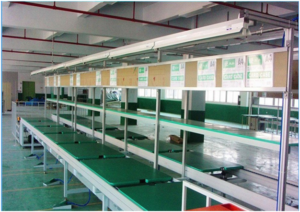
An assembly line conveyor does more than move parts from one station to the next — it sets the rhythm of the entire floor. Get the type wrong, and you either bottleneck a downstream station or leave operators waiting on an underloaded one. Get it right, and the conveyor becomes invisible: product simply arrives at the right pace, every time.
There isn't one universal "assembly line conveyor." The right choice depends on what you're building, how heavy it is, and how the line is paced. Here are the four types worth knowing, and where each one fits.
1. Belt assembly conveyor
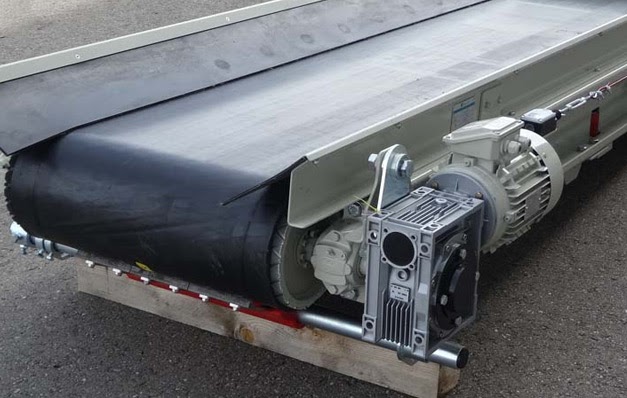
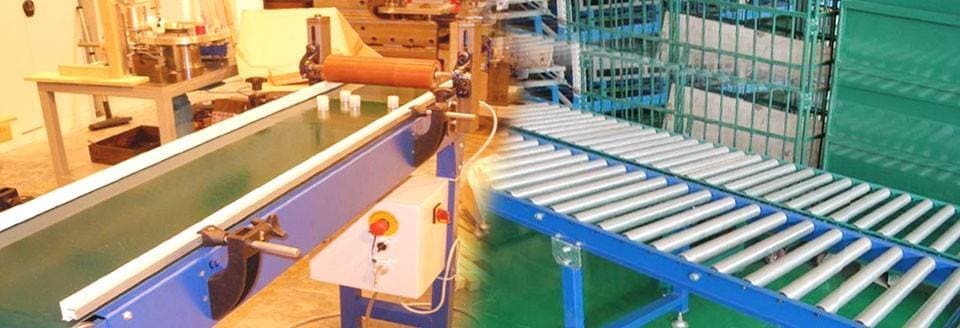
A continuous belt running over a flat bed or rollers, driven at a controlled speed — the standard choice for light, smooth-handling work.
Best for: electronics, small appliances, and light components where smooth, quiet movement at operator stations matters more than raw load capacity. Speed control: VFD (variable frequency drive), adjustable from the control panel.
Neo Conveyors builds this as part of its assembly line conveyor range, using the same horizontal belt conveyor platform built for general production-line use, with anti-static and food-grade surface options available where the application calls for it.
2. Roller assembly conveyor
Built around powered or gravity-fed rollers instead of a continuous belt surface — designed to carry rigid, flat-bottomed loads and, critically, to let product accumulate between stations without a conveyor motor running constantly.
Best for: heavy components, engine parts, and gearboxes — rigid products that need to buffer at a station without extra handling. Speed control: powered or gravity, depending on the station's requirement.
This draws on Neo Conveyors' broader roller conveyor line, adapted for assembly-station spacing and accumulation zones rather than general warehouse transport.
3. Chain assembly conveyor
A positively driven chain rather than a belt or rollers — built to carry loads a belt simply can't handle without slipping, at the slower pace heavy sub-assembly work usually requires.
Best for: heavy automotive parts, large sub-assemblies, and pallet-based assembly — high load, slow-pace stations like engine, gearbox, or axle build-up. Speed control: fixed or VFD, depending on the process.
This is the same positive-drive principle behind Neo Conveyors' chain conveyors, sized and paced specifically for assembly-station work rather than continuous bulk transport.
4. Slat assembly conveyor
Flat, interlocking slats forming a stable, continuous surface — built for products too large, heavy, or irregularly shaped to sit securely on a belt or rollers.
Best for: appliances, air conditioners, and refrigerators — anything needing a flat, stable surface through multiple assembly and test stations. Speed control: fixed or VFD.
Part of Neo Conveyors' slat conveyor line, built into assembly-specific layouts with the workstation spacing and stop positions the process requires.
Why takt time decides more than the conveyor type
Picking the right conveyor type is only half the job. The other half is takt time — the interval allowed between completing each unit, calculated by dividing available production time by required output. Takt time is what actually determines line speed, workstation spacing, and buffer zone size, regardless of which of the four conveyor types you choose. A correctly chosen conveyor type paired with the wrong takt-time calculation still produces a line that bottlenecks or idles.
This is also why most real assembly lines aren't built from a single conveyor type. A typical automobile plant, for example, runs chain conveyors for heavy sub-assemblies like engines and gearboxes, slat conveyors for body panels and completed units, and belt conveyors for light trim and electrical components — often all three on the same line, at different stages.
Quick comparison
| Type | Best For | Load Handling | Speed Control |
|---|---|---|---|
| Belt | Electronics, small appliances, light components | Light, smooth-surface loads | VFD |
| Roller | Heavy rigid components, engine parts, gearboxes | Heavy, needs accumulation | Powered or gravity |
| Chain | Heavy automotive parts, pallet-based assembly | Very heavy, slow-pace | Fixed or VFD |
| Slat | Appliances, ACs, refrigerators, irregular products | Large or irregular, flat-surface | Fixed or VFD |
Typical specification range across all four types: conveyor widths of 300 mm to 1,500 mm, line speeds from 0.05 m/s to 1.5 m/s (VFD adjustable), load capacity up to 500 kg per metre depending on type, and frame options in mild steel or stainless steel with powder-coated, painted, food-grade, or anti-static surface finishes.
Beyond the conveyor: integration that makes it an assembly line
A bare conveyor moves product — an assembly line conveyor needs to work with the rest of the station. That typically means:
- Sensor and PLC integration — presence sensors, barcode or RFID readers, vision systems, and reject gates built into specific workstations
- Accumulation zones — buffer sections between stations that stop a slowdown at one point from cascading back up the whole line
- ESD-safe surfaces — anti-static belt and frame options for electronics and semiconductor assembly
- Ergonomic station design — conveyor height, width, and stop positions set for standing or seated operators, not just the product's dimensions
Final thoughts
There's no single "best" assembly line conveyor — only the type that matches your product's weight, shape, and the pace your line actually needs to run at. Most plants end up combining two or more of these four types across different stations, which is normal rather than a sign of an over-complicated design.
Neo Conveyors has been designing and manufacturing assembly line conveyor systems — belt, roller, chain, and slat — for automobile, electronics, appliance, and engineering plants since 2007, with takt time engineering included as part of every project rather than charged separately. Get in touch with your production rate, product dimensions, and station count for a configuration recommendation.
Related reading
Recent Posts