Centrifugal Discharge Bucket Elevator Manufacturer in India
Centrifugal Discharge Bucket Elevator Manufacturer in India
High-capacity centrifugal discharge bucket elevators for cement, fly ash, grain, fertilizer, coal, and mineral powder vertical handling. Belt type and chain type. Up to 200 TPH capacity, up to 40 m lift height. Custom-engineered in Ghaziabad, with PAN India installation.
- Centrifugal throw discharge
- Belt or chain type
- Up to 200 TPH
- Up to 40 m lift
- MS / SS casing
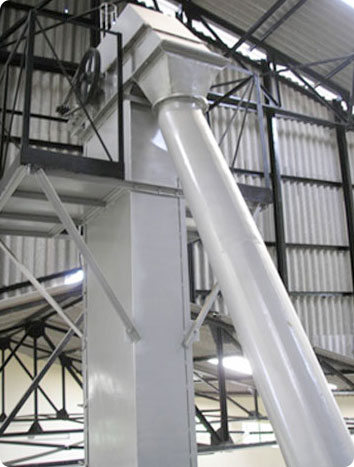
FIG. 01 — GENERAL ARRANGEMENT, CENTRIFUGAL BUCKET ELEVATOR
What is a Centrifugal Discharge Bucket Elevator?
A centrifugal discharge bucket elevator uses high belt/chain speed to generate centrifugal force at the head pulley, throwing material from the buckets into the discharge chute without the bucket needing to tip. This makes it the highest-throughput, lowest-cost bucket elevator type for free-flowing bulk materials.
How centrifugal discharge works
Buckets are spaced apart on the belt or chain, typically one to two bucket widths apart. As the belt runs at high speed, typically 1.0–2.0 m/s, the loaded buckets travel upward inside the sealed casing. At the head pulley, the combination of the pulley's rotational speed and the belt velocity creates centrifugal force, throwing material out of the bucket and into the discharge chute before the bucket has even rounded the top of the pulley. No bucket tipping is required.
When centrifugal discharge is the correct choice
Centrifugal discharge is correct for free-flowing, granular, or fine bulk materials not degraded by the centrifugal throw at discharge, cement, fly ash, grain, fertilizer, sand, coal dust, limestone powder, and mineral powders. It is not correct for fragile materials, sticky materials, or materials with high segregation sensitivity, which require the continuous discharge type instead.
Key components
Free capacity calculation included: share your material name, bulk density, required TPH, and lift height. Our engineers calculate bucket size, spacing, belt/chain speed, and motor power, and send a GA drawing with quotation at no charge. Send material details
How a Centrifugal Bucket Elevator Works
Four stages, from material infeed at the boot to centrifugal discharge at the head, that must all be precisely engineered for rated TPH without spillage or belt slip.
Boot — Material Infeed & Bucket Filling
Material enters the boot section through a feed inlet. As buckets travel past the boot pulley, they scoop material from the boot, filling each bucket with a metered charge. Fill factor is typically 75–85% for centrifugal type.
Vertical Lift — Carrying Run
Loaded buckets travel upward inside the sealed casing on the carrying run of the belt/chain, preventing dust emission during the lift. Belt speed is higher than continuous type, typically 1.0 to 2.0 m/s, to generate sufficient centrifugal force at the head.
Head — Centrifugal Discharge
At the head pulley, the combination of pulley rotation and belt speed generates centrifugal force. This force throws material out of each bucket and into the discharge chute before the bucket rounds the top.
Return — Empty Buckets
Empty buckets return downward inside the same sealed casing on the return run, preventing spillage and dust emission. Belt cleaners at the head remove any material adhering to the belt before return.
Advantages of Centrifugal Discharge Bucket Elevators
Five engineering advantages that make the centrifugal discharge type the most widely used bucket elevator in Indian cement, power, grain, and fertilizer industries.
High Capacity Material Handling
High belt/chain speed and spaced buckets achieve the maximum TPH per unit of casing cross-section, 2–3× the throughput of a continuous type elevator of the same casing size, at lower construction cost.
Continuous Material Flow
Continuous belt motion means continuous material flow from boot to discharge, no intermittent stop-start that batch conveying systems require.
Reduced Operating Costs
Lower cost per tonne elevated than pneumatic conveying, skip hoists, or screw elevators for equivalent capacities and heights.
Compact Vertical Design
The smallest floor footprint of any conveyor system for equivalent TPH and lift height.
Suitable for Fine Bulk Materials
Reliably handles fine powders, granular materials, and small-lump materials, where troughed belts would scatter and pneumatic systems would require high pressure.
Fully Enclosed Dust-Free Operation
Complete casing from boot to head with sealed joints eliminates dust emission during lifting.
Materials Suitable for Centrifugal Discharge Bucket Elevators
Centrifugal discharge is the correct choice for free-flowing, granular, and fine bulk materials, where the centrifugal throw at discharge does not cause unacceptable degradation or dust generation.
Cement
Raw meal, cement powder, and OPC/PPC at raw mill, kiln, and packing plant discharge points.
Fly Ash
ESP and bag filter fly ash at thermal power plants and cement plants.
Coal
Coal dust and small-lump coal at power plants, cement kilns, and chemical plants.
Fertilizer
Urea, DAP, MOP, and NPK granules at blending plants and bagging lines.
Grain
Wheat, rice, maize, soybean, and pulses at grain silos and mills.
Sand
Dry sand, silica sand, and foundry sand at mixing and processing plants.
Mineral Powders
Limestone powder, barite, calcium carbonate, gypsum, and talc.
Salt & Sugar
Industrial salt and refined sugar at processing and packing plants.
Not suitable for: large-lump clinker, minerals above 50 mm lump size, fragile materials, or sticky/wet materials. For these, the Continuous Discharge Bucket Elevator is the correct choice.
Industries Using Centrifugal Bucket Elevators
Cement Plants
Raw meal, cement powder, and limestone dust elevation, heavy-duty for 24×7 kiln operation at 50–200 TPH.
Power Plants
Fly ash elevation from ESP hoppers, coal dust handling, dust-tight sealed casing for PCB compliance.
Mining Industry
Mineral powder and processed mineral elevation between processing stages.
Fertilizer Industry
Urea, DAP, MOP, NPK granule elevation at blending, bagging, and storage facilities.
Food Processing Industry
Grain, flour, sugar, and salt elevation with plastic buckets and food-grade casing.
Chemical Plants
Chemical powder and pigment elevation with explosion-proof motor options.
Technical Specifications
| Discharge type | Centrifugal, high-speed throw at head pulley |
|---|---|
| Drive type | Belt (rubber EP/NN) or chain (drop-forged steel) |
| Capacity | Up to 200 TPH (calculated per material) |
| Lift height | Up to 40 m standard; custom for greater heights |
| Bucket width | 100 mm to 600 mm |
| Bucket spacing | Spaced, 1 to 2 bucket widths apart |
| Belt speed | 1.0 m/s to 2.0 m/s (centrifugal discharge) |
| Casing material | MS (3–6 mm) / SS304 / SS316 |
| Take-up | Screw take-up at boot (standard) |
| Motor | VFD-compatible geared motor; explosion-proof options |
| Power supply | 415 V, 3 Phase, 50 Hz |
Bucket Types
Standard for cement, sand, limestone, coal, and abrasive industrial materials.
For grain, fertilizer, salt, and food-grade applications where metal contamination must be avoided.
For chemical, pharma, and high-impact applications, suitable up to 120°C.
Belt & Chain Options
Most common, for cement, grain, fertilizer, fly ash, and ambient-temperature materials up to 80°C.
Drop-forged steel chain for abrasive, high-temperature (up to 250°C), or very heavy bulk materials.
Belt Type vs Chain Type Bucket Elevators
| Factor | Belt type (rubber EP/NN) | Chain type (forged steel) |
|---|---|---|
| Material temperature | Up to 80°C (standard) | Up to 250°C (heat-resistant) |
| Abrasiveness | Low to medium abrasion | High abrasion, chain outlasts belt |
| Capital cost | Lower | Higher |
| Best materials | Cement, grain, fly ash, fertilizer | Hot clinker, abrasive ore, coal (above 80°C) |
Centrifugal Bucket Elevators — Live at Customer Plants
Centrifugal bucket elevator in operation
Watch on YouTube →Manufacturing & installation overview
Watch on YouTube →Why Choose Neo Conveyors?
Custom Engineered Since 2007
Every elevator starts with your material's bulk density, abrasiveness, temperature, and required TPH.
1,000+ Conveyor Installations
18+ years of bucket elevator projects across cement, power, grain, mining, and fertilizer industries.
PAN India Installation
Installation and commissioning by Neo Conveyors' own team across all Indian states.
Spare Parts & AMC Support
Belts, chains, buckets, and Annual Maintenance Contracts available PAN India.
Frequently Asked Questions
What is a centrifugal discharge bucket elevator?
A centrifugal discharge bucket elevator is a high-speed vertical conveyor that uses buckets attached to a belt or chain to lift bulk materials, throwing material into the discharge chute at the head using centrifugal force rather than tipping.
How does it differ from a continuous discharge elevator?
Centrifugal discharge elevators run at high speed for free-flowing materials; continuous discharge elevators run slowly and tip gently, suited to fragile materials.
What materials can centrifugal discharge bucket elevators handle?
Cement powder, fly ash, raw meal, coal dust, limestone dust, grain, sugar, salt, fertilizer, sand, and mineral powders. Not suitable for large lumps, fragile, or sticky materials.
What capacities are available?
Up to 200 TPH and up to 40 metres lift height as standard, with custom designs for greater heights and capacities.
When should I choose belt type over chain type?
Belt type for temperatures below 80°C and low-to-moderate abrasiveness; chain type for higher temperatures or high abrasiveness.
Can it be customised?
Yes, height, capacity, drive type, bucket material, casing material, and motor are all specified per project with a GA drawing included.
What industries use centrifugal bucket elevators?
Cement, power, mining, fertilizer, grain and food processing, and chemical plants.
How much does a centrifugal discharge bucket elevator cost in India?
Price depends on height, capacity, drive type, bucket material, casing material, and motor specification. Contact Neo Conveyors for a quotation.
Request a Free Quote — Capacity Calculation Included
Share your material name, bulk density, required TPH, and lift height. Our engineers calculate bucket type, drive type, belt/chain speed, and motor power, and send a GA drawing with quotation at no charge.