Continuous Discharge Bucket Elevator Manufacturer in India
Continuous Discharge Bucket Elevator Manufacturer in India
Custom continuous discharge bucket elevators, gentle handling for grain, rice, flour, seeds, fertilizer, food products, animal feed, and fragile bulk materials. Closely spaced buckets tip material gently at head without centrifugal impact. Belt and chain type, up to 200 TPH, up to 40 m lift, PAN India installation.
- Gentle gravity-tip discharge
- Closely spaced buckets
- Low material breakage
- Belt & chain type
- Food-grade options
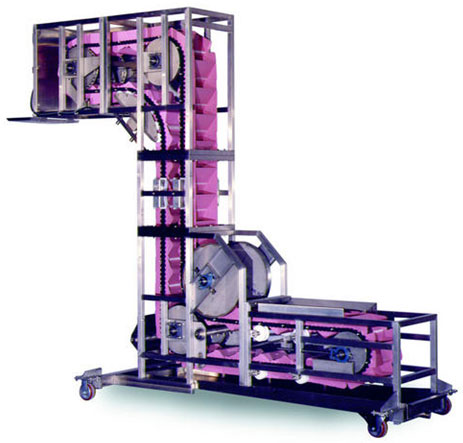
FIG. 01 — GENERAL ARRANGEMENT, CONTINUOUS DISCHARGE BUCKET ELEVATOR
What is a Continuous Discharge Bucket Elevator?
A continuous discharge bucket elevator uses closely spaced buckets on a slow-moving chain, so closely spaced that material tips gently from each bucket into the discharge chute by the action of the next bucket behind it, with no centrifugal force involved. This makes it the correct choice wherever fragile, granular, or large-lump materials must be elevated without breakage.
The continuous discharge mechanism
Unlike centrifugal discharge elevators where spaced buckets are thrown clear at high speed, continuous discharge elevators use closely spaced buckets, typically touching or nearly touching, moving slowly on a chain. As the chain rounds the head sprocket, each bucket is guided by the back of the bucket in front to tip its contents gently forward into the discharge chute. Because the chain moves slowly, typically 0.3–0.8 m/s versus 1.0–2.0 m/s for centrifugal type, there is no centrifugal force to throw material; gravity alone tips material out with minimal impact, dust, and breakage.
When continuous discharge is the correct choice
Choose continuous discharge whenever the material would be damaged, broken, or generate excessive dust under centrifugal throwing. The primary applications are grain and rice mills, food processing, fertilizer, and industries handling large-lump materials like clinker and coal that would be shattered by centrifugal discharge. For free-flowing fine materials like cement powder, fly ash, and sand, the centrifugal type provides higher throughput at lower cost. Our engineers specify the correct type based on your material at no charge.
Continuous discharge — choose when:
- Material is fragile, grain, rice, seeds
- Material is large-lump, clinker, coal >50 mm
- Breakage reduces product value or grade
- Dust at discharge is unacceptable
- Food or pharma hygiene required
Centrifugal discharge — choose when:
- Material is fine & free-flowing, cement, fly ash
- Maximum TPH per casing size is priority
- Material not damaged by centrifugal throw
- Lower cost per TPH is priority
Free elevator type selection & capacity calculation: share your material name, bulk density, required TPH, and lift height. Our engineers confirm whether continuous or centrifugal discharge is correct, then calculate bucket size, chain speed, and motor power, and send a GA drawing with quotation at no charge. Send material details
How Continuous Bucket Elevators Work
Four stages, all occurring at slow chain speed, that ensure material is handled gently from boot infeed to head discharge, with minimum breakage and dust generation throughout.
Boot — Slow, Gentle Bucket Filling
Material enters the boot (base) section through the feed inlet. Because the chain runs slowly, buckets fill gently from the boot without the scooping impact that occurs at centrifugal elevator speeds. This gentle filling is the first stage of breakage reduction, critical for grain and seed elevators.
Slow Vertical Lift — Carrying Run
Closely spaced, fully loaded buckets travel upward at low chain speed, typically 0.3 to 0.8 m/s. The slow speed means no centrifugal force acts on the material in the bucket during lift; material sits stably for the entire vertical journey.
Head — Gravity Tipping (No Throw)
As the chain rounds the head sprocket, each bucket is pushed forward by the next bucket behind it, the close spacing means the back of one bucket guides the one ahead, tipping it gently. Material falls by gravity into the discharge chute without centrifugal throwing.
Return — Empty Buckets
Empty buckets return downward inside the sealed casing. The closely spaced arrangement and slow speed mean very little residual material in returning buckets, reducing carry-back and belt contamination compared to higher-speed centrifugal elevators.
Advantages of Continuous Discharge Elevators
Five engineering advantages that make the continuous discharge type the preferred bucket elevator in grain, food, fertilizer, and fragile material handling applications across India.
Gentle Material Handling
Slow chain speed and gravity-tip discharge eliminate the high-impact centrifugal throw that breaks fragile materials. Products arrive at discharge in the same condition they were loaded at the boot.
Reduced Product Degradation
For grain, rice, and seeds, breakage during elevation directly reduces whole grain proportion and increases flour/dust percentage. Continuous type maintains higher whole-grain percentage than centrifugal type.
Low Material Breakage
On paddy rice, continuous discharge elevators consistently achieve less than 0.3% broken grain versus 1–3% on centrifugal elevators at equivalent capacity, directly protecting product value and grade.
Efficient Vertical Conveying
Closely spaced buckets deliver a near-continuous flow of material to the discharge chute, no gaps between bucket loads as occur in spaced centrifugal elevators.
High Reliability in Heavy-Duty Applications
Chain type continuous elevators handle large-lump materials that would shatter in centrifugal type, running 24×7 with heavy-duty forged chain and reduced chain and sprocket wear.
Lower Dust at Discharge
Gravity tipping at low speed generates significantly less dust than high-velocity centrifugal throw, reducing product loss and improving air quality for dust-sensitive materials.
Materials Handled by Continuous Discharge Bucket Elevators
Continuous discharge is the correct choice for fragile, granular, large-lump, or hygiene-sensitive bulk materials where centrifugal throwing at discharge would cause damage, excessive dust, or contamination.
Grains
Wheat, rice, maize, soybean, barley, where whole-grain percentage directly determines grade and market price. Continuous type maintains grain integrity.
Seeds
Oil seeds, cotton seed, sunflower, mustard, fragile coating and embryo must not be damaged during elevation. Gentle tipping essential.
Food Products
Biscuits, food granules, breakfast cereals, and processed food products, where breakage of finished product is a quality and yield defect.
Fertilizers
Urea, DAP, MOP, NPK granules, granule breakage produces dust that clogs screens and reduces product weight. Gentle handling maintains granule integrity.
Chemical Powders
Chemical granules, pigments, and industrial chemical products where degradation, excessive dust, or cross-contamination at discharge is unacceptable.
Animal Feed
Pellet feed, mash, and compound animal feed, pellet breakage reduces feed quality and animal intake. Continuous type preserves pellet shape.
Fragile Bulk Materials
Large-lump coal, clinker, limestone, and minerals above 50 mm lump size, too large and brittle for centrifugal discharge; chain type handles these reliably.
Rice & Paddy
Paddy and milled rice, broken grain percentage is the primary quality metric in rice milling. Continuous elevators reduce broken grain from 2–4% to under 0.5%.
Industries Served
Continuous discharge bucket elevators are deployed wherever fragile or valuable materials must be elevated without breakage, across rice milling, flour milling, food processing, fertilizer, and feed manufacturing industries.
Rice Mills
Paddy intake, cleaning, husking, and milled rice elevation. Broken rice percentage is a direct quality measure; continuous type keeps breakage below 0.5%.
Flour Mills
Wheat intake, cleaned wheat to roller mill, semolina, flour, and bran elevation. Food-grade enclosed casing prevents pest access.
Feed Manufacturing
Raw ingredient intake, mash, pellet, and crumble elevation in compound and poultry feed plants. Continuous discharge maintains pellet integrity.
Food Processing
Grain, seed, food ingredient, and processed food elevation in snack, cereal, pulse, and food manufacturing plants, with hygienic, easy-clean designs.
Fertilizer Plants
Urea, DAP, NPK granule elevation at blending and bagging plants. Continuous type reduces granule breakage and dust generation during elevation.
Chemical Industries
Chemical granule, pigment, and powder elevation where product degradation, dust, or cross-contamination must be minimised.
Technical Specifications
All continuous discharge bucket elevators are made-to-order. Chain speed, bucket spacing, and bucket size are calculated from your material's bulk density, fragility index, required TPH, and lift height.
| Discharge type | Continuous, gravity tipping at head, no centrifugal throw |
|---|---|
| Drive type | Belt (rubber EP/NN) or chain (drop-forged steel) |
| Capacity | Up to 200 TPH (calculated per material) |
| Lift height | Up to 40 m standard; custom for greater heights |
| Chain speed | 0.3 m/s to 0.8 m/s (slow, for gentle discharge) |
| Bucket spacing | Closely spaced, touching or 1 bucket-width apart |
| Bucket width | 100 mm to 600 mm |
| Casing material | MS (3–6 mm) / SS304 / SS316 |
| Casing construction | Fully sealed with access doors and inspection windows |
| Boot design | Low-impact infeed, gravity fill or slow-scoop boot |
| Discharge chute | Gravity-flow chute at head, gentle angle, no centrifugal impact |
| Motor | Geared motor; VFD optional; explosion-proof on request |
| Power supply | 415 V, 3 Phase, 50 Hz |
Bucket Types
Heavy-duty MS for industrial materials, clinker, coal, minerals, chemical granules. AR-steel liner available for abrasive materials. Most economical.
High-density polyethylene, for grain, fertilizer, seeds, and food applications where metal-free product contact is required. Light weight, non-corroding.
FDA/EU food-safe materials, nylon (PA), polypropylene, or food-grade HDPE, for flour mills, food processing, and pharmaceutical applications.
Drive Systems
Motor coupled directly to head sprocket shaft, for lower-capacity continuous elevators where precise speed reduction is not required. Simplest and most economical.
Helical or worm gearbox provides precise speed reduction to the low chain speeds required for continuous discharge. Most common configuration.
For high-capacity continuous chain elevators handling clinker, large-lump coal, or abrasive minerals, double-reduction gearbox with high-torque motor for 24×7 operation.
- Paddy & rice
- Wheat & flour
- Maize & soybean
- Pulses & lentils
- Oil seeds
- Animal feed pellets
- Compound feed
- Urea granules
- DAP & potash
- NPK granules
- Clinker (cold)
- Coal (large lump)
- Limestone (lump)
- Minerals & ores
- Chemical granules
- Food granules
Download Bucket Elevator Catalogue
Specifications, bucket types, comparison table, PDF, free.
Continuous vs Centrifugal Discharge Bucket Elevators
The single most important design decision for any bucket elevator, choosing the wrong discharge type causes either avoidable product breakage or underperformance.
| Feature | Continuous discharge (this page) | Centrifugal discharge |
|---|---|---|
| Fragile materials | Excellent, no centrifugal impact | Moderate, may cause breakage |
| Grain handling | Excellent, grain stays whole | Good, some breakage acceptable |
| Product damage | Very low, gravity tipping only | Moderate, centrifugal throw impact |
| Dust at discharge | Very low, slow gentle tipping | Higher, high-velocity throw |
| Large-lump material (>50 mm) | Handles, chain type available | Risk of breakage at discharge |
| Chain/belt speed | Slow (0.3–0.8 m/s) | High (1.0–2.0 m/s) |
| TPH per casing size | Lower, slow speed limits | Higher, high speed enables |
| Capital cost (same capacity) | Slightly higher, more buckets | Lower, fewer spaced buckets |
| Best materials | Grain, rice, fertilizer, feed, clinker | Cement, fly ash, sand, coal fines |
| Rice mill broken grain % | <0.5% breakage | 1–3% breakage |
Need maximum TPH for cement, fly ash, or sand? Centrifugal Discharge Bucket Elevator →
Continuous Bucket Elevators — Live at Customer Plants
Real Neo Conveyors continuous discharge bucket elevator installations, rice mill, grain, and industrial applications in operation across India.
More installation videos: youtube.com/@neoconveyors
Recent Continuous Discharge Bucket Elevator Installations
Four recent projects, rice mill, flour mill, fertilizer plant, and feed industry, with full engineering parameters and results achieved.
Rice Mill — Haryana
Rice mill needed paddy and milled rice elevated 18 m at 25 TPH between intake pit, husker, whitener, and silo. Previous centrifugal elevator was producing 3.2% broken rice, well above the 1% maximum for premium grade.
- Broken rice: 3.2% → 0.4%, premium grade achieved
- 25 TPH sustained across 3-shift paddy season
- 4 elevator lifts replaced, all Neo Conveyors continuous type
Flour Mill — Punjab
Roller flour mill needed wheat elevated 12 m from intake pit to pre-cleaning equipment at 15 TPH, and cleaned wheat to roller mill entry at 12 TPH. Food-grade enclosed MS casing with HDPE buckets and sealed access doors.
- Sealed casing, pest-free through 2 harvest seasons
- HDPE buckets, no metal contamination at flour output
- Wheat damage at intake undetectable vs previous elevator
Fertilizer Plant — Gujarat
Fertilizer blending plant needed urea granules elevated 22 m at 30 TPH for bagging line feed. Centrifugal elevator was producing visible granule dust and fines, causing bagging nozzle clogging and customer complaints.
- Granule dust at discharge eliminated, bagging nozzles clear
- Customer complaints about fines: zero since commissioning
- 30 TPH sustained, 14 months without chain replacement
Feed Industry — Uttar Pradesh
Compound feed manufacturer needed 3 mm poultry feed pellets elevated 16 m at 20 TPH from pellet cooler to finished product silo. Previous centrifugal elevator was producing 8–12% fines, well above the 3% maximum for premium feed.
- Pellet fines: 10% → 1.8%, premium broiler feed grade met
- ROI realised within 4 months
- 3 lifts replaced, all performing at target fines level
Why Choose Neo Conveyors?
Every continuous discharge bucket elevator is designed from your material data, bucket type, chain speed, and boot design specified for gentle handling. Fabricated in-house at Ghaziabad, installed by our own engineers across India.
Custom Engineered Since 2007
We specify chain speed, bucket spacing, and boot design based on your material's fragility and required TPH. Not a catalogue elevator adapted for your product.
1,000+ Installations
18+ years of bucket elevator projects across rice mills, flour mills, fertilizer plants, feed manufacturers, and chemical industries. References available on request.
Complete Design & Manufacturing
GA drawing, capacity calculation, casing fabrication, bucket supply, motor selection, and electrical panel, all designed and manufactured in-house at Ghaziabad.
PAN India Installation Support
Installation, casing erection, chain fitting, alignment, and commissioning by Neo Conveyors' own engineers across all Indian states. No third-party contractors.
MS, HDPE & Food-Grade Buckets
All bucket materials supplied in-house, the correct bucket for your product specified without extra cost. Food-grade HDPE and nylon buckets stocked.
Spare Parts & AMC
Replacement chains, buckets, sprockets, and bearings stocked for all models. Annual Maintenance Contracts and rapid-response service across PAN India.
Frequently Asked Questions
What is a continuous discharge bucket elevator?
A continuous discharge bucket elevator uses closely spaced buckets on a slow-moving chain. Because the buckets are so closely spaced, as the chain rounds the head sprocket, each bucket is pushed forward by the next bucket behind it, tipping its contents gently into the discharge chute by gravity, without any centrifugal throwing action.
How does continuous discharge differ from centrifugal discharge?
Continuous discharge uses slow chain speed and closely spaced buckets with material tipped gently by gravity, best for fragile materials. Centrifugal discharge uses high belt speed and spaced buckets thrown by centrifugal force, best for fine free-flowing materials where maximum TPH per casing size is the priority.
What materials can be handled?
Continuous discharge bucket elevators handle paddy and milled rice, wheat, maize, soybean, pulses, oil seeds, flour, bran, seeds, animal feed pellets, compound feed, urea granules, DAP, potash, NPK, chemical granules, food granules, cold clinker, large-lump coal above 50 mm, limestone lump, and minerals.
What is the difference between belt type and chain type continuous elevators?
Belt type continuous elevators use a rubber EP or NN belt, suitable for grain, fertilizer, seeds, food, and chemical granules at ambient temperature with low to moderate abrasiveness. Chain type uses a heavy drop-forged steel chain, required for abrasive, large-lump, or heavy materials and temperatures above 80°C.
What capacities are available?
Neo Conveyors manufactures continuous discharge bucket elevators up to 200 TPH capacity and up to 40 metres lifting height as standard. For the same casing cross-section, continuous type achieves lower TPH than centrifugal type because the slow chain speed limits bucket trips per minute.
Can it be customised?
Yes, every continuous discharge bucket elevator is made-to-order. Elevator height, capacity, drive type, bucket material, bucket size and spacing, chain specification, casing material, boot design, and motor are all specified for your material and site, with a GA drawing included at no charge.
Do you provide installation services across India?
Yes, PAN India installation and commissioning by Neo Conveyors' own engineers across all Indian states, serving rice mills in Punjab, Haryana, and UP, flour mills across North India, feed manufacturers in UP, Maharashtra, and Gujarat, and fertilizer and chemical plants across India.
How much does a continuous discharge bucket elevator cost in India?
Price depends on elevator height, capacity, drive type, bucket material, casing material, and motor specification. Continuous discharge elevators are priced slightly higher than equivalent centrifugal type, but for fragile materials the product quality improvement typically delivers ROI in 3–6 months.
Continuous Discharge Bucket Elevator — Service Locations Across India
Manufactured at the Ghaziabad facility, installed and commissioned by Neo Conveyors' own engineers at rice mills, flour mills, fertilizer plants, feed manufacturers, and food processing facilities across all Indian states.
Uttar Pradesh
Ghaziabad (HQ & Plant), Noida, Greater Noida, Lucknow, Kanpur, Agra, Meerut, Moradabad, Mathura, Aligarh, Bareilly, Gorakhpur, Varanasi, Sahibabad
Delhi NCR
New Delhi, Gurugram, Faridabad, Manesar, Bhiwadi, Bawal, Neemrana, Sonipat, Kundli, Rohtak
Haryana
Panipat, Ambala, Hisar, Karnal, Yamunanagar, Rewari, Palwal, Kurukshetra
Punjab
Ludhiana, Amritsar, Jalandhar, Patiala, Bathinda, Mohali, Phagwara
Himachal Pradesh & Uttarakhand
Baddi, Solan, Haridwar, Roorkee, Rudrapur, Dehradun, Kashipur
Rajasthan
Jaipur, Jodhpur, Udaipur, Kota, Ajmer, Alwar, Bhiwadi, Chittorgarh
Gujarat
Ahmedabad, Surat, Vadodara, Rajkot, Gandhinagar, Bharuch, Anand, Vapi, Morbi, Mundra
Maharashtra
Mumbai, Pune, Nagpur, Nashik, Aurangabad, Thane, Navi Mumbai, Solapur, Pimpri-Chinchwad, Chakan
Madhya Pradesh & Chhattisgarh
Indore, Bhopal, Jabalpur, Pithampur, Dewas, Raipur, Bhilai
South India
Hyderabad, Chennai, Bangalore, Coimbatore, Kochi, Visakhapatnam, Hosur, Mysuru, Madurai
East India
Kolkata, Howrah, Durgapur, Bhubaneswar, Patna, Ranchi, Jamshedpur, Siliguri
North East & International
Guwahati, Dibrugarh, Shillong, UAE (Dubai / Abu Dhabi), Bangladesh, Nepal, Sri Lanka, Africa
Request a Free Quote — Capacity Calculation Included
Share your material name, bulk density, required TPH, and lift height. Our engineers confirm continuous vs centrifugal, calculate chain speed and bucket size, and send a GA drawing at no charge within 24–48 hours.
Talk to Our Bucket Elevator Experts
G-414, UPSIDC Phase-II, Ghaziabad, Uttar Pradesh
+91-9654112235 · sales@neoconveyors.com