How to Choose the Right Conveyor System: Complete Industrial Selection Guide
Most conveyor problems we get called about weren't caused by a bad machine. They came from a good machine that was chosen for the wrong job: sized for the average day instead of the peak hour, or picked from a catalogue before anyone had written down what the material actually was. This guide walks through how we'd think about the choice, in the order we'd think about it.
Start With the Material, Not the Machine
The first question is always the same: what are you actually moving? Not "cement" or "cartons" as a category, but the specifics, because those specifics decide almost everything that follows.
For bulk material, the things that matter most are bulk density, particle or lump size, moisture, temperature, and how abrasive or sticky it is. Two materials that look similar on a purchase order can behave completely differently on a belt. Dry fly ash and damp fly ash are a good example: same name, very different handling problem. For packaged goods it's dimensions, weight, and what the bottom of the pack is like, a rigid carton and a soft sack want different surfaces underneath them.
Also worth saying out loud early: is it fragile, does it make dust, does it need to stay hygienic, is it corrosive? Each of those narrows the field quickly. Food and pharma lines, for instance, usually mean stainless construction and a design that can be cleaned properly, which rules out some conveyor types straight away.
Work Out the Capacity You Actually Need
Capacity gets stated in whatever unit suits the industry: TPH for bulk, cartons or bags per hour for packaged goods, pallets per hour in a warehouse. Whichever you use, get to a real number before talking to anyone about equipment.
For a belt carrying bulk material, the underlying relationship is simple:
That's a starting point, not a design calculation. A real design also accounts for how the belt is troughed, how efficiently it's loaded, the incline, how the material flows, and a margin on top. The guidance published for bulk belt conveyors (CEMA's is the one most engineers reference) treats capacity, belt width, speed, and drive as linked decisions rather than separate ones.
The trap here is designing for today's average. If the line does 50 TPH on a normal day and 65 in a busy week, a conveyor sized for 50 will spend the busy week struggling. Think about peak, surge, start-up conditions, and where production is likely to go in a few years, then add a sensible margin. Undersizing is the expensive mistake; a modest amount of headroom is cheap.
Pick the Conveyor Type That Fits the Job
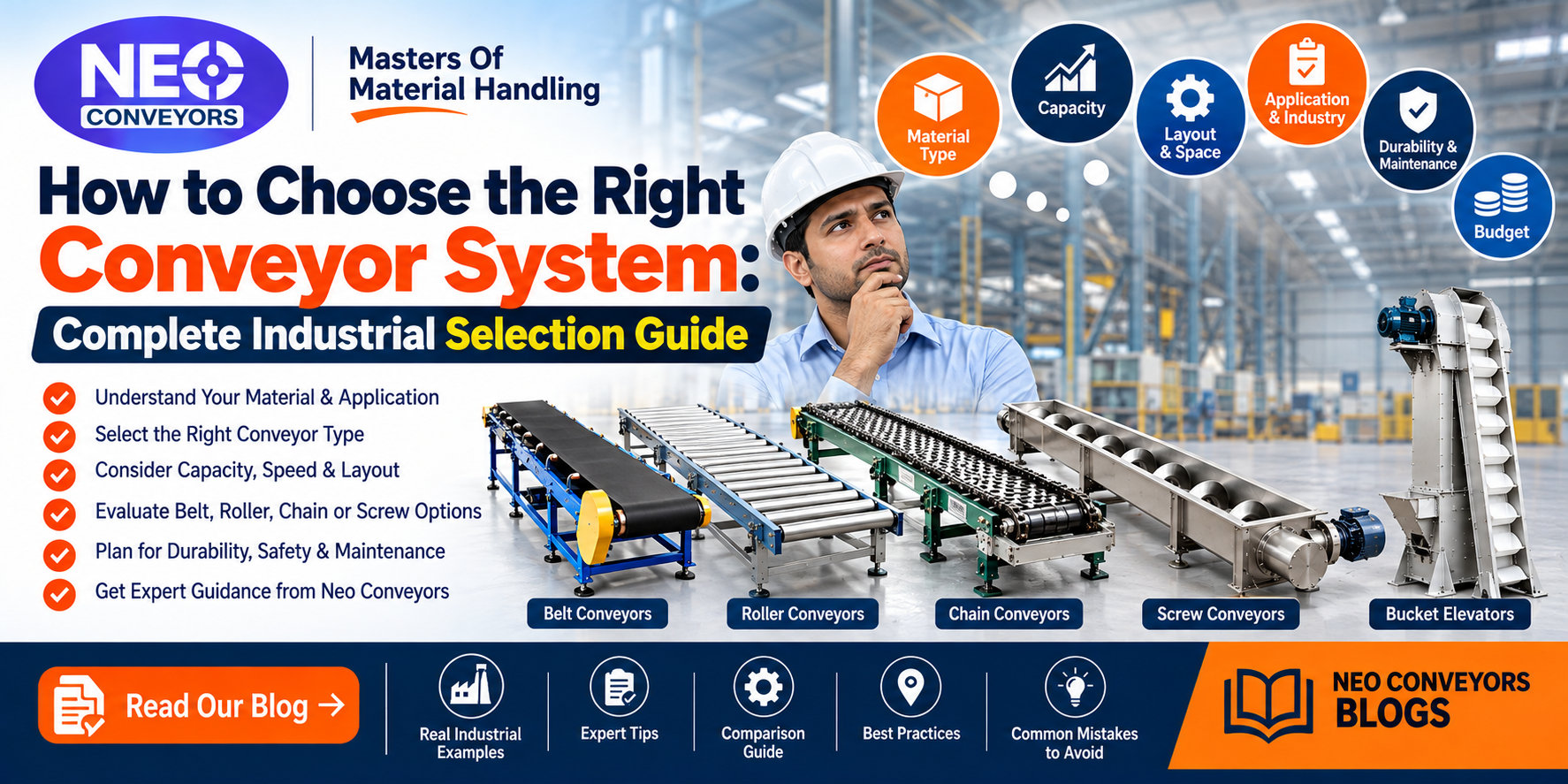
Once you know the material and the capacity, the type usually narrows to two or three sensible options. This is roughly how they line up:
| Conveyor | Typically used for |
|---|---|
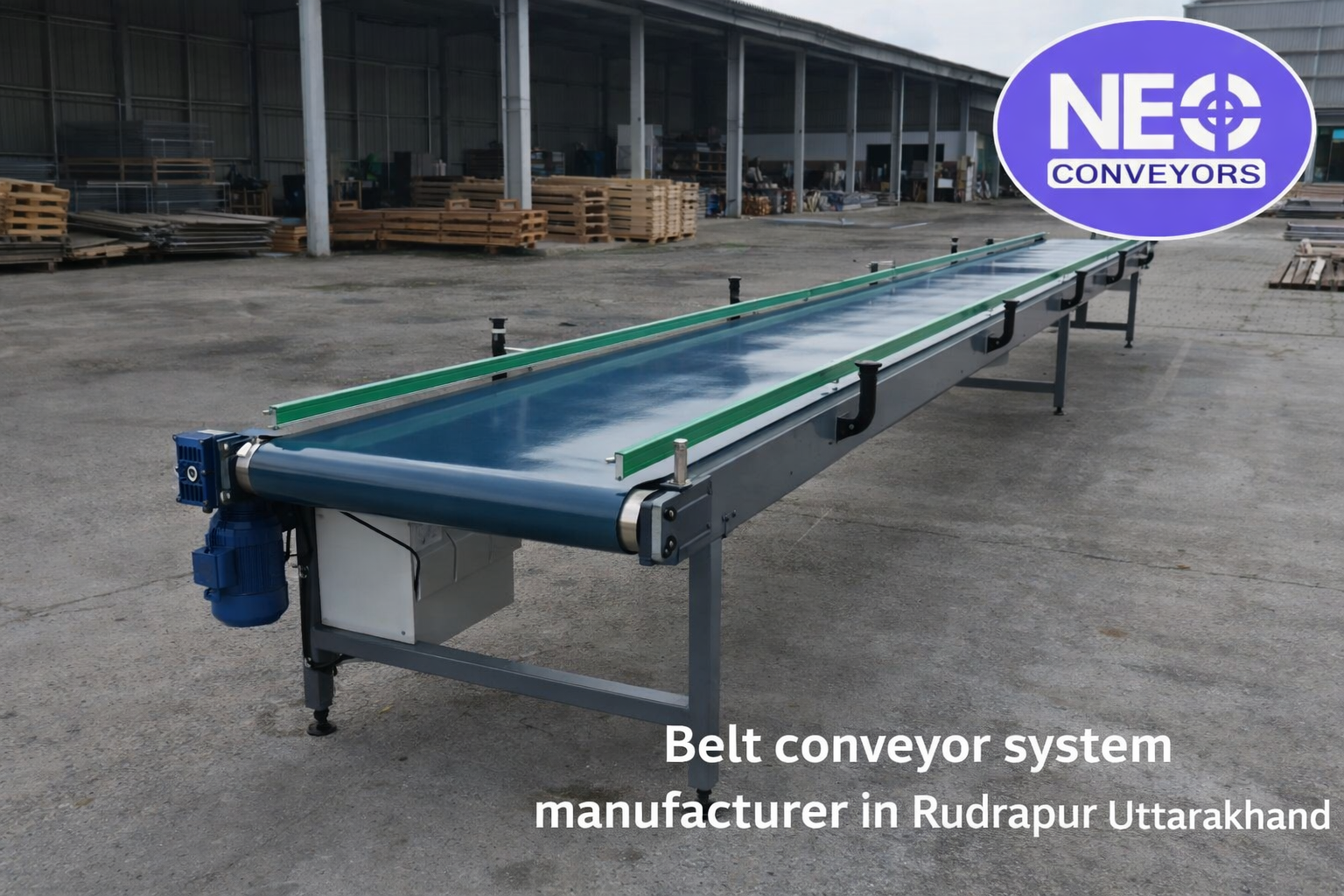
| Belt conveyor | Bags, cartons, packaged goods, and bulk material; long runs and inclines |
| Roller conveyor | Boxes, cartons, pallets, containers, anything with a firm, flat base; gravity or powered |
| Screw conveyor | Powders and granules, controlled feeding, enclosed short runs |
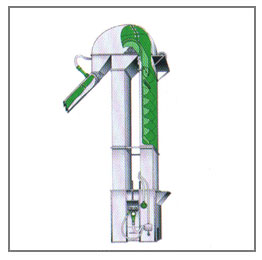
| Bucket elevator | Lifting bulk material vertically, grain, cement, fertilizer |
| Chain conveyor | Heavy loads, pallets, industrial components, tougher duty |
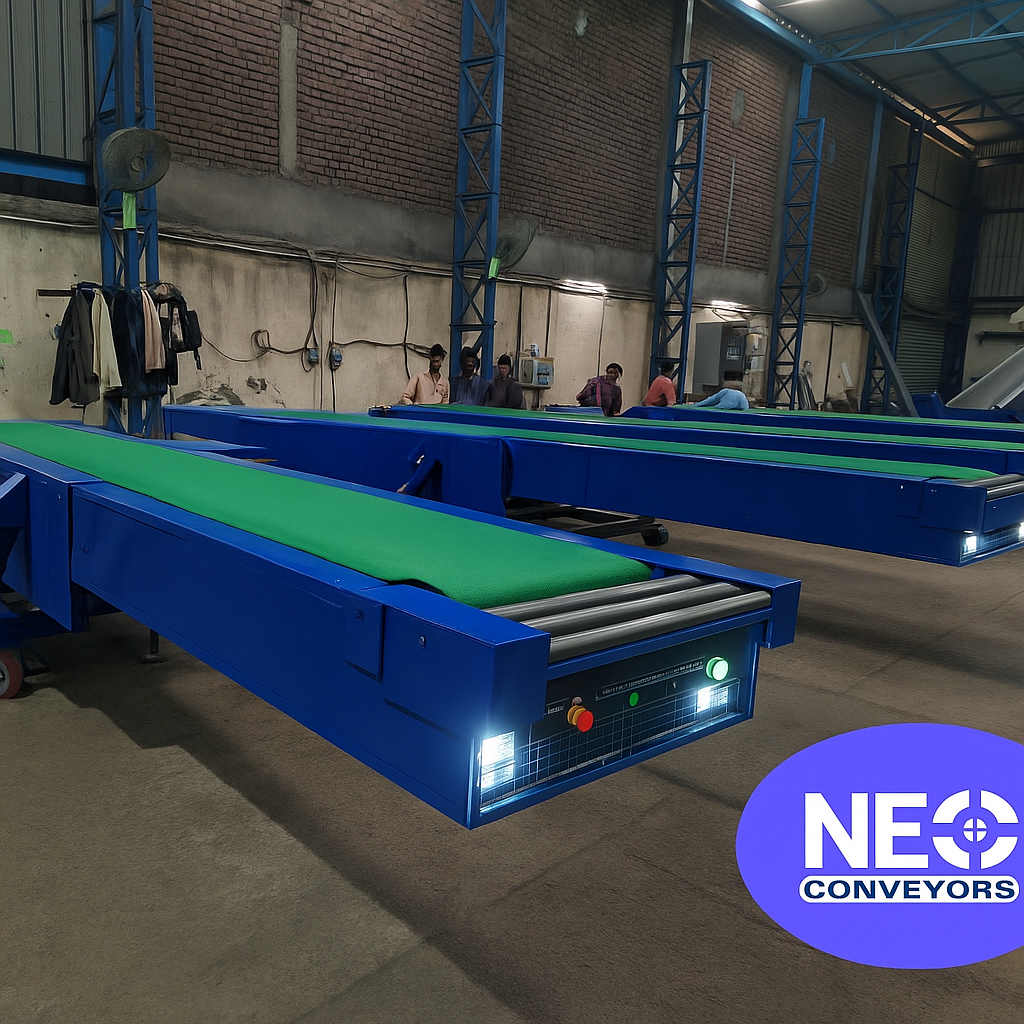
| Telescopic belt conveyor | Loading and unloading trucks and containers at a dock |
That's a starting map, not a verdict. Two applications with the same material can want different conveyors depending on distance, height, and how much dust is acceptable.
Belt Speed and Belt Width Work Together
These two get chosen as a pair, because for a given capacity you can trade one against the other: a narrower belt running faster, or a wider belt running slower. Faster isn't automatically better. Higher speed pushes up wear, dust, noise, and spillage, and for fragile or packaged products it makes stable transfers harder. The usual aim is the lowest speed that still delivers the capacity comfortably.
On the packaged-goods side, speed is set by product spacing, sensor response, the cycle time of the machine downstream, and how much an operator needs to interact with the line. On the bulk side it comes down to density, lump size, abrasiveness, and how well the loading point can control the material.
Belt width has to be wide enough to carry the volume, take the largest lump or pack without it hanging over the edge, leave clearance either side, and match the loading chute. It's tempting to choose from the list of widths people commonly use (300, 400, 500, 600, 800, 1,000, 1,200 mm and up), but the number should come out of the calculation rather than the other way around.
If It Has to Go Up, Incline Changes Everything
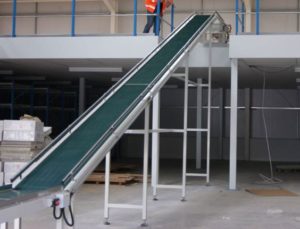
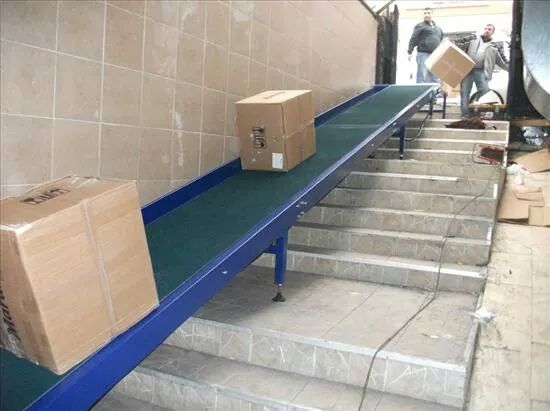
The moment a conveyor has to gain height, the belt surface matters a lot more. A plain flat belt will only hold product up to a fairly gentle angle. Steeper than that and you're looking at cleats, sidewalls, or a different type of conveyor altogether. How steep is workable depends on the material's angle of repose, the belt surface, the speed, and how stable the product is on the belt.
Available floor space usually decides the angle in practice: the height you need to gain, divided by the length you're allowed to use. If we've been asked for an angle the material won't hold, the honest answer is to lengthen the run or change the conveyor type, not to fit cleats and hope. Our inclined belt conveyor page goes into which belt suits which angle.
Motor, Gearbox, and Drive Pulley: One System
Motor power comes from the mechanical demand on the conveyor: the load, belt speed, length, elevation, the resistance of rollers and pulleys, starting conditions, and drive efficiency. It doesn't come from length alone, and this is one of the more common shortcuts we see. Take two conveyors that are both 10 metres long with a 600 mm belt. One carries light cartons on the flat; the other lifts heavy bulk material up an incline. The motors involved will be nowhere near each other in size.
The gearbox has to be matched to the motor rather than chosen separately: the output speed, torque, and service factor all need to line up with duty cycle and mounting. Helical, bevel-helical, worm, and shaft-mounted units are all used, depending on the job. The chain of decisions runs like this:
Get one link wrong and the belt won't run at the speed or torque you designed for. That's why we'd always calculate the drive as a whole.
Bags, Bulk Material, Warehouses, and Packaging Lines
Bags
Bags behave differently from boxes and very differently from loose material. What matters is the bag size and weight, what the bottom is like (a full sack slumps and slides), how many per hour, and the incline. A cleated belt handles bags on an incline well; heavier sacks call for a frame, belt, and drive sized for the actual weight, not the nominal one.
Bulk material
Bulk conveying is really a question of material, capacity, distance, and elevation, in roughly that order. Abrasiveness, moisture, dust, lump size, and temperature all feed in, and dusty or hazardous material may also need enclosure, dust control, and suitable electrical equipment.
Warehouses
Warehouse conveyors move unit loads rather than bulk, so the questions are about cartons and pallets: their sizes and weights, the throughput, how many destinations, the floor space, and whether you need accumulation, scanning, or sortation. Belt, gravity roller, powered roller, and telescopic conveyors are the usual building blocks. The mistake to avoid is specifying one conveyor section in isolation; a warehouse system works or doesn't as a flow.
Packaging lines
A packaging conveyor rarely works alone. It has to talk to the filler, the capper, the labeller, the checkweigher, and the case packer, so product spacing, sensors, reject mechanisms, and hygiene needs are as important as the mechanical side. Here, the integration matters as much as the conveyor itself.
Decide on Automation Early
A VFD lets you adjust belt speed to suit production, which is handy where several machines have to stay in step or where product spacing needs controlling. Sensors, encoders, and a PLC add counting, automatic start/stop, accumulation, sorting, and reject handling. Beyond that you can tie into an HMI, SCADA, barcode scanning, or a checkweigher.
The honest advice is to decide how much of this you'll want before the design is fixed. Adding sensors, cable routes, and control provisions during the build is cheap. Retrofitting them onto a finished conveyor rarely is.
Where It Runs Affects What It's Made Of
An indoor production floor, an outdoor plant, a dusty mill, a cold store, and a food washdown area all ask different things of a conveyor. Heat, moisture, corrosion, and dust influence the frame material, bearing choice, motor protection, belt selection, coating, sealing, and whether it needs to survive washdown.
The frame itself has to carry the conveyor's own weight, the load, and any impact at the loading point, with support and roller spacing to match. Mild steel is the workhorse; stainless (SS304 or SS316) makes sense for food, pharma, and corrosive environments; galvanised and aluminium have their places too.
Where Most Conveyor Problems Actually Start
If we had to pick one place to spend extra design effort, it would be the loading and transfer points. Poor loading causes mistracking, spillage, belt damage, segregation, dust, and impact wear, and it can undermine an otherwise well-designed conveyor. The loading chute should suit the material flow, lump size, belt speed, and drop height; the discharge should get material to the next process without blocking or slamming into it. If you're troubleshooting an existing line, our guide to common conveyor belt problems covers what these look like in practice.
Design Safety in, Don't Add It After
The hazards are familiar: nip points, moving belts, rotating pulleys, chains and sprockets, falling material, unexpected start-up, and awkward maintenance access. Good design deals with these from the start: guarding, emergency stops or pull cords where appropriate, interlocks, warning devices, safe access for maintenance, lockout/tagout provisions, and safe crossings and walkways.
What's required depends on where the conveyor is installed and the industry it serves. Standards such as ASME B20.1 and regulations such as OSHA's conveyor rules are useful reference points, but they aren't universal requirements everywhere, so the applicable local standards for your installation are what you'll need to work to.
When a Standard Conveyor Is Enough, and When It Isn't
A standard conveyor is usually fine when the application is straightforward: standard dimensions, moderate capacity, no special automation. A customised one earns its cost when you have limited floor space, unusual dimensions, several transfer points, high capacity, difficult material, special discharge heights, truck loading, food or pharma requirements, or a need to integrate with existing machinery. In industrial work, a conveyor is more often engineered around the plant layout than picked off a shelf.
A Practical Selection Checklist
Having these to hand makes a quotation far more accurate, and saves a few rounds of back and forth.
| Area | What to have ready |
|---|---|
| Material | Name, bulk density, lump size, moisture, temperature, abrasiveness, flowability |
| Capacity | Required TPH or units/hour, average and peak |
| Dimensions | Length, loading height, discharge height, incline, width constraints |
| Operating conditions | Hours per day, indoor or outdoor, temperature, dust and moisture, washdown needs |
| Drive | Required speed, motor power if known, VFD preference |
| Automation | Sensors, PLC, HMI, counting, sorting, interlocks, machine integration |
| Construction | MS, SS304, SS316, galvanised, any food-grade requirement |
Common Selection Mistakes
Choosing by belt width alone. A 600 mm belt doesn't tell you the capacity; speed, loading, and material all matter.
Guessing the motor. Power should be calculated from the real load and conditions, not estimated from the length.
Designing for average production. The peak hour is the one that exposes an undersized conveyor.
Running it too fast. More speed brings more wear, dust, and spillage, and it isn't always needed.
Ignoring the material. A design that works for sand won't necessarily work for cement or fragile packs.
Neglecting transfer points. A good conveyor with a poor chute still has problems.
Adding automation late. Cheap at the design stage, awkward afterwards.
Comparing quotes on price alone. The cheapest offer isn't always the cheapest to own over the conveyor's life.
What to Look for in a Conveyor Manufacturer
Look at engineering capability, experience in your industry, the quality of fabrication and components, automation ability, installation and commissioning support, spares availability, and after-sales service. And ask them to explain the design basis, meaning the assumptions they've made about your material, capacity, and duty, rather than comparing quotes on price alone. If two quotes differ a lot, the assumptions underneath them usually differ too.
At Neo Conveyors we design and build belt conveyors, inclined belt conveyors, telescopic belt conveyors, roller conveyors, chain conveyors, screw conveyors, bucket elevators, and inspection conveyors, each engineered around the capacity, dimensions, material, elevation, speed, construction, and automation of the project. For truck loading specifically, see our truck loader conveyor guide, and once a system is running, our conveyor maintenance tips will help keep it that way.
FAQs
How do I choose the right conveyor system?
Start with the material or product you're moving, then work through required capacity, conveying distance and elevation, operating environment, and how much automation you need. Conveyor type, belt width, speed, and drive follow from those answers rather than the other way round.
How is conveyor capacity calculated?
For bulk material on a belt, capacity comes from the material's cross-section on the belt, the belt speed, and the material's bulk density. Real designs also apply loading efficiency, incline, and a design margin, so the simple relationship is a starting point rather than a finished calculation.
How do I select conveyor belt width?
Belt width is set by required capacity, the size of the largest lumps or products, belt speed, and the loading arrangement. It should be calculated for the application rather than picked because it's a common size.
How do I select conveyor motor power?
Motor power depends on conveyor length, load, belt speed, elevation, friction, and drive efficiency, plus starting conditions. Two conveyors of the same length can need very different motors, so it needs a proper calculation rather than a rule of thumb.
What conveyor is suitable for bags?
Belt conveyors are widely used for bags, with a cleated belt where an incline is involved. Roller conveyors can also work for bags or cartons with firm, flat bottoms.
Which conveyor is suitable for bulk materials?
Belt conveyors, screw conveyors, bucket elevators, and chain conveyors are all used for bulk material. The right one depends on the material's properties, the capacity, the distance, and whether the material needs to go up.
What conveyor is suitable for a warehouse?
Warehouses mostly move unit loads, so belt, roller, powered roller, and telescopic conveyors are the usual choices, with sortation added where parcels need routing.
Can a conveyor be automated?
Yes. VFDs, sensors, PLCs, counters, scanners, sorters, and interlocks can all be added. It's easier and cheaper to plan for them at the design stage than to retrofit later.
Can Neo Conveyors build a customised conveyor?
Yes, our conveyors are engineered around capacity, dimensions, material, elevation, speed, construction, and automation requirements for each project.
Send Us the Basics and We'll Suggest a Configuration
Material, required capacity, conveyor length, loading and discharge heights, bulk density, and what it's for. That's enough for our engineers to come back with a suitable configuration for your application.
Recent Posts