Bulk materials Handling Conveyors manufacturers India
Bulk Material Handling Conveyor Manufacturers in India — A Complete Guide
Bulk material handling is the heartbeat of Indian industry — moving cement, grain, coal, chemicals, and countless other materials through every stage of production. This guide by Neo Conveyors, Ghaziabad's leading conveyor manufacturer since 2007, covers every major bulk material handling conveyor system available in India today — how each works, where it excels, and how to choose the right one for your plant.
1. What Is Bulk Material Handling — And Why Does It Matter?
Bulk material handling refers to the storage, transportation, and control of unpackaged materials in large quantities — powders, granules, lumps, slurries, and aggregates that cannot be conveniently packed into individual units. In India's largest industrial sectors — cement, mining, food processing, pharmaceuticals, steel, and chemicals — bulk material movement is not a peripheral activity. It is the central operational challenge that determines how efficiently and cost-effectively a plant can produce.
When bulk material handling is done poorly — through manual labour, inadequate conveyor capacity, or the wrong equipment type — the consequences cascade through the entire operation. Bottlenecks slow production. Material spillage creates waste and safety hazards. Labour costs climb as plants rely on manual handling for tasks that should be automated. Product quality suffers when uncontrolled material flow leads to inconsistent feed rates into processing equipment.
When done well — with correctly specified, well-engineered conveyor systems matched precisely to the material and process — bulk material handling becomes invisible. The plant runs at design capacity, consistently, day and night, shift after shift. Costs are predictable. Maintenance is scheduled, not reactive. This is what Neo Conveyors has been delivering for Indian industrial clients since 2007. Explore our complete product range or contact us for a free site survey →
2. Types of Bulk Material Handling Conveyors — The Complete Range
The term "bulk material handling conveyor" covers a wide family of distinct technologies. Each is optimised for specific materials, load capacities, distances, and operating environments. Understanding the differences is the first step toward correct specification. All of the following systems are manufactured and supplied by Neo Conveyors from our Ghaziabad manufacturing facility.
2.1 Troughed Belt Conveyors — The Universal Bulk Handler
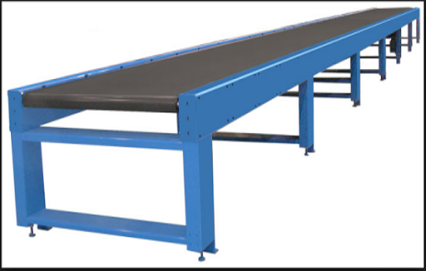
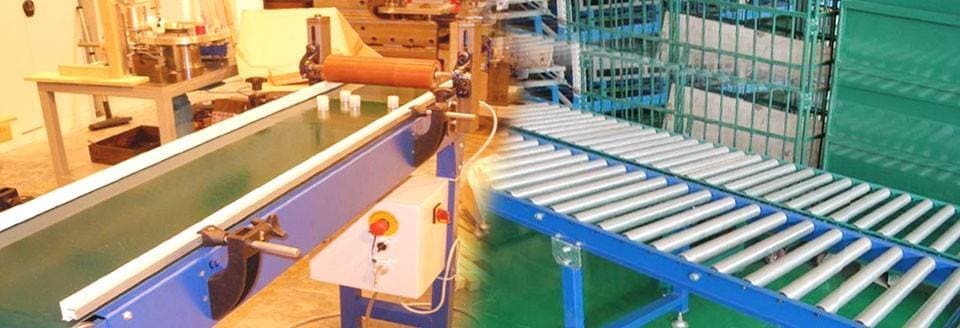
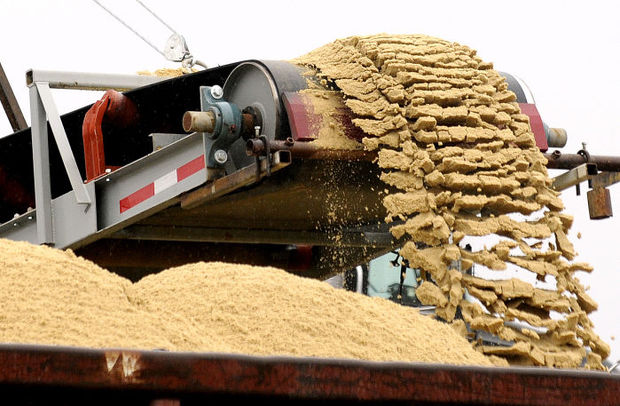
The troughed belt conveyor is the most widely used bulk material handling system in India and globally. A continuous rubber or fabric belt — formed into a trough shape by angled idler rollers — carries material from the feed point to the discharge point. The troughed profile contains the material on the belt and significantly increases carrying capacity compared to a flat belt. Belt widths from 300 mm to 2,000 mm+ and belt speeds from 0.5 to 6.0 m/s allow troughed belt conveyors to handle anywhere from a few tonnes per hour to several thousand tonnes per hour.
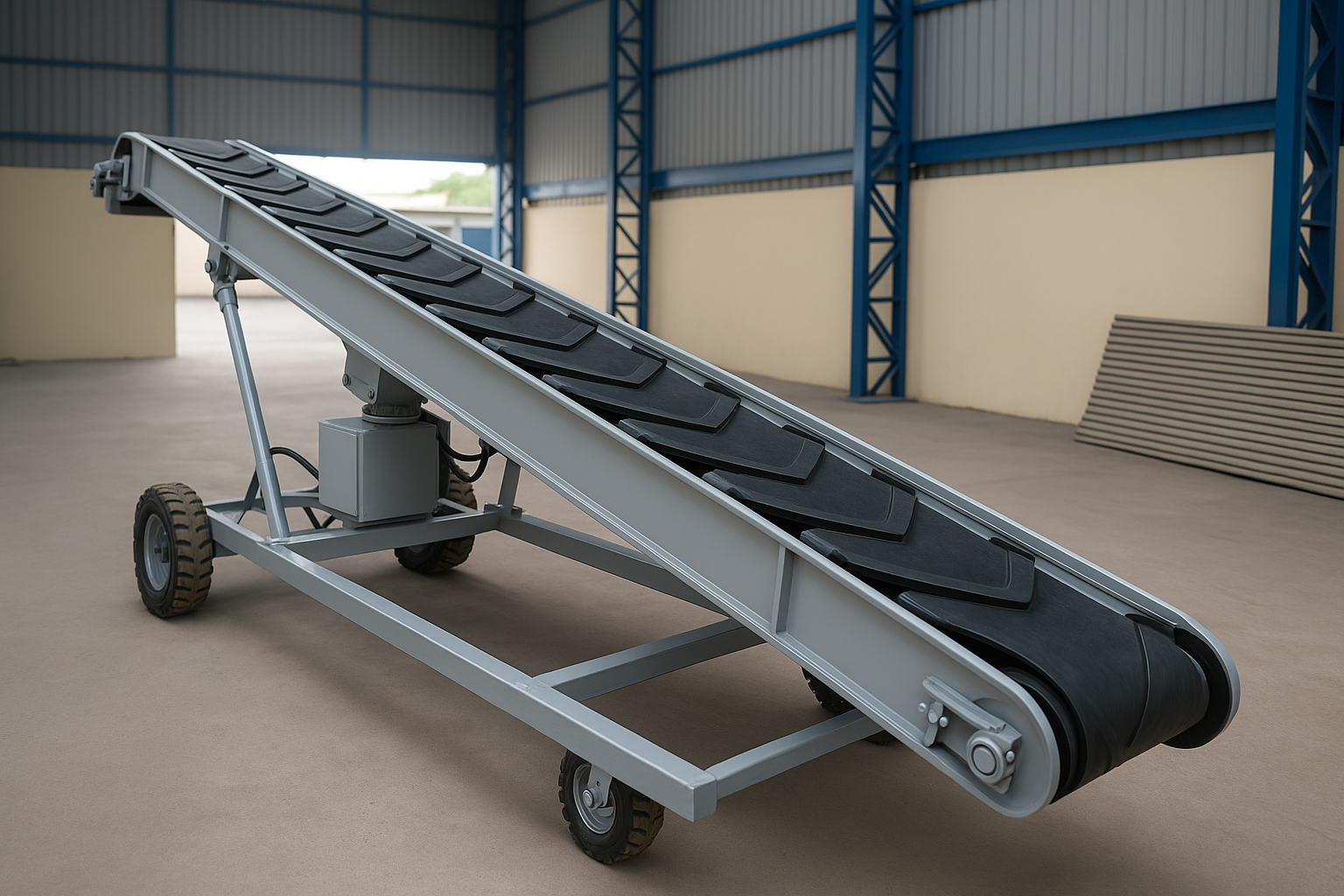
Troughed belt conveyors are the standard solution for coal, iron ore, limestone, aggregate, grain, fertiliser, and most granular or lumpy bulk materials in continuous horizontal or slightly inclined transport. For steep incline transport where a troughed belt cannot maintain material on the belt, cleated belt variants or alternative technologies are used. Read our detailed guide: Inclined Belt Conveyor — Efficient Vertical Material Movement →
2.2 Screw Conveyors — Enclosed, Controlled Bulk Transport
A screw conveyor uses a rotating helical screw blade (the flight) inside a stationary trough or tube to push material forward. Unlike belt conveyors, which carry material on an open surface, screw conveyors enclose the material completely — making them ideal wherever dust containment, contamination prevention, or environmental protection is important. They also allow precise control over material feed rate, making them valuable as feeders to mills, mixers, and process equipment.
Neo Conveyors manufactures horizontal, inclined, and vertical screw conveyors in a range of diameters (150 mm to 600 mm+) for materials including cement powder, fly ash, grain, rice bran, flour, fertiliser, and chemical powders. For a deeper look at the advantages: Advantages of Screw Conveyor →
2.3 Bucket Elevators — Vertical Bulk Material Lifting
Where bulk material must be elevated vertically — from ground-floor storage to an elevated silo, from a ground-level crusher to an elevated screening deck — a bucket elevator is the most space-efficient and energy-efficient solution. Buckets attached to a belt or chain loop scoop material at the boot (bottom) of the elevator, carry it vertically, and discharge it at the head (top) through centrifugal or gravity discharge.
Neo Conveyors manufactures belt bucket elevators and chain bucket elevators for grain, cement, coal, pet coke, sand, sugar, and other free-flowing bulk materials. Elevating heights from 5 m to 50 m+ are achievable. Read: What Are Bucket Elevators? → and Belt Bucket Elevator Conveyor Manufacturer →
2.4 Chain & Slat Conveyors — Heavy-Duty and High-Temperature Handling
Where bulk materials are too heavy, too hot, too abrasive, or too irregular for a belt conveyor, chain and slat conveyors take over. Drag chain conveyors push granular bulk materials along an enclosed trough using chain-mounted flights. Slat chain conveyors carry discrete heavy loads — engine blocks, drums, casting — on rigid steel slats. Apron conveyors use overlapping metal pans to handle hot clinker, sharp-edged ore, and similarly demanding materials.
For a complete guide to how these systems improve industrial efficiency, read our blog: How Chain Conveyors Improve Efficiency in Industrial Processes →
2.5 Apron Conveyors — For the Most Demanding Bulk Applications
Apron conveyors use overlapping steel pans mounted on two parallel chains to create a continuous, rigid carrying surface. They are the go-to solution for heavy, hot, sharp, or lumpy bulk materials that cannot be handled by any other conveyor type — including hot cement clinker, foundry castings, blast furnace slag, large-lump ore, and scrap metal. Operating temperatures of 200°C+ are achievable with appropriate pan and chain materials.
3. Industries That Rely on Bulk Material Handling Conveyors in India
| Industry | Primary Bulk Materials | Recommended Conveyor | Key Requirement |
|---|---|---|---|
| Cement & Mining | Clinker, limestone, coal, fly ash | Belt, Apron, Screw | Abrasion resistance; high temperature |
| Grain & Food Processing | Wheat, rice, pulses, sugar, flour | Screw, Bucket Elevator | Food-grade; enclosed, dust-free |
| Pharmaceuticals & Chemicals | API powder, excipients, chemical granules | Screw (SS316), Belt (PU) | GMP compliance; containment |
| Steel & Foundry | Hot castings, slag, scrap, ore | Apron, Chain | High temp; heavy, abrasive loads |
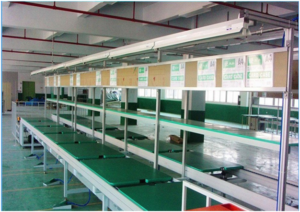
| FMCG & Packaging | Bulk powders, granules, packaged goods | Belt, Screw, Roller | Hygiene; speed; flexibility |
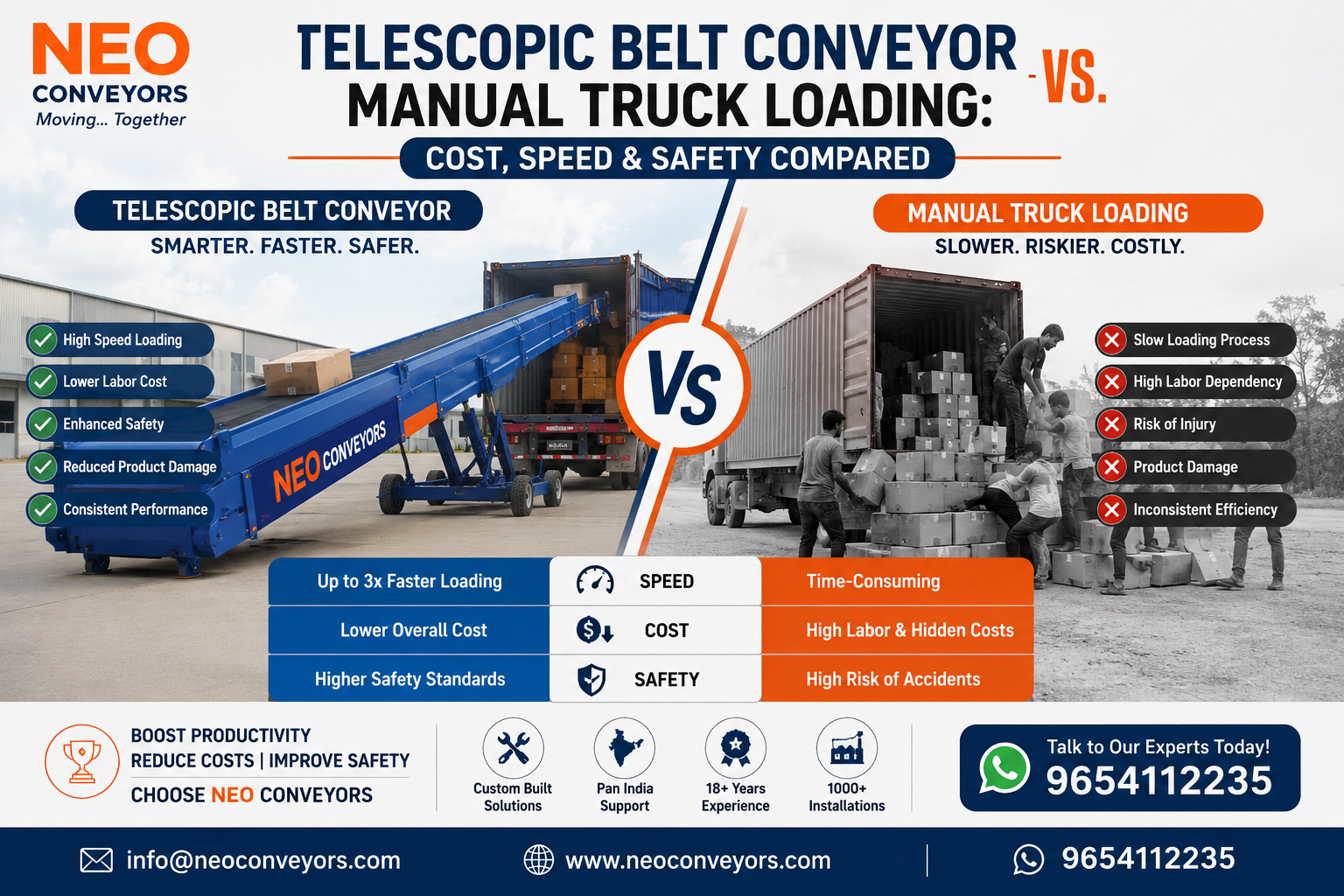
| Warehousing & Logistics | Bulk bags, sacked materials, pallet loads | Loading/Unloading, Telescopic | Speed; dock efficiency |
| Agriculture & Agro-Processing | Paddy, maize, soya, seeds | Bucket Elevator, Screw, Belt | Gentleness; food safety |
4. How to Choose the Right Bulk Material Handling Conveyor — A 5-Step Framework
Correct conveyor selection for bulk material handling is a systematic process. Shortcut this process — by choosing based on price, copying a competitor's layout, or accepting a supplier's first suggestion — and you risk investing in equipment that underperforms, breaks down prematurely, or simply cannot do the job. Follow this five-step framework, or read our dedicated guide: How to Choose the Right Conveyor Solution →
Step 1 — Characterise Your Material Fully
Define: bulk density (t/m³), particle size and size distribution, moisture content, abrasiveness (Mohs hardness for mineral materials), temperature at the point of conveying, angle of repose, and any special properties (explosive dust, corrosiveness, fragility). These parameters determine which conveyor technologies are physically capable of handling your material — eliminating incompatible options before any cost comparison begins.
Step 2 — Define Throughput and Operating Schedule
Determine required capacity in tonnes per hour (TPH) or cubic metres per hour (m³/h) at peak and average rates, number of daily operating hours and shifts, and whether flow is continuous or intermittent (batch). Build in a 15–20% capacity margin over the calculated requirement for future growth and peak surge protection.
Step 3 — Map Your Plant Layout Constraints
Document the horizontal distance the material must travel, any vertical elevation change required, the available cross-section for the conveyor (headroom, width), and connection points to upstream and downstream equipment. A free site survey by Neo Conveyors' engineering team maps all of these with precision and produces a layout drawing as the basis for equipment specification.
Step 4 — Consider Environmental and Regulatory Requirements
Dust containment (for explosive or carcinogenic materials), temperature resistance, GMP or food-grade compliance, ATEX rating for explosive atmosphere, and weather protection for outdoor conveyors all add specification requirements. These must be defined before selecting any conveyor system. For related guidance on heavy-duty conveyor selection: The Right Type of Heavy Duty Conveyor for Industrial Applications →
Step 5 — Evaluate Total Cost of Ownership, Not Just Purchase Price
The cheapest conveyor is rarely the most cost-effective conveyor. Factor in: capital cost, installation cost, annual energy consumption, maintenance cost (scheduled + reactive), spare parts availability and pricing, belt or chain replacement frequency, and expected service life. Neo Conveyors prepares total cost of ownership analyses for major purchase decisions — ask for one when you request a quotation →
5. Neo Conveyors — India's Bulk Material Handling Conveyor Specialists Since 2007
Neo Conveyors, headquartered in G-414, UPSIDC Phase II, Ghaziabad, Uttar Pradesh, has been designing, manufacturing, installing, and supporting bulk material handling conveyor systems for Indian industry since 2007. Founded by Graduate Engineers with over 20 years of prior experience in material handling system design, Neo Conveyors brings an engineering-first approach to every project.
Over 18 years and 1,000+ conveyor installations across India — from grain elevators in Punjab to cement plant conveyors in Rajasthan to pharmaceutical screw conveyors in Himachal Pradesh — our team has developed a depth of application knowledge that goes far beyond what any catalogue or brochure can represent. View our installation gallery →
We manufacture the complete range of bulk material handling conveyors in-house at our Ghaziabad facility: belt conveyors, screw conveyors, bucket elevators, chain and slat conveyors, apron conveyors, roller conveyors, and telescopic belt conveyors. Every system is custom-engineered to the client's specific material, layout, and operating requirements. Browse all products →
Post-installation, we support our clients through our Annual Maintenance Contract (AMC) programme — covering scheduled preventive maintenance, priority emergency response, and local spare parts supply. Download our full product catalogue →
6. Frequently Asked Questions — Bulk Material Handling Conveyors
Q: What is the difference between a belt conveyor and a screw conveyor for bulk material handling?
A belt conveyor is open and ideal for high-volume horizontal or slightly inclined transport of granular, lumpy, or mixed bulk materials over long distances. A screw conveyor is enclosed and better suited for controlled, dust-free transport of fine powders and granules over short to medium distances, particularly when precise feed rate control is needed. Read: Advantages of Screw Conveyor →
Q: Which conveyor is best for handling cement and fly ash?
For dry cement powder and fly ash, screw conveyors and bucket elevators are standard — they provide enclosed, dust-controlled transport essential for these fine, airborne materials. For cement clinker (coarse, hot, abrasive), apron conveyors or heavy-duty troughed belt conveyors are used. Contact us for cement industry conveyor advice →
Q: Does Neo Conveyors provide installation and AMC for bulk material conveyors across India?
Yes. Neo Conveyors manages design, manufacturing, installation, and commissioning of bulk material handling conveyor systems pan-India from our Ghaziabad base. Our AMC programme provides structured preventive maintenance, priority emergency support, and local spare parts supply. Contact us to confirm availability in your location →
Q: How do I get a quote for a bulk material handling conveyor system?
Share your material type, throughput requirement, plant layout (or allow us to conduct a free site survey), and environmental conditions — and Neo Conveyors will provide a fully engineered, fixed-price quotation within 3–5 working days. Call +91-9654112235 or email neoconveyors@yahoo.com to start.
7. Related Guides & Technical Resources
Continue your research with these technical guides from the Neo Conveyors engineering team:
Ready to Solve Your Bulk Material Handling Challenge?
Neo Conveyors' Graduate Engineers offer a free site survey, engineered layout drawing, and fixed-price quotation — no cost, no commitment. Serving all of India from Ghaziabad since 2007.
📞 +91-9654112235 | ✉ neoconveyors@yahoo.com | 📍 G-414, UPSIDC Phase II, Ghaziabad, UP
Recent Posts