Roller Conveyor Manufacturer in India
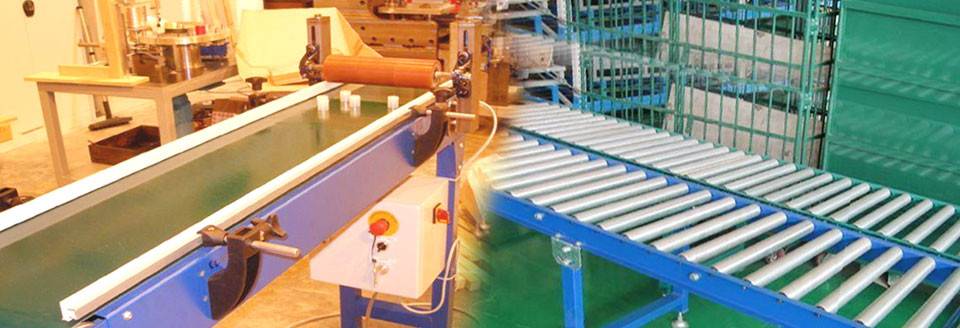
Neo Conveyors is a trusted roller conveyor manufacturer in India since 2007, manufacturing both gravity-driven free roller conveyors and motorised powered roller conveyors for warehouses, logistics centres, packaging lines, and industrial plants across the country. Every system is engineered around your product dimensions, load weight, and floor layout — manufactured at our Ghaziabad plant and installed by our own engineers, PAN India.
Gravity or Powered?
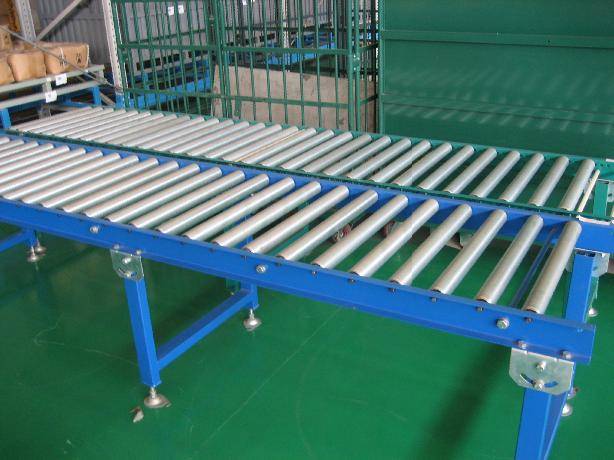
The most important question when specifying a roller conveyor is simple: does your product need to move under its own weight, or does it need a motor to drive it? The answer determines everything — cost, maintenance, speed control, and integration capability.
| Factor | Free roller conveyor (gravity) | Powered roller conveyor |
|---|---|---|
| Drive | No motor — gravity or manual push | Electric motor — controlled speed |
| Power cost | Zero — no electricity needed | Minimal — energy-efficient drives |
| Speed control | Fixed by slope angle | Adjustable via VFD control |
| Best for | Sloped runs, accumulation, dispatch | Flat lines, automation, sorters |
| Maintenance | Extremely low — no motor parts | Low — simple roller drive system |
| Typical use | Warehouse picking, dispatch, packing | Production lines, assembly, e-commerce sorters |
View detailed specifications for each type: Free Roller Conveyor → | Powered Roller Conveyor →
Technical Specifications
All systems custom engineered — roller pitch, frame width, load rating, and material to match your product and environment.
| Specification | Standard range |
|---|---|
| Roller diameter | 50 mm to 89 mm — as per load |
| Roller pitch | 75 mm to 300 mm — as per product size |
| Frame width | 300 mm to 1,200 mm — custom |
| Conveyor length | As per plant layout — no standard limit |
| Load capacity | Up to 500 kg per metre depending on roller and frame spec |
| Drive type | Gravity (unpowered) or electric motor (powered) |
| Speed control | Fixed speed or VFD — powered models only |
| Roller material | Mild steel / Galvanised steel / Stainless steel / PVC |
| Frame material | Mild Steel (MS) or Stainless Steel (SS) |
| Surface finish | Powder coated / Painted / Food grade |
| Roller bearing | Ball bearing — sealed and grease-filled for long life |
| Power supply | 415 V, 3 Phase, 50 Hz (powered models) |
Where Roller Conveyors Outperform Belt Conveyors
Roller conveyors and belt conveyors are often compared, but they serve different purposes. Here is where a roller conveyor is the better choice for your plant.
| Situation | Why roller conveyor wins |
|---|---|
| Heavy pallets and crates | Rollers support high point loads without belt wear or damage |
| Accumulation required | Products can queue on rollers without motor overload — unlike belts |
| Zero power budget available | Gravity roller needs no electricity — lowest operating cost of any conveyor |
| Products with flat, rigid bases | Roller suits boxes, cartons, totes, trays, and pallets — not bags or loose material |
| Manual push or gravity slope | Gravity roller replaces manual carrying at near-zero cost |
| Frequent maintenance access needed | Individual rollers can be replaced without dismantling the full conveyor |
For loose material, bags, or products without a flat base, see: Belt Conveyors →
What's Built Into Every Roller Conveyor
Gravity or powered
Choose zero-power gravity operation or motorised speed control — same robust frame construction.
Heavy load capacity
Up to 500 kg per metre — handles pallets, heavy crates, and industrial containers.
Sealed ball bearings
Grease-filled sealed bearings in every roller — long service life with minimal maintenance.
Custom roller pitch
Roller spacing matched to your smallest product — prevents products falling between rollers.
Accumulation zones
Gravity roller naturally accumulates products — ideal for buffer zones and picking stations.
Multiple roller materials
MS, galvanised, SS, or PVC roller shells — selected for your product and environment.
Modular design
Sections can be extended, joined, or curved — adapts as your layout grows.
Low maintenance
Individual roller replacement without full line stoppage — fastest maintenance of any conveyor type.
Why Choose Neo Conveyors
Manufacturer since 2007
Gravity and powered roller conveyors designed and fabricated in-house at our Ghaziabad plant.
Widest customisation
Roller pitch, diameter, frame width, length, and material — all to your exact requirement.
Our engineers install
PAN India installation and commissioning by our own team — no third-party contractors.
Proven track record
1,000+ conveyor installations across warehousing, logistics, FMCG, food, and manufacturing.
After-sales support
Spare rollers, AMC, and technical support available after every installation.
Learn more: About Neo Conveyors → · Gallery → · Technical Support →
Roller Conveyor FAQs
What is the difference between a free roller conveyor and a powered roller conveyor?
A free roller conveyor uses gravity or manual push — no motor, no electricity. It works on a slight slope or at a flat accumulation station. A powered roller conveyor uses an electric motor to drive the rollers at a controlled speed — ideal for flat automated lines and integration with production machinery.
What products can roller conveyors handle?
Products with flat, rigid bases — cardboard boxes, wooden crates, plastic totes, metal trays, pallets, and similar rigid containers. Roller conveyors are not suitable for bags, loose materials, or products without a stable base. For those, see our Belt Conveyors.
What is the roller pitch and why does it matter?
Roller pitch is the centre-to-centre distance between rollers. It must be set so that every product always rests on at least 3 rollers at any point — preventing it from falling between rollers or tilting. Our engineers calculate the correct pitch for your smallest product before manufacture.
What is the maximum load capacity?
Up to 500 kg per metre depending on roller diameter, frame specification, and bearing rating. For very heavy loads — steel castings, dies, large pallets — our engineers will specify the correct roller and frame combination.
Can roller conveyors be made food-grade?
Yes. Stainless steel frame and roller shells with sealed, food-grade bearings available for food processing, cold storage, dairy, and pharmaceutical environments.
What is the price of a roller conveyor in India?
Price depends on conveyor type (gravity or powered), roller specification, frame width and length, and material. Contact Neo Conveyors for a detailed no-obligation quotation.
Do you install across India?
Yes — PAN India installation by our own engineers. Details at neoconveyors.com/technical-support.
From the Neo Conveyors Blog
More on roller-based material handling and loading dock automation from our blog.
Truck Loader Conveyor — Suitable for Loading and Unloading
How belt-and-roller truck loader systems reduce loading time and manual strain at dispatch docks.
Blog IndexMore Conveyor Guides & Case Studies
Browse the full Neo Conveyors blog for buying guides, industry use-cases, and product deep-dives.
Explore More Conveyor Systems
- Free Roller Conveyor
- Powered Roller Conveyor
- Belt Conveyors (All Types)
- Horizontal Belt Conveyor
- Inclined Belt Conveyor
- Roller on Bed Belt Conveyor
- Troughed Belt Conveyor
- Telescopic Belt Conveyor
- Assembly Line Conveyors
- Inspection Conveyors
- Loading & Unloading Conveyors
- Chain Conveyors
- Slat Conveyors
- Screw Conveyors (All Types)
- Vertical Screw Conveyor
- Bucket Elevators (All Types)
- View All Products →
Get a Custom Roller Conveyor Quote
Tell us your product type, load weight, line speed, and floor layout — our engineers will recommend and quote the right roller conveyor system.